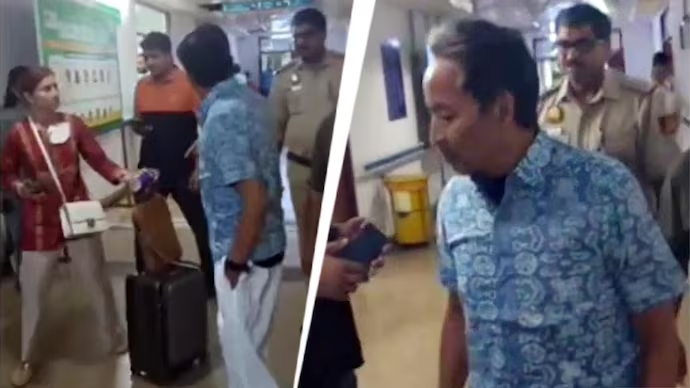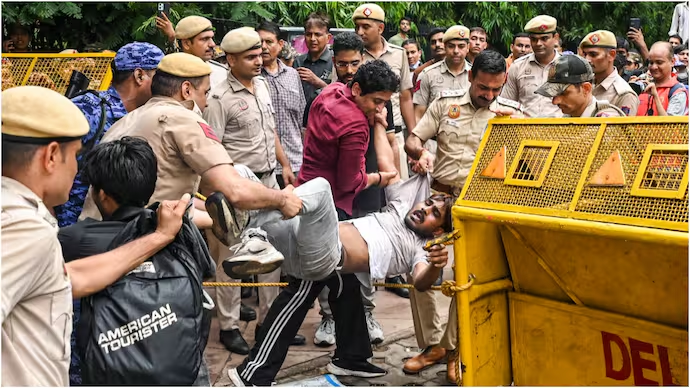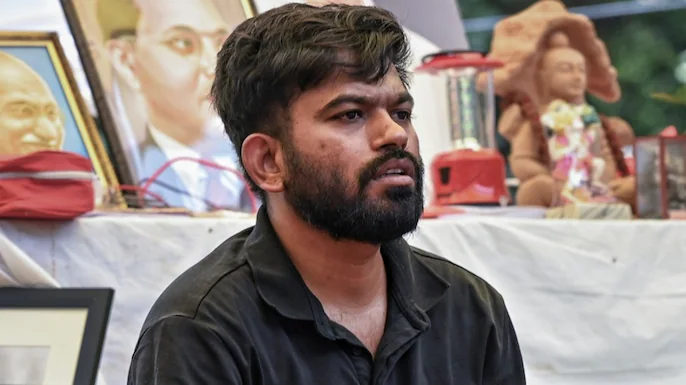
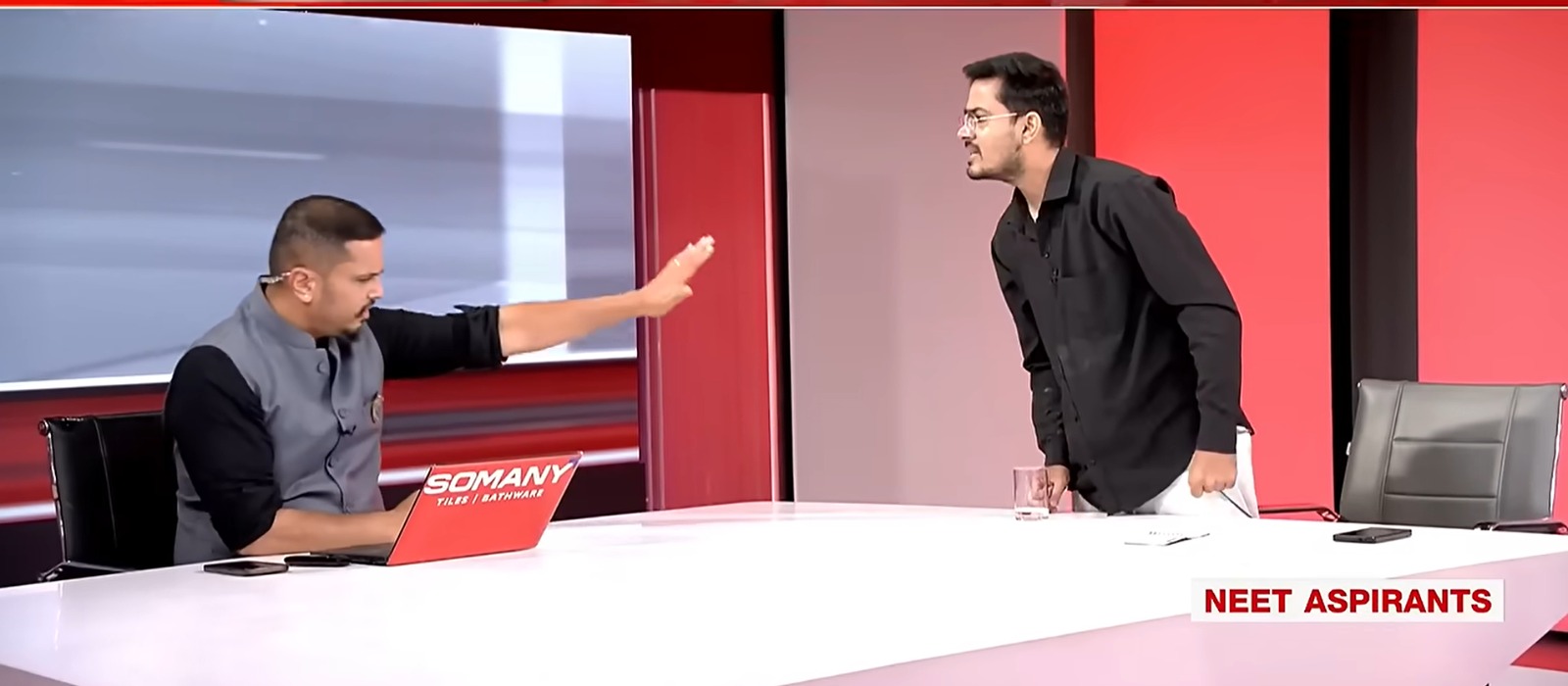
During a viral TV debate regarding the NEET student protests, an aspirant named Harsh Dubey highlighted core systemic issues. Expressing deep frustration with the current examination framework and paper leaks, he drew attention to structural flaws such as intense cut-off pressures and reservation dynamics. Ultimately, he emphasized that the situation demands concrete, long-term exam reforms rather than mere political rhetoric.
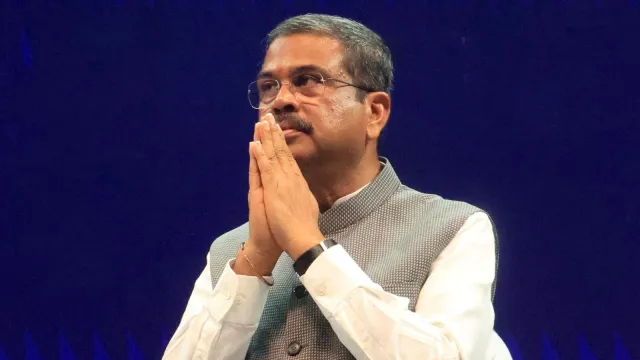
The fundamental flaw lies within the system itself, making demands for the resignation of current Union Education Minister Dharmendra Pradhan futile. While proponents claim that a resignation establishes a precedent of accountability and instills a fear of consequences, its actual effectiveness is questionable. India possesses a prolonged record of paper leaks and systemic failures; when a minister steps down, the underlying system remains unaltered, nothing gets resolved, and the individual is simply reassigned to a different ministry or role.
Substantive change must originate from within the administrative apparatus, requiring leadership to comprehend the granular realities and profound distress experienced by candidates. Rather than disregarding student perspectives, the ministry should actively integrate their feedback into policy frameworks. While current demonstrations prioritize demands for ministerial resignations, formal apologies, and financial restitution for bereaved families, these actions often obscure the underlying systemic crisis. Consequently, the discourse remains largely performative, failing to address the foundational grievances that necessitate urgent attention.
The Core Problems: Why the System Is Failing Us
- Single-Day High-Stakes Pressure: Relying on a single, high-pressure exam day for 2.2 million students is inherently flawed. It invites systemic risk, where individual misfortune or localized center issues can derail years of effort, while simultaneously incentivizing corruption and paper leaks.
- Supply-Demand Imbalance: Extreme competition for limited government seats creates inflationary cut-offs. The resulting pressure on students is a consequence of structural capacity deficits, not individual failure.
- Vulnerable Logistics: The current chain of custody for physical question papers—reliant on numerous private vendors and manual transport—is prone to failure. This sprawling, human-dependent process creates too many points of compromise.
The numbers are staggering: in exams like NEET-UG, between 2.2 and 2.4 million candidates compete annually for roughly 100,000 to 120,000 MBBS seats, with government seats being even fewer. Similar imbalances plague job exams, where state recruitment drives and Staff Selection Commission (SSC) notifications frequently attract millions of applicants for only a few thousand available positions. This massive competition exacerbates the recurring systemic crisis of paper leaks. What were once isolated incidents have evolved into pervasive operations, with reports revealing over 41 paper leaks across 15 states in a five-year period, impacting more than 1.4 crore (14 million) candidates. These leaks are facilitated by complex, corrupt ecosystems involving printing press staff, transport handlers, and middlemen who leverage encrypted apps like Telegram and WhatsApp to sell papers for substantial sums. Ultimately, the burden falls on honest candidates, who spend years preparing only to lose their merit-based edge to those utilizing these illicit shortcuts. Families undertake significant debt to pay for application fees, coaching hubs, hostel rent, and study materials across multiple dropped years. Aspirants spend their twenties in a state of “permanent waiting”—postponing career progress, financial independence, and personal milestones while preparing in cramped coaching hubs.
Government responses often focus on temporary fixes (adding CCTV cameras, harsher penalties via legislation) rather than structural reforms (encrypted digital delivery, bi-annual testing, or audit-proof testing centers). Expert reports—such as the K. Radhakrishnan Committee (2024)—advocated for reducing outsourced centers, adopting hybrid/online testing models, encrypted last-minute paper distribution, and biometric authentication, yet implementation remains slow across testing bodies.
The following points outline key systematic challenges faced by unreserved aspirants in high-stakes competitive examinations:
Open Category Dynamics: A common misconception is that the remaining ~40–50% of unreserved slots are exclusive to General Category candidates; in reality, these are “Open Category” positions available to all eligible individuals based on rank.
The Principle of Merit Migration: Governed by Supreme Court rulings, high-scoring reserved category aspirants who achieve the general cut-off threshold without utilizing age or fee concessions are seamlessly shifted to the Open/Unreserved roster.
Perceived Competitive Imbalance: General category students frequently experience a shrinking competitive arena, as their opportunities are restricted strictly to the 40–50% unreserved pool, whereas reserved category individuals can legitimately contest for seats within both their dedicated quotas and the open category.
Cut-Off Pressure & Narrow Margins: In prominent national and state-level competitive exams like NEET-UG, UPSC, and State PSCs, unreserved candidates face unforgiving thresholds. A student securing an impressive 92% score might still miss out on a government medical college allocation, whereas a candidate benefiting from a reserved status could secure admission at a much lower benchmark. Due to the high density of applicants within the open tier, a variance of just one or two marks can cause an aspirant’s rank to plummet by thousands, abruptly nullifying years of rigorous preparation.
Economic Strains & Financial Vulnerability: Millions of unreserved category families operate near or below middle-class economic thresholds. They face parallel financial constraints—such as the inability to afford steep coaching institute fees, a lack of resources for private institutions, and intense domestic stress—comparable to those experienced by reserved category candidates.
Limitations of the EWS Quota: Although the implementation of the 10% Economically Weaker Section (EWS) quota was designed to offer relief to low-income general category candidates, the rigid eligibility income ceiling (e.g., ₹8 Lakh/annum) is widely criticized for failing to protect a significant portion of the struggling middle-class population.
The SC/ST “Creamy Layer” Omission: Unlike the Other Backward Classes (OBC) quota, which actively filters out affluent individuals through a “creamy layer” policy, no such socio-economic restriction applies to SC/ST reservations. Unreserved candidates often vocalize frustration when second- or third-generation affluent families continue to access quota protections ahead of economically distressed general tier applicants.
Prolonged Preparation Cycles: Given the slim margin for error despite strong academic performance, general category candidates frequently dedicate their early-to-mid twenties to taking 3 to 5 successive drop years, heavily risking career stagnation and enduring mental health burnout.
Triggered “Brain Drain”: A growing number of unreserved aspirants feel compelled to look beyond the public domain, opting to transition into private enterprises where caste-based reservations do not operate, or taking on substantial financial liabilities to pursue education abroad.
Beyond the structural and economic toll lies the human cost:
A rising trend of student suicides that underscores the deep pathology of the current system. The relentless pressure of competitive exams, exacerbated by rigid reservation frameworks, creates an environment where students feel their future is entirely hostage to a single outcome. Yet, the crisis is further deepened by domestic environments that reinforce this burden. Families, often driven by their own anxieties and societal expectations, create an atmosphere where the exam becomes the sole definition of success, effectively stripping students of their mental well-being and sense of self-worth. This “all-or-nothing” paradigm, where failure is not seen as a setback but as a life-ending catastrophe, transforms the pursuit of education into a profound mental health hazard.
Towards Equitable Reform
Recognizing these systemic failures is merely the first step; continuing along the current trajectory invites deeper societal and institutional collapse. Meaningful change requires a paradigm shift—moving away from outdated, identity-centric policies toward a framework grounded in objective necessity and structural expansion. To realign the system with the principles of fairness and national growth, the following reforms are imperative:
- Economic-Based Affirmative Action: The current quota system must evolve from rigid, caste-based stratification toward a dynamic socio-economic assessment. This model would prioritize genuine need by evaluating tangible metrics—household income, parental education levels, and urban versus rural accessibility—ensuring that support reaches those who are truly economically and socially disadvantaged.
- One-Time Benefit Limitations: To prevent the concentration of state advantages within specific cohorts, quota access should be restricted to a single generation or a singular academic entry point. By limiting these benefits to, for instance, undergraduate college entry, the system can prevent the ‘generational stacking’ of advantages, thereby creating more equitable access for subsequent aspirants.
- Prioritizing the Expansion of Institutional Capacity: The overarching, often overlooked crisis remains a profound supply-side failure. India’s administrative focus must shift from merely managing competitive scarcity to aggressively expanding the availability of quality government education and employment seats. Without a systematic increase in infrastructure, any adjustment to admission criteria serves only to redistribute existing limitations rather than fostering genuine national development.
- Bi-Annual Computer-Based Testing (CBT): Transition from paper-based OMR sheets to encrypted, digital assessment platforms. Conducting the examination twice annually allows for a “best-of-two” scoring mechanism, which significantly reduces the high-stakes pressure of a single, definitive exam day.
- Psychometric Normalization: Adopt robust statistical scoring methodologies across multiple test sessions. This ensures parity and fairness, neutralizing any disparities in difficulty levels between different sets of question papers.
- Institutional Autonomy for Testing Bodies: Reconstitute examination agencies into independent statutory bodies modeled after institutions like the UPSC. These organizations must be governed by career academicians and subject-matter experts, rather than relying on transient, ad-hoc contractual staff.
Ultimately, the goal of any national testing framework must be to act as a bridge to opportunity, not a gatekeeper of despair. The status quo—defined by corruption, logistical fragility, and profound psychological trauma—is a failing architecture that stifles the potential of millions. Real progress demands the courage to dismantle this culture of scarcity and replace it with a system defined by integrity, adaptability, and merit. Until policy aligns with the lived reality of these students, the country will continue to lose its most vital resource: the next generation’s future, sacrificed at the altar of systemic inertia.