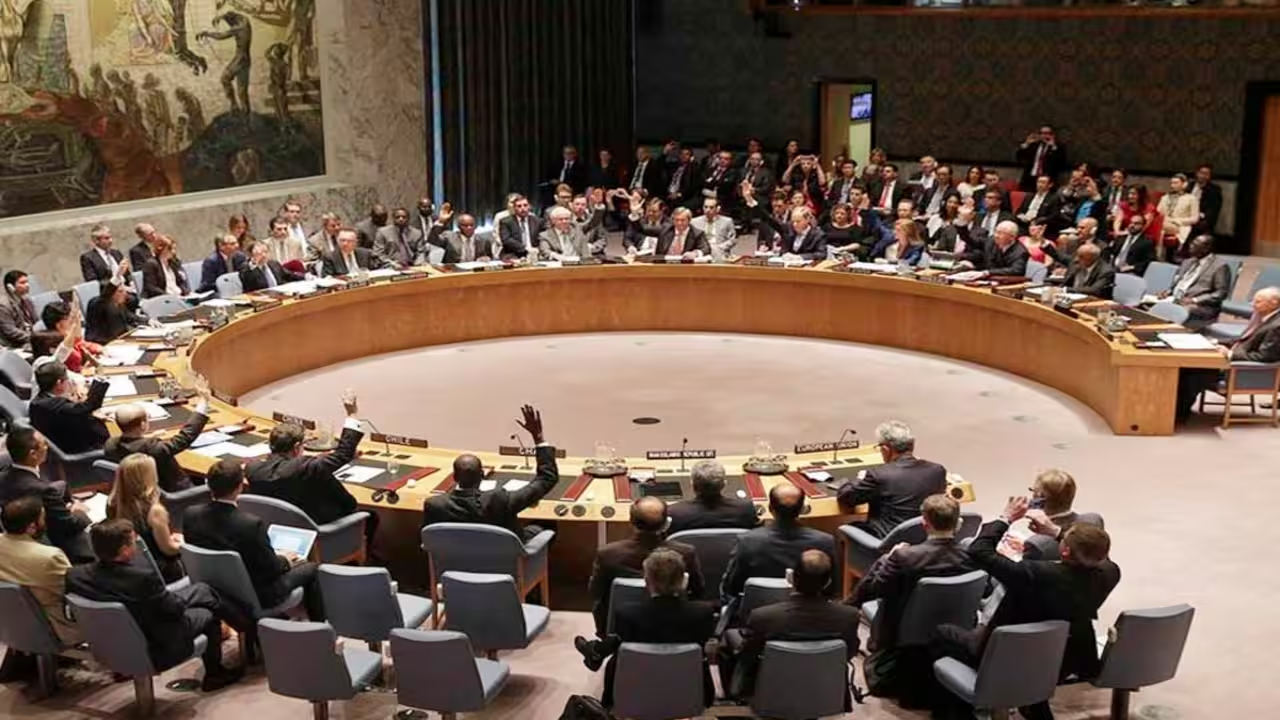
India has strongly criticised the continued delay in reforming the United Nations Security Council (UNSC) after another round of negotiations ended without any concrete outcome. Expressing disappointment over the prolonged stalemate, India said that 17 rounds of Inter-Governmental Negotiations (IGN) have failed to produce meaningful progress and urged member states to move towards text-based negotiations with clearly defined timelines.
The remarks came after the United Nations General Assembly decided to extend the reform discussions into its 81st session, marking the 18th consecutive year that negotiations have continued without a final agreement.
India Calls for Urgent UN Security Council Reform
India reiterated that comprehensive reform of the 15-member UN Security Council has become increasingly urgent, particularly at a time when the global body faces criticism over its inability to effectively respond to international conflicts.
According to India, meaningful reform should include:
- Expansion of both permanent and non-permanent membership.
- Greater representation for developing nations and the Global South.
- Text-based negotiations instead of repetitive discussions.
- Clearly defined timelines and milestones to achieve reforms.
India argued that the current process has failed to deliver tangible outcomes despite years of deliberations.
India Voices Frustration Over Lack of Progress
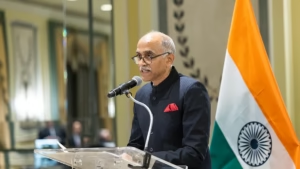
Speaking during the adoption of the decision to continue negotiations, India’s Permanent Representative to the United Nations, Parvathaneni Harish, said that the latest session had once again failed to produce any meaningful breakthrough.
He noted that discussions had largely repeated long-standing positions without generating consensus or paving the way for genuine reforms.
Highlighting the prolonged nature of the process, Harish remarked that after seventeen negotiation cycles, there was still “no liberation in sight,” questioning how much longer the international community should wait for meaningful change.
Greater Representation for the Global South
India maintained that any credible reform process must better reflect current global realities.
The country has consistently advocated expanding both permanent and non-permanent categories of the Security Council while ensuring stronger representation for emerging economies and countries from the Global South.
India also argued that simply increasing non-permanent seats would not adequately address the imbalance in decision-making powers held by the existing permanent members.
India Launches Campaign for UNSC Seat
Earlier this month, External Affairs Minister S. Jaishankar launched India’s campaign for a non-permanent seat on the UN Security Council for the 2028–29 term.
The election is scheduled to take place in June next year, where India and Tajikistan will contest the lone Asia-Pacific seat.
India last served as a non-permanent member of the Security Council during the 2021–22 term, marking its eighth tenure on the Council.
Debate Over Expansion Model Continues
While India supports expanding both permanent and non-permanent membership, the Uniting for Consensus group has proposed a different model.
The group, which includes countries such as Canada, Pakistan, Türkiye and Italy, advocates expanding only the non-permanent category and has proposed increasing the Council’s size to 27 members without creating new permanent seats.
India has maintained that such an approach would fail to address the structural imbalance in global decision-making.
Negotiations Continue into the 81st Session
With the negotiations now rolled over into the 81st session of the UN General Assembly beginning in September, India has reiterated its commitment to constructive engagement while stressing that another year without meaningful progress would only deepen global frustration over the long-pending issue of Security Council reform.
Key Highlights
- India criticised the continued deadlock in UN Security Council reform negotiations.
- The UN General Assembly has extended the reform talks into its 81st session.
- India said 17 rounds of negotiations have produced no meaningful outcome.
- New Delhi called for text-based negotiations with fixed timelines and milestones.
- India wants expansion of both permanent and non-permanent UNSC membership.
- The country also advocated greater representation for the Global South.
- India is campaigning for a non-permanent UN Security Council seat for the 2028–29 term.
FAQs
1. Why did India criticise the UN Security Council reform process?
India said that 17 rounds of negotiations have failed to produce meaningful reforms and called for a more result-oriented approach.
2. What reforms is India seeking in the UN Security Council?
India supports expanding both permanent and non-permanent membership while ensuring greater representation for developing countries and the Global South.
3. What are text-based negotiations?
Text-based negotiations involve discussions around a formal draft document, enabling member states to negotiate specific proposals rather than general positions.
4. What did the UN General Assembly decide?
The General Assembly extended the Security Council reform negotiations into its 81st session beginning in September.
5. Why does India believe UNSC reform is urgent?
India argues that the current Security Council structure no longer reflects present-day geopolitical realities and has struggled to respond effectively to global conflicts.
6. Who represented India during the negotiations?
India’s Permanent Representative to the United Nations, Ambassador Parvathaneni Harish, addressed the General Assembly.
7. When will India contest the next UN Security Council election?
India will contest the election for a non-permanent seat for the 2028–29 term, with voting scheduled for June next year.
8. When did India last serve on the UN Security Council?
India last served as a non-permanent member during the 2021–22 term.
9. What is the Uniting for Consensus group?
It is a group of countries that supports expanding only the non-permanent membership of the Security Council instead of creating new permanent seats.
10. Why is Security Council reform considered important?
Reform is viewed as essential to make the Security Council more representative, effective and reflective of today’s global political landscape.