India has called for an immediate de-escalation of tensions in West Asia, expressing deep concern over renewed hostilities and attacks on commercial vessels in the Strait of Hormuz. Addressing the United Nations Security Council (UNSC), India urged all parties to prioritise dialogue, restore safe maritime navigation, and work towards lasting regional stability.
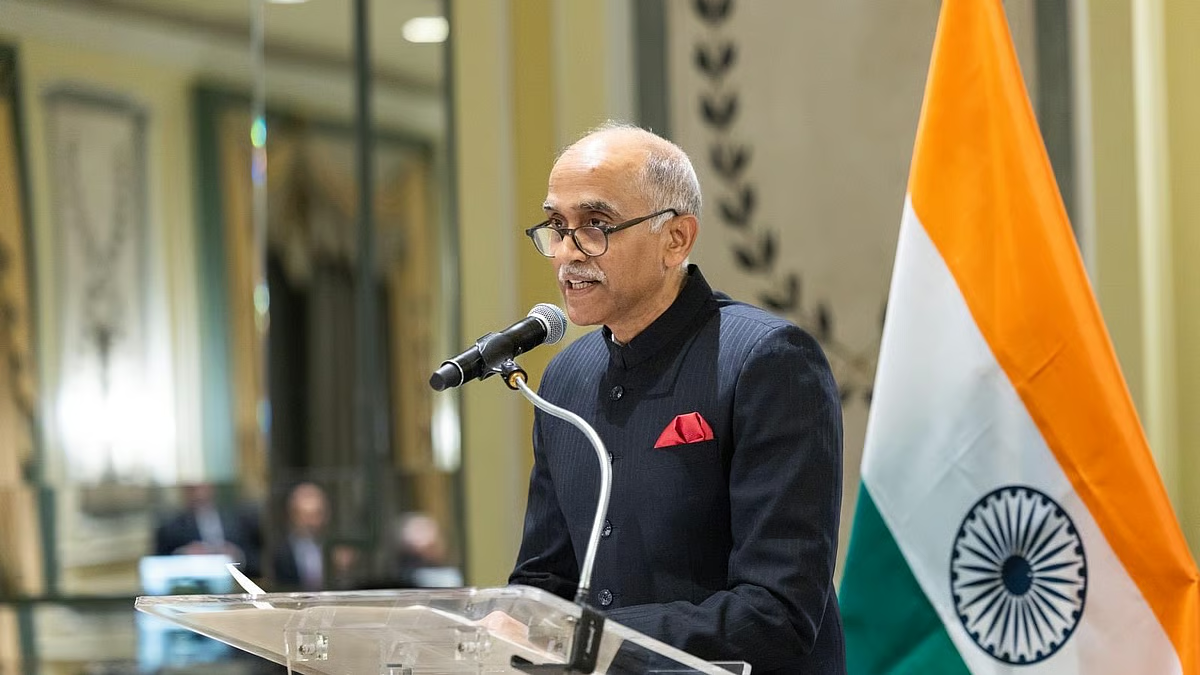
Speaking during the UNSC open debate on the Middle East, India’s Permanent Representative to the United Nations, Ambassador Parvathaneni Harish, described the escalating conflict as a serious threat to regional peace and global economic stability.
India Condemns Attacks on Commercial Ships
India strongly condemned the recent attacks targeting commercial vessels navigating the Strait of Hormuz, including GFS Galaxy, MT Al Bahiyah, and MT Mombasa.
The attacks resulted in injuries to several Indian nationals, with one Indian citizen losing his life and another reported missing.
India reiterated that attacks on merchant shipping and civilian infrastructure are unacceptable and called for the immediate restoration of free and secure navigation through international waterways in accordance with international law.
Call for Dialogue and Diplomacy
India stressed that diplomacy remains the only sustainable path toward restoring peace in the region.
The country urged all stakeholders to avoid further escalation and resume dialogue to safeguard regional security, international trade routes, and global energy supplies.
According to India, protecting commercial shipping lanes is essential not only for regional stability but also for the global economy.
India Highlights Strategic Stakes in West Asia
India underlined its strong economic and strategic ties with West Asia, noting that stability in the region is directly linked to India’s national interests.
Key figures highlighted include:
- Annual bilateral trade of approximately USD 180 billion.
- Cumulative foreign direct investment exceeding USD 31 billion.
- Annual remittances of over USD 52 billion from Gulf Cooperation Council (GCC) countries.
- Around 10 million Indians living and working across the Gulf region.
India stated that ensuring the safety and well-being of its citizens abroad remains a top priority.
Focus Should Remain on Gaza Humanitarian Crisis
While discussing maritime security, India cautioned that global attention on the Strait of Hormuz should not overshadow the ongoing humanitarian crisis in Gaza.
The country expressed concern over civilian casualties and widespread destruction, urging the international community to intensify humanitarian assistance.
India also noted that its development assistance to Palestine amounts to nearly USD 175 million, reaffirming its commitment to supporting the Palestinian people.
Support for Two-State Solution
India reiterated its longstanding position in favour of a negotiated two-state solution.
The country stated that lasting peace can only be achieved through the establishment of a sovereign, independent, and viable Palestinian state living peacefully alongside Israel within secure and internationally recognised borders.
Concerns Over Yemen and Lebanon
India also addressed security challenges elsewhere in the region.
Regarding Yemen, it condemned attacks by the Houthis on maritime navigation and stressed that protecting the Bab al-Mandab Strait and the Southern Red Sea is a shared international responsibility.
On Lebanon, India strongly condemned attacks on United Nations Interim Force in Lebanon (UNIFIL) peacekeepers and emphasised the importance of ensuring their safety while supporting the Lebanese Armed Forces in maintaining stability.
India Calls for Regional Peace and Stability
India concluded its remarks by linking regional de-escalation with the protection of international shipping routes, humanitarian relief in Gaza, support for the two-state solution, and enhanced security for civilians and peacekeepers across West Asia.
The country reaffirmed its commitment to diplomacy, international law, and collaborative efforts aimed at restoring peace and stability in one of the world’s most strategically significant regions.
Frequently Asked Questions (FAQs)
1. What did India say at the UN Security Council?
India called for immediate de-escalation in West Asia, condemned attacks on commercial vessels, and urged the restoration of safe maritime navigation.
2. Why is the Strait of Hormuz important?
The Strait of Hormuz is one of the world’s busiest oil shipping routes and is crucial for global energy supplies and international trade.
3. Which vessels were attacked?
India referred to attacks on commercial vessels including GFS Galaxy, MT Al Bahiyah and MT Mombasa.
4. Were Indian citizens affected?
Yes. Several Indian nationals were injured, one person lost their life, and another remains missing following the attacks.
5. Why is West Asia important for India?
The region is vital for India’s energy security, trade, investments, and the welfare of nearly 10 million Indians living and working in Gulf countries.
6. What is India’s position on the Gaza conflict?
India has called for urgent humanitarian assistance and emphasised that attention to maritime security should not overshadow the humanitarian crisis in Gaza.
7. Does India support a two-state solution?
Yes. India continues to support the establishment of a sovereign and independent Palestinian state living peacefully alongside Israel.
8. What did India say about Yemen?
India condemned attacks on maritime navigation by the Houthis and stressed the importance of protecting key international shipping routes.
9. What was India’s message regarding Lebanon?
India condemned attacks on UN peacekeepers and urged continued support for the Lebanese Armed Forces to maintain stability.
10. What is India’s overall message on the West Asia conflict?
India advocates dialogue, diplomacy, protection of global shipping lanes, humanitarian assistance, and peaceful political solutions to restore long-term regional stability.