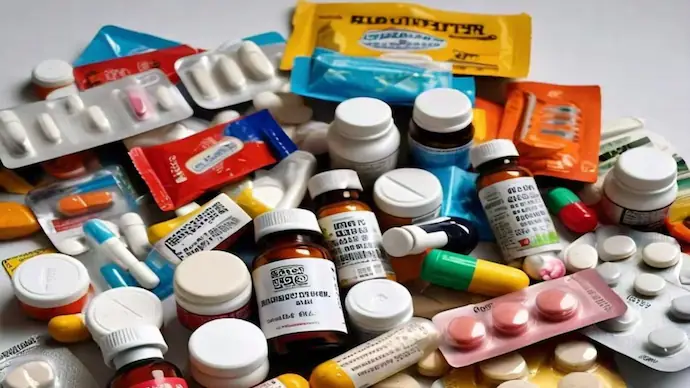
The Rajasthan government has permanently cancelled the drug licences of 31 medical stores after an AI-powered audit under the Rajasthan Government Health Scheme (RGHS) uncovered alleged fake claims, inflated medicine pricing and financial irregularities.
The action follows an investigation by the Rajasthan State Health Assurance Agency (RSHAA), which found evidence suggesting collusion between certain pharmacies, doctors and beneficiaries to submit fraudulent reimbursement claims. Officials say the use of artificial intelligence has significantly strengthened monitoring of RGHS transactions and helped detect suspicious billing patterns.
Key Highlights
- Rajasthan cancelled the drug licences of 31 medical stores following an AI-based RGHS audit.
- Investigation found alleged fake claims, forged doctor signatures and inflated medicine prices.
- AI monitoring detected abnormal pricing, incorrect product mapping and fraudulent transactions.
- Government has initiated recovery of excess payments and suspended services of 10 medical stores.
- Show-cause notices have also been issued to 13 pharmacies as the crackdown continues.
AI Audit Exposes Alleged Fraud in RGHS Claims
The Rajasthan State Health Assurance Agency launched an AI-powered audit to strengthen oversight of claims submitted under the Rajasthan Government Health Scheme.
According to officials, the system flagged multiple suspicious transactions, prompting a detailed investigation.
The probe allegedly found:
- Fake reimbursement claims
- Forged doctor signatures
- Claims submitted for non-payable items
- Incorrect product mapping
- Inflated Maximum Retail Price (MRP) claims
- Abnormal billing patterns
- Alleged collusion between pharmacies, doctors and beneficiaries
Authorities said artificial intelligence played a crucial role in identifying irregular claim patterns that may have otherwise gone unnoticed.
Excessive Medicine Pricing Detected
The investigation also uncovered alleged overpricing of several medicines covered under the RGHS.
Officials reported irregularities involving medicines including:
- Exemptia 40 mg
- Denberi Injection
- Terifrac (Teriparatide)
- Trulicity 1.5 mg
According to the findings, some pharmacies allegedly billed medicines at prices significantly above prevailing market rates.
In several cases:
- Mandatory RGHS discounts were allegedly not provided.
- Some pharmacies reportedly offered only 12% discounts, despite the scheme requiring a minimum 40% discount.
- Certain reimbursement claims were found to be two to five times higher than the purchase cost of the medicines.
Licences Cancelled Across Multiple Districts
Following the investigation, the Drug Control Department permanently cancelled the licences of 31 medical stores across Rajasthan.
The affected pharmacies are located in:
- Jaipur – 11
- Bharatpur – 9
- Nagaur – 2
- Dholpur – 2
- Hanumangarh – 1
- Bhilwara – 1
- Sikar – 1
- Jodhpur – 1
- Alwar – 1
Additional Action Taken
Apart from licence cancellations, the Rajasthan government has taken several additional measures to strengthen compliance under the RGHS.
These include:
- Recovery of excess payments made on fraudulent claims.
- Temporary suspension of TMS services for 10 medical stores.
- Issuing show-cause notices to 13 additional pharmacies.
- Preparation of a new action plan to curb profiteering and financial irregularities.
Officials said the objective is to improve transparency, accountability and efficient delivery of medicines under the state health scheme.
AI Strengthens Healthcare Monitoring
The latest crackdown highlights the growing role of artificial intelligence in public healthcare administration.
By analyzing large volumes of claim data, AI systems can identify unusual pricing trends, duplicate claims, forged documentation and billing anomalies more quickly than traditional manual audits.
Authorities believe such technology-driven monitoring will help reduce fraud, protect public funds and improve governance across healthcare schemes.
Frequently Asked Questions (FAQs)
1. Why did Rajasthan cancel the licences of 31 medical stores?
The licences were cancelled after an AI-powered audit allegedly uncovered fake claims, inflated medicine pricing and other financial irregularities under the Rajasthan Government Health Scheme (RGHS).
2. What is RGHS?
RGHS (Rajasthan Government Health Scheme) is a state-run healthcare programme that provides medical benefits and cashless treatment to eligible beneficiaries.
3. How did AI help detect the fraud?
The AI system identified suspicious billing patterns, abnormal pricing, fake claims, incorrect product mapping and other irregularities in reimbursement data.
4. What irregularities were found during the investigation?
Officials alleged forged doctor signatures, inflated MRP claims, fake reimbursements, non-payable claims and failure to provide mandatory discounts.
5. Which medicines were found to have pricing irregularities?
Medicines including Exemptia 40 mg, Denberi Injection, Terifrac (Teriparatide) and Trulicity 1.5 mg were among those highlighted during the audit.
6. Which districts were affected by the action?
Medical stores in Jaipur, Bharatpur, Nagaur, Dholpur, Hanumangarh, Bhilwara, Sikar, Jodhpur and Alwar were affected.
7. What additional action has the government taken?
Authorities have initiated recovery of excess payments, suspended services of 10 pharmacies and issued show-cause notices to 13 others.
8. What is the purpose of AI monitoring under RGHS?
The system aims to improve transparency, detect fraudulent claims, prevent financial losses and strengthen accountability in healthcare reimbursements.
9. Will more action be taken?
Yes. The Rajasthan government has indicated that further measures will be implemented to prevent profiteering and improve monitoring.
10. Why is AI increasingly used in healthcare audits?
AI enables faster detection of billing anomalies, fraudulent transactions and irregular claim patterns, helping governments improve oversight and protect public funds.