

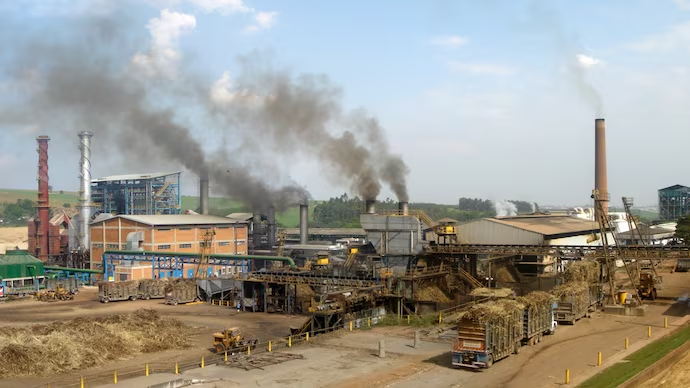
India’s nationwide rollout of E20 petrol has marked a major step in the country’s clean energy ambitions. The government has fast-tracked its target of blending 20% ethanol with petrol, aiming to reduce crude oil imports, cut carbon emissions and strengthen energy security. However, the rapid implementation has also triggered concerns among vehicle owners, with many questioning whether existing cars and motorcycles are fully prepared for the transition. Brazil’s decades-long ethanol journey provides a useful roadmap for understanding how such a large-scale fuel transformation can succeed.
India’s E20 Mission Moves Ahead Faster Than Expected
India achieved its E20 blending target years ahead of its original schedule, making it one of the fastest transitions toward higher ethanol use among major economies. The initiative is part of a broader effort to reduce dependence on imported fossil fuels while supporting domestic sugarcane production and expanding the country’s renewable energy portfolio.
Despite these goals, many motorists remain concerned about fuel efficiency, engine performance and the long-term impact of higher ethanol blends on vehicles that were originally designed for E10 or lower blends. Several industry experts have also pointed out that a significant portion of vehicles currently on Indian roads were manufactured before E20-compatible engines became widely available.
Why Ethanol Blending Matters
Ethanol is a renewable fuel produced primarily from agricultural crops such as sugarcane. Blending ethanol with petrol offers multiple advantages, including:
- Lower greenhouse gas emissions
- Reduced dependence on imported crude oil
- Additional income opportunities for farmers
- Better utilisation of agricultural resources
- Improved national energy security
These benefits have encouraged governments worldwide to increase ethanol use, but the pace of implementation has differed significantly across countries.
Brazil Built Its Ethanol Ecosystem Over Decades
Brazil is widely regarded as the global benchmark for ethanol-powered transportation. Unlike India’s rapid rollout, Brazil gradually expanded ethanol use over several decades, allowing vehicle manufacturers, fuel suppliers and consumers enough time to adapt.
The country’s ethanol programme gained momentum after the global oil crisis of the 1970s, when reducing reliance on imported petroleum became a national priority. Government-backed incentives encouraged sugarcane ethanol production while automobile manufacturers began developing engines capable of operating on higher ethanol blends.
Rather than forcing an overnight transition, Brazil steadily increased ethanol blending percentages while investing heavily in production facilities, fuel distribution networks and consumer awareness.
This long-term strategy helped create confidence among motorists and manufacturers alike.
Automobile Industry Played a Key Role
Brazil’s success was not driven by fuel policy alone. The country’s automobile industry evolved alongside its ethanol programme.
Leading manufacturers redesigned engines, upgraded fuel systems and introduced vehicles capable of running on pure ethanol. These engineering improvements included corrosion-resistant components, modified fuel injection systems and enhanced ignition technology that allowed engines to perform efficiently with higher ethanol concentrations.
One of the biggest milestones came with the launch of the world’s first commercially successful flex-fuel vehicles, enabling drivers to use petrol, ethanol or any blend between the two without worrying about engine compatibility.
This innovation significantly boosted consumer confidence and accelerated ethanol adoption across the country.
Consumer Choice Helped Build Public Trust
One major difference between Brazil’s model and India’s current approach is the availability of fuel choices.
Brazilian motorists can choose between ethanol-blended petrol and pure ethanol depending on fuel prices, driving conditions and personal preference. Modern flex-fuel vehicles automatically adjust engine settings based on the fuel mixture, eliminating concerns over compatibility.
This flexibility has allowed consumers to balance fuel economy with operating costs while supporting the country’s renewable fuel programme.
Challenges India Still Needs to Address
While India’s ethanol programme has made rapid progress, several challenges remain before higher ethanol blends can become universally accepted.
A major concern is vehicle compatibility. Although manufacturers have introduced E20-compatible models in recent years, millions of older cars and two-wheelers were originally designed for lower ethanol blends. Owners of these vehicles remain uncertain about possible impacts on engine performance, maintenance costs and fuel efficiency.
The fuel retail network is also adapting to the transition. Unlike Brazil, where consumers can choose between different fuel options, Indian motorists currently have limited flexibility once E20 becomes the standard fuel available at petrol stations. This has fuelled debate over whether a phased rollout would have provided consumers and manufacturers with more time to adjust.
What India Can Learn From Brazil
Brazil’s experience demonstrates that a successful fuel transition depends on more than increasing ethanol production. It requires coordinated planning across government, the automobile industry, fuel retailers and consumers.
Several lessons stand out:
Gradual Implementation
Brazil increased ethanol blending in stages over several decades. This gave manufacturers sufficient time to redesign engines while allowing consumers to replace older vehicles naturally.
Flex-Fuel Technology
The widespread adoption of flex-fuel vehicles transformed Brazil’s market. Drivers could use petrol, ethanol or any combination of the two without worrying about compatibility, making fuel choice a matter of price rather than technical limitations.
Strong Infrastructure
Fuel stations across Brazil were upgraded to supply multiple fuel options, ensuring motorists always had access to suitable fuel regardless of their vehicle type.
Consumer Incentives
Government incentives, including subsidies and tax benefits, encouraged both manufacturers and consumers to embrace ethanol-powered mobility. These measures helped build confidence while reducing the financial burden of the transition.
Balancing Green Goals With Consumer Confidence
India’s ethanol blending programme supports several long-term national priorities, including lower carbon emissions, reduced oil imports and stronger energy security. It also creates additional demand for agricultural produce, benefiting the country’s sugarcane sector.
However, experts believe long-term success will depend on ensuring that policy implementation keeps pace with technological readiness. Expanding the availability of flex-fuel vehicles, strengthening fuel infrastructure and improving public awareness could help address concerns while encouraging wider acceptance of cleaner fuels.
A balanced approach that combines environmental objectives with consumer convenience is likely to deliver stronger and more sustainable results over the coming years.
What Comes Next for India’s Ethanol Programme?
The government has already signalled its intention to continue expanding ethanol use beyond E20 as part of India’s broader clean energy roadmap. Automobile manufacturers are simultaneously increasing production of vehicles designed for higher ethanol blends and flex-fuel technology.
As this transition continues, collaboration between policymakers, automakers, fuel companies and consumers will play a decisive role in determining how smoothly the next phase unfolds.
Brazil’s experience shows that building a successful ethanol economy requires patience, investment and flexibility. India’s ambitious programme has the potential to achieve similar success, provided future policy decisions continue to prioritise infrastructure, technological readiness and consumer confidence alongside environmental goals.
Conclusion
India’s accelerated E20 rollout marks an important milestone in the country’s journey towards cleaner and more sustainable transportation. While the policy promises significant environmental and economic benefits, its long-term success will depend on how effectively the country addresses concerns surrounding vehicle compatibility, infrastructure and consumer choice.
Brazil’s decades-long transition illustrates that lasting success comes through gradual adaptation rather than rapid implementation. As India continues expanding its ethanol programme, adopting some of these proven strategies could help create a smoother transition for motorists while strengthening the nation’s renewable energy ambitions.
FAQs
1. What is E20 petrol?
E20 petrol is fuel that contains 20% ethanol blended with 80% petrol, aimed at reducing fossil fuel consumption and lowering emissions.
2. Why is India promoting ethanol-blended petrol?
India is promoting ethanol blending to reduce crude oil imports, improve energy security, support farmers and cut greenhouse gas emissions.
3. Why is Brazil considered a global leader in ethanol fuel?
Brazil has spent decades developing ethanol-compatible vehicles, fuel infrastructure and flex-fuel technology, making ethanol a mainstream transport fuel.
4. What are flex-fuel vehicles?
Flex-fuel vehicles can operate on petrol, ethanol or any combination of both without requiring engine modifications.
5. Are all vehicles in India compatible with E20 petrol?
No. Many older vehicles were designed for E10 or lower ethanol blends, while newer models are increasingly being manufactured to support E20 fuel.
6. What are the main concerns about E20 petrol?
Some vehicle owners worry about reduced fuel efficiency, engine wear, maintenance costs and compatibility with older vehicles.
7. How did Brazil make ethanol adoption successful?
Brazil introduced ethanol gradually, invested in infrastructure, supported automakers and gave consumers the flexibility to choose between different fuel options.
8. What benefits does ethanol provide?
Ethanol helps lower emissions, reduces dependence on imported oil, supports agriculture and promotes cleaner transportation.
9. Can India adopt Brazil’s flex-fuel model?
Industry experts believe expanding flex-fuel vehicles and offering multiple fuel choices could improve consumer confidence and support India’s long-term ethanol strategy.
10. What is the future of ethanol blending in India?
India is expected to continue increasing ethanol use while improving vehicle technology, fuel infrastructure and renewable energy integration to achieve its long-term sustainability goals.
Leave a Reply