

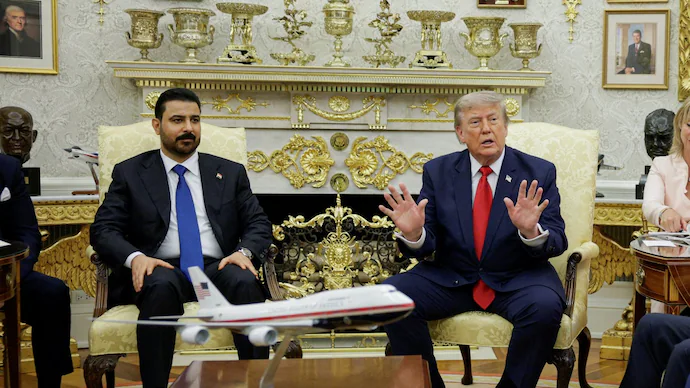
The United States will complete the withdrawal of its remaining troops from Iraq by September 30, 2026, officially ending a military presence that began with the 2003 invasion of the country. The announcement signals a major shift in US-Iraq relations as both governments say Iraqi security forces are now capable of handling the nation’s security challenges independently.
The decision also closes one of the longest chapters in America’s military involvement in the Middle East, transitioning the relationship from military cooperation to economic and strategic partnerships.
US Confirms End of Military Mission in Iraq
During a meeting at the White House with Iraqi Prime Minister Ali al-Zaidi, US President Donald Trump said Washington no longer sees the need to maintain troops in Iraq.
Trump stressed that while military operations are ending, the United States will continue supporting Iraq through business investments and economic cooperation, particularly in the energy sector. He added that American companies will continue operating in Iraq even after the troop withdrawal is completed.
The Iraqi Prime Minister confirmed that all remaining US forces are scheduled to leave by the end of September while bilateral cooperation between the two countries will continue through diplomatic and commercial channels.
A Military Presence That Lasted More Than Two Decades
The US military first entered Iraq in March 2003 during the invasion that led to the removal of former Iraqi President Saddam Hussein. The operation was launched over allegations that Iraq possessed weapons of mass destruction, claims that were never ultimately proven.
At the height of the conflict in 2007, more than 170,000 American troops were stationed across Iraq as the country battled insurgency and political instability.
Although most combat forces withdrew in 2011, a smaller American military contingent remained to provide security assistance, protect diplomatic missions and support Iraqi forces.
Return to Fight the Islamic State
US troops returned to Iraq in 2014 after the rapid expansion of the Islamic State (ISIS), which captured large territories across Iraq and neighbouring Syria.
American forces worked alongside Iraqi security personnel by providing intelligence, military training and logistical support as part of the international coalition against ISIS.
Over the following years, Iraqi forces gradually regained control of territories previously held by the militant group. Even after ISIS lost its territorial strongholds, a limited number of US troops continued supporting counterterrorism operations and military training.
Iraq Says Security Forces Are Ready
The latest withdrawal reflects growing confidence in Iraq’s own defence capabilities.
Officials said Iraqi security forces have taken on increasing responsibility over recent years, allowing coalition troops to reduce their operational role.
The transition has included the handover of military bases, consolidation of coalition operations and expanded leadership by Iraqi defence agencies.
Baghdad maintains that its military is now equipped to respond independently to security threats while continuing intelligence-sharing and defence cooperation with international partners when necessary.
Shift Towards Economic and Strategic Partnership
Although the military mission is ending, both governments emphasised that cooperation between Washington and Baghdad will continue.
US companies remain active across Iraq’s energy and infrastructure sectors, and officials from both countries have highlighted opportunities for stronger economic engagement, investment and trade.
Analysts believe the evolving relationship reflects a broader shift in American foreign policy that places greater emphasis on diplomatic and commercial partnerships rather than long-term military deployments.
What the Withdrawal Means for the Middle East
The departure of US troops marks a significant geopolitical milestone for the region.
For Iraq, it represents another step toward exercising full control over national security after years of relying on international military support.
For the United States, the withdrawal aligns with efforts to reduce its direct military footprint in the Middle East while maintaining strategic influence through alliances, diplomacy and economic cooperation.
Security experts, however, note that regional stability will continue to depend on Iraq’s ability to counter extremist threats and manage evolving security challenges independently.
What Happens Next?
The withdrawal is expected to be completed by September 30, formally ending the US-led military mission that has evolved through multiple phases over the past 23 years.
While military operations will conclude, cooperation between the two nations is expected to continue through defence consultations, intelligence sharing, trade partnerships and investments.
The transition marks the beginning of a new chapter in US-Iraq relations, shifting the focus from battlefield operations to long-term economic development and regional stability.
Conclusion
The planned withdrawal of US troops from Iraq closes one of the longest military engagements in modern American history. As Iraq assumes greater responsibility for its own security, both nations are looking to strengthen cooperation through investment, diplomacy and strategic partnerships instead of a permanent military presence.
FAQs
1. When will US troops leave Iraq?
The remaining US troops are scheduled to withdraw from Iraq by September 30, 2026.
2. Why is the US withdrawing from Iraq?
US officials say Iraq’s security forces are now capable of managing the country’s security without a permanent American military presence.
3. How long were US troops stationed in Iraq?
The US military maintained a presence in Iraq for approximately 23 years, beginning with the 2003 invasion.
4. Why did the US invade Iraq in 2003?
The invasion was launched over allegations that Iraq possessed weapons of mass destruction, claims that were never substantiated.
5. Why did US troops return to Iraq in 2014?
American forces returned at Iraq’s request to help combat the rise of the Islamic State (ISIS).
6. Will the US have any presence in Iraq after the withdrawal?
Yes. Although military forces will leave, American businesses and diplomatic engagement are expected to continue.
7. How many US troops were once deployed in Iraq?
At the height of the Iraq War in 2007, more than 170,000 US troops were stationed in the country.
8. What role did US troops perform in recent years?
Their primary responsibilities included military training, intelligence support and joint counterterrorism operations with Iraqi forces.
9. Is Iraq now responsible for its own security?
Yes. Iraqi authorities say national security forces are prepared to independently manage the country’s security operations.
10. What does the withdrawal mean for US-Iraq relations?
The relationship is expected to shift toward economic cooperation, trade, diplomacy and long-term strategic partnerships rather than military operations.
Leave a Reply