

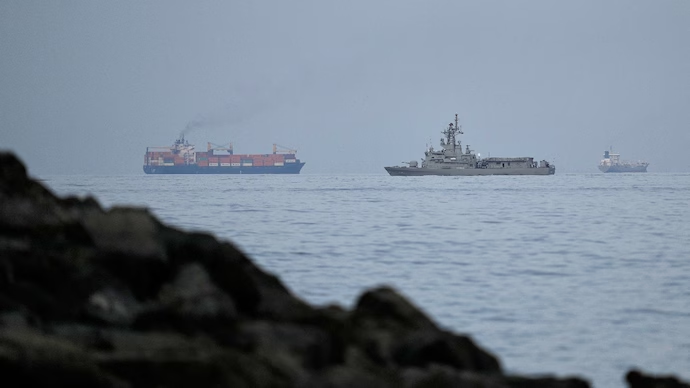
Shipping companies are increasingly steering clear of a US-guided transit route through the Strait of Hormuz as security concerns escalate following a series of attacks on commercial vessels. The growing uncertainty has raised fresh worries over the safety of seafarers, global energy supplies, and one of the world’s most important shipping corridors.
The Strait of Hormuz is a critical gateway for international trade, carrying a significant portion of the world’s crude oil and liquefied natural gas (LNG) exports. Any disruption in the region can have far-reaching consequences for global markets and fuel prices.
Shipping Firms Reassess Routes
Several shipping operators have begun delaying or suspending voyages through the Strait of Hormuz after recent attacks increased the risk to crews and vessels.
Industry representatives say the latest incidents have forced companies to prioritise crew safety, with many reconsidering whether it is safe to continue using the waterway under current conditions.
The growing hesitation comes as commercial shipping faces mounting uncertainty despite ongoing security efforts in the region.
Attacks Raise Security Concerns
The Strait of Hormuz has become the centre of heightened tensions between Iran and the United States.
Recent attacks on commercial vessels have intensified fears among shipping companies. Multiple ships, including crude oil tankers, an LNG carrier and a container vessel, have reportedly been targeted in waters near Oman over the past several days.
The incidents have added pressure on maritime operators already dealing with an increasingly volatile security environment.
US-Guided Transit Operation Faces Challenges
To maintain the flow of commercial shipping, the United States launched a coordinated escort operation involving helicopters, drones and other surveillance assets to guide vessels through the strait.
The initiative initially helped keep oil exports moving while limiting disruption to global energy markets.
However, repeated attacks have weakened industry confidence in the effectiveness of the operation, with some shipping companies now choosing to avoid the route altogether.
Executives within the maritime sector say protecting crew members has become the top priority as security risks continue to increase.
Why the Strait of Hormuz Matters
The Strait of Hormuz is among the world’s most strategically important maritime passages.
A large share of global crude oil and LNG exports passes through the narrow waterway every day, linking Gulf producers with markets across Asia, Europe and other regions.
Any prolonged disruption could affect global energy supplies, increase shipping costs and place upward pressure on international oil prices.
Because of its strategic importance, the region remains closely monitored by governments, naval forces and the global shipping industry.
US Maintains Waterway Is Open
Despite growing security concerns, US officials continue to insist that the Strait of Hormuz remains open for commercial shipping.
American authorities have stated that hundreds of vessels have safely navigated the wider region in recent days with military coordination supporting many of those journeys.
At the same time, maritime security advisers continue urging caution, recommending that shipping companies delay non-essential voyages until conditions improve.
What Happens Next?
Shipping companies are expected to closely monitor developments before restoring normal operations through the Strait of Hormuz.
Future decisions will likely depend on regional security conditions, the effectiveness of international naval protection and whether further attacks occur.
With global energy markets heavily dependent on uninterrupted Gulf exports, the situation in the Strait of Hormuz will remain a key focus for governments, shipping firms and energy traders worldwide.
FAQs
1. Why are shipping companies avoiding the Strait of Hormuz?
Many companies are avoiding the route due to increasing security risks following attacks on commercial vessels.
2. Why is the Strait of Hormuz important?
It is one of the world’s busiest shipping lanes and carries a major share of global crude oil and LNG exports.
3. What is the US-guided transit route?
It is a military-supported escort operation designed to help commercial ships safely navigate the Strait of Hormuz.
4. What types of vessels have been attacked?
Recent incidents have reportedly involved crude oil tankers, an LNG carrier and a container ship.
5. Why are shipping companies concerned?
Operators are prioritising crew safety as attacks and regional tensions continue to increase.
6. Has the United States closed the Strait of Hormuz?
No. US officials maintain that the waterway remains open to commercial shipping.
7. How could the crisis affect global energy markets?
Any disruption in the Strait of Hormuz could impact oil and LNG supplies, potentially increasing energy prices worldwide.
8. Are maritime security firms issuing warnings?
Yes. Several maritime security companies have advised operators to delay voyages until security conditions improve.
9. What role does the Strait of Hormuz play in global trade?
It serves as a vital route connecting Gulf energy producers with international markets.
10. What will determine when shipping returns to normal?
Future operations will depend on regional security, the effectiveness of naval protection and whether further attacks can be prevented.
Leave a Reply