

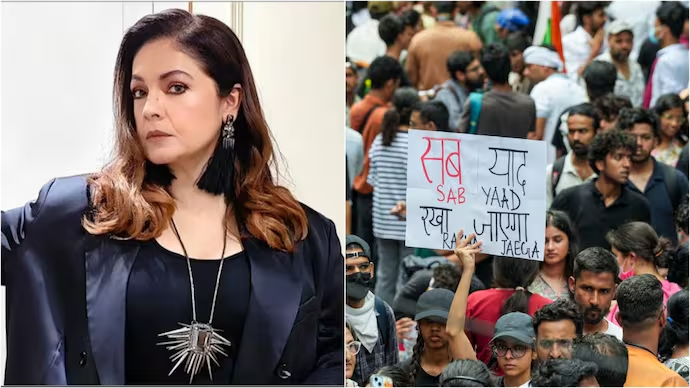
Actor and filmmaker Pooja Bhatt has spoken out against Delhi University’s advisory asking students to stay away from demonstrations in the national capital, saying young people should be encouraged to express their views rather than have their voices suppressed.
Her remarks come amid ongoing protests linked to the NEET paper leak controversy and broader concerns over transparency and accountability in India’s education system.
Pooja Bhatt Responds to DU Advisory
Reacting to the university’s advisory on social media, Pooja Bhatt said that protecting students also means safeguarding their ability to express their concerns.
She argued that suppressing student voices could be more harmful than allowing peaceful participation in public discussions and stressed the importance of supporting democratic expression.
Her comments have sparked fresh debate online, with many users sharing differing opinions on the balance between student safety and the right to protest.
What Did Delhi University’s Advisory Say?
Delhi University issued an advisory urging students and faculty members to avoid gatherings and demonstrations at Jantar Mantar.
The university cited concerns including:
- Student safety
- Compliance with legal guidelines
- Possible impact on academic progress
- Professional consequences
- Circulation of misleading or false information
The advisory encouraged students to prioritize their safety and remain cautious about unverified content circulating online.
Protests Continue Over Education Issues
The demonstrations in the national capital are part of wider protests demanding greater accountability and reforms in the education sector following allegations related to the NEET examination.
Student groups have continued to raise concerns regarding examination integrity, transparency, and policy reforms, while similar demonstrations have also been reported in other cities.
The issue has drawn attention from public figures, educators, and political leaders, contributing to an ongoing national discussion on education governance.
Government Announces Measures on Examination Reforms
Amid the continuing debate, the government has announced plans to introduce stronger legal measures to address examination paper leaks.
Proposed reforms include:
- Fast-track courts for paper leak cases
- Tougher punishment for offenders
- Strengthening examination security
- Improving transparency in public examinations
The government has also stated that protecting students’ academic future remains a priority.
Public Debate Continues
The Delhi University advisory and Pooja Bhatt’s response have further intensified discussions surrounding student rights, campus safety, freedom of expression, and examination reforms.
As conversations continue, education stakeholders are calling for stronger systems that ensure both academic integrity and a safe environment for students.
Key Highlights
- Pooja Bhatt criticised Delhi University’s advisory on protests.
- She said students should be supported in expressing their views.
- DU urged students to avoid demonstrations due to safety and legal concerns.
- The protests are linked to concerns over the NEET examination controversy.
- The government has proposed stricter anti-paper leak measures.
- Debate continues over student rights, safety, and education reforms.
FAQs
1. Why did Pooja Bhatt criticise Delhi University’s advisory?
She said students should be supported in exercising their right to express their views rather than having their voices suppressed.
2. What did Delhi University advise students?
The university urged students and faculty to avoid demonstrations, citing safety concerns, legal guidelines, and possible academic consequences.
3. Why are students protesting?
The demonstrations are linked to concerns over alleged irregularities in the NEET examination and broader demands for education reforms and accountability.
4. Where are the protests taking place?
One of the major protest locations is Jantar Mantar in New Delhi, with similar demonstrations reported in other cities.
5. What concerns did Delhi University highlight?
The advisory referred to student safety, compliance with the law, academic progress, and the spread of misleading information.
6. What reforms has the government proposed?
The government has proposed fast-track courts, stricter punishment for paper leak cases, and stronger examination security measures.
7. Why has the issue gained national attention?
The controversy has affected a large number of students and sparked widespread discussions on examination integrity and education policy.
8. What is the focus of the ongoing debate?
The discussion centers on examination reforms, accountability, student welfare, campus safety, and freedom of expression.
9. Has the government responded to the controversy?
Yes. The government has announced proposed legal reforms and reiterated its commitment to protecting students’ academic interests.
10. Why is the Delhi University advisory significant?
The advisory has become a focal point in the broader debate over balancing student safety with the right to participate in public demonstrations.
Leave a Reply