

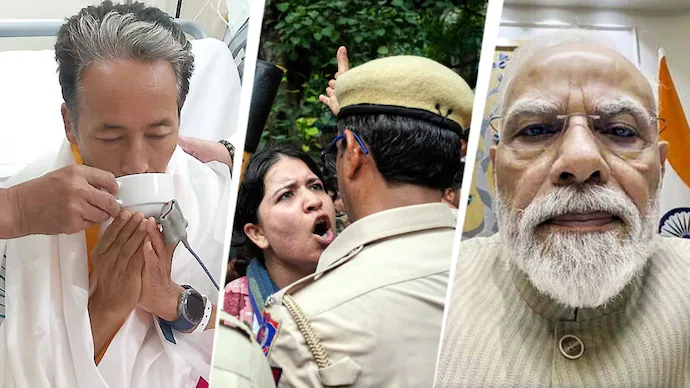
As protests led by the Cockroach Janta Party (CJP) gathered momentum across the country, the Central Government launched a series of initiatives within a span of 24 hours aimed at addressing student concerns and restoring normalcy.
The developments came after demonstrations over alleged examination irregularities expanded into a broader movement demanding reforms in the education system, placing increasing political and administrative pressure on the government.
Student Protest Expanded Beyond Paper Leak Issue
What initially began as protests over alleged examination paper leaks evolved into a wider campaign calling for accountability and systemic reforms in India’s examination process.
The agitation intensified after clashes during the July 20 march towards Parliament, with demonstrations spreading to several cities and attracting students, job aspirants and civil society groups.
As the protests grew, authorities faced increasing challenges in maintaining normal public life, particularly in central Delhi, where security restrictions affected commuters and government offices.
Prime Minister Announces Fast-Track Courts
In an early morning message, Prime Minister Narendra Modi announced that the government would establish fast-track courts to ensure speedy prosecution in cases involving examination paper leaks.
The Prime Minister emphasised that protecting the future of students remained a top priority and said the government was committed to ensuring strict action against those responsible for compromising public examinations.
Later in the day, the Delhi High Court designated a special fast-track court to exclusively hear paper leak-related cases.
Government Holds High-Level Meetings
As protests continued to grow, senior members of the Union Government held a series of meetings to formulate a response.
A high-level meeting involving:
- Union Home Minister Amit Shah
- Union Health Minister JP Nadda
- Minister of State in the Prime Minister’s Office Dr Jitendra Singh
reportedly focused on ways to engage with protest leaders while addressing concerns over law and order.
Following the meeting, the government decided to initiate dialogue with representatives of the Cockroach Janta Party and consider demands related to educational reforms.
Outreach to Student Protesters
The government also launched a direct outreach initiative.
In a video message, Dr Jitendra Singh invited CJP representatives for dialogue, stating that the government had extended multiple proposals for discussions within the previous 24 hours.
Negotiations initially encountered differences over the venue for talks.
While the government proposed meetings at official locations, the CJP insisted on discussions at a neutral venue.
The two sides eventually agreed to meet at the Constitution Club of India in New Delhi.
Administrative Changes in Education Ministry
As part of its response, the government also announced administrative changes within the Ministry of Education.
Education Secretary Vineet Joshi was transferred during the period of heightened public attention over examination-related issues.
The move came amid continuing scrutiny of the handling of alleged irregularities in competitive examinations.
Sonam Wangchuk Ends Hunger Strike
A significant development came when activist Sonam Wangchuk ended his prolonged 26-day hunger strike after receiving assurances from senior government representatives.
Union Ministers JP Nadda and Jitendra Singh met Wangchuk at a hospital in Gurugram and assured him that:
- Measures would be taken to strengthen safeguards against paper leaks.
- Peaceful student protesters would not face punitive action.
- Educational accountability would be addressed through institutional mechanisms.
Following these assurances, Wangchuk announced the end of his fast.
Prime Minister Announces New Legislation
Later the same day, Prime Minister Modi released another public message outlining additional measures.
He announced that the government would introduce legislation in Parliament to strengthen legal provisions against examination malpractice.
According to the proposal, amendments to the Public Examinations (Prevention of Unfair Means) Act would introduce:
- Jail terms of up to 10 years.
- Financial penalties of up to ₹1 crore for those involved in organised examination fraud and paper leaks.
The proposed legislation is expected to be introduced during the upcoming Parliamentary session.
Government Balances Outreach and Enforcement
Alongside policy announcements, authorities continued extensive security arrangements in the national capital as protests remained active.
The government’s response combined legislative proposals, administrative action, direct engagement with protest leaders and public messaging in an effort to address growing public concern while maintaining law and order.
Whether these initiatives succeed in easing tensions and resolving the ongoing agitation will depend on the outcome of discussions with protest representatives and the implementation of the announced reforms.
Key Highlights
- The Central Government launched multiple initiatives within 24 hours to address growing student protests.
- Prime Minister Narendra Modi announced fast-track courts for paper leak cases.
- A special fast-track court was designated to hear examination-related offences.
- Senior ministers held high-level meetings to formulate the government’s response.
- Talks with Cockroach Janta Party representatives were scheduled at the Constitution Club.
- Sonam Wangchuk ended his 26-day hunger strike after receiving government assurances.
- The government announced plans to introduce stronger anti-paper leak legislation in Parliament.
- Proposed amendments include prison terms of up to 10 years and fines of up to ₹1 crore.
Frequently Asked Questions (FAQs)
Why did the government respond within 24 hours?
The government initiated several measures as nationwide student protests expanded and demands for accountability over alleged examination irregularities intensified.
What did Prime Minister Narendra Modi announce?
The Prime Minister announced the establishment of fast-track courts for paper leak cases and later proposed stronger legislation against examination malpractice.
What was discussed with the CJP?
Government representatives agreed to hold talks with the Cockroach Janta Party at the Constitution Club after both sides reached consensus on a neutral venue.
Why did Sonam Wangchuk end his hunger strike?
Wangchuk ended his 26-day fast after receiving assurances from government representatives regarding educational reforms, examination accountability and protection for peaceful protesters.
What changes are proposed in the anti-paper leak law?
The proposed amendments include stricter punishment, including imprisonment of up to 10 years and fines of up to ₹1 crore for organised examination fraud.
Has the government made administrative changes?
Yes. The Education Ministry witnessed administrative changes, including the transfer of Education Secretary Vineet Joshi during the ongoing developments.
Leave a Reply