

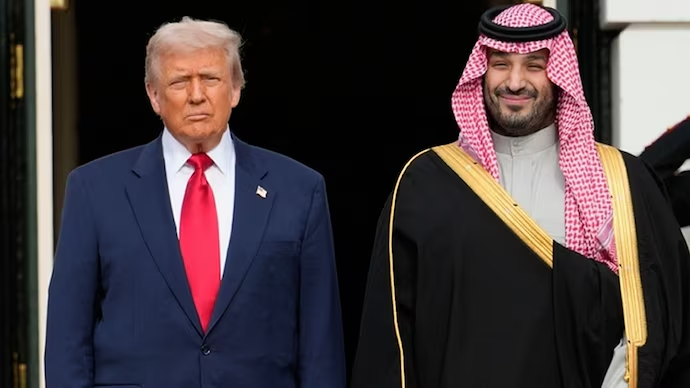
A newly approved US-Saudi nuclear deal is reshaping geopolitical discussions across the Middle East. While the agreement is officially aimed at expanding Saudi Arabia’s civilian nuclear energy program, experts believe it could have long-term implications for regional security, particularly for Israel and Pakistan.
The agreement reportedly allows Saudi Arabia to develop parts of its nuclear fuel cycle domestically, raising fresh questions about nuclear safeguards, regional deterrence, and future strategic partnerships.
What Is the US-Saudi Nuclear Deal?
The agreement establishes long-term civil nuclear cooperation between the United States and Saudi Arabia, allowing American companies to participate in developing the kingdom’s nuclear energy infrastructure.
The pact is expected to remain in force for several decades and still requires approval from the US Congress before becoming fully operational.
Supporters argue the agreement will strengthen energy cooperation and diversify Saudi Arabia’s energy sources beyond oil.
Why Is Israel Concerned?
Israel has long opposed the spread of uranium enrichment capabilities across the Middle East.
Although the agreement focuses on civilian nuclear energy, experts point out that uranium enrichment technology can potentially be used for both civilian fuel production and, if pursued further, weapons-grade material.
Israeli security officials have repeatedly argued that any future nuclear capability in neighboring countries could alter the regional strategic balance.
The concern is heightened because Saudi Arabia has previously stated that it would consider matching any future Iranian nuclear weapons capability.
Reports Suggest Fewer Nuclear Safeguards
According to reports, the agreement may not include some of the stricter non-proliferation commitments that have featured in previous US nuclear cooperation agreements.
Among the issues attracting attention are:
- Domestic uranium enrichment capabilities
- Absence of certain traditional enrichment restrictions
- Different inspection arrangements compared to earlier agreements
These aspects have fueled international debate over future monitoring mechanisms.
Why Pakistan Is Being Closely Watched
Pakistan and Saudi Arabia have maintained close strategic and defense ties for decades.
Analysts note that Pakistan possesses advanced nuclear expertise and technical experience developed over several decades.
Although there is no official confirmation of any future nuclear cooperation beyond peaceful defense relations, some security experts believe Saudi Arabia could potentially seek technical assistance if it ever decided to expand beyond a civilian nuclear program.
At present, there is no evidence that such cooperation is taking place.
Long-Standing Strategic Relationship
Saudi Arabia and Pakistan share extensive military and security cooperation.
Their relationship includes:
- Defense collaboration
- Military training
- Intelligence coordination
- Economic assistance
- Strategic partnerships
These long-standing ties continue to fuel speculation whenever Saudi Arabia’s nuclear ambitions become a topic of international discussion.
Congressional Approval Still Pending
Before implementation, the agreement must pass through the US Congressional review process.
Lawmakers are expected to examine:
- Nuclear safety provisions
- Inspection mechanisms
- Non-proliferation commitments
- Regional security implications
- Long-term strategic risks
Any significant amendments could alter the final structure of the agreement.
Could Saudi Arabia Develop Nuclear Weapons?
Experts emphasize that possessing uranium enrichment capability does not automatically mean a country can build nuclear weapons.
Developing a nuclear arsenal requires multiple additional elements, including:
- Weapons-grade fissile material
- Warhead design
- Delivery systems
- Extensive testing
- Advanced technical infrastructure
Saudi Arabia maintains that its nuclear ambitions are focused on peaceful civilian energy production.
Regional Impact
The agreement is expected to influence the strategic calculations of several countries across the Middle East.
Possible long-term implications include:
- Increased regional nuclear competition
- Greater diplomatic engagement
- Stronger international monitoring
- Renewed non-proliferation debates
- Heightened security discussions involving Iran, Israel, Saudi Arabia, and major global powers
Key Highlights
- The US and Saudi Arabia have agreed on a new civil nuclear cooperation framework.
- The agreement reportedly allows Saudi Arabia greater domestic nuclear capabilities.
- Israel has expressed concern over future regional security implications.
- Pakistan’s long-standing strategic relationship with Saudi Arabia has renewed geopolitical discussions.
- The agreement still requires approval from the US Congress.
- Experts say civilian nuclear technology alone does not create nuclear weapons capability.
FAQs
1. What is the US-Saudi nuclear deal?
It is a civil nuclear cooperation agreement that supports Saudi Arabia’s civilian nuclear energy program with US participation.
2. Why is Israel concerned?
Israel fears expanded uranium enrichment capabilities could eventually alter the regional security balance.
3. Does the agreement allow Saudi Arabia to build nuclear weapons?
No. The agreement is for civilian nuclear cooperation, although some experts say enrichment capability could have long-term strategic implications.
4. Why is Pakistan mentioned in discussions?
Pakistan has maintained close strategic ties with Saudi Arabia and possesses advanced nuclear expertise, leading to speculation among analysts.
5. Has Saudi Arabia announced a nuclear weapons program?
No. Saudi Arabia continues to state that its nuclear program is intended for peaceful purposes.
6. Does uranium enrichment automatically lead to nuclear weapons?
No. Building nuclear weapons requires several additional technologies and capabilities beyond uranium enrichment.
7. Is the agreement already in effect?
Not yet. It must complete the US Congressional approval process.
8. What are the main concerns surrounding the agreement?
Concerns focus on uranium enrichment rights, nuclear safeguards, regional security, and future non-proliferation measures.
9. Could the agreement impact Middle East politics?
Yes. Analysts believe it could influence strategic calculations across the region for years to come.
10. Which countries are most affected?
Saudi Arabia, the United States, Israel, Iran, and Pakistan are among the countries most closely watching the agreement.
Leave a Reply