

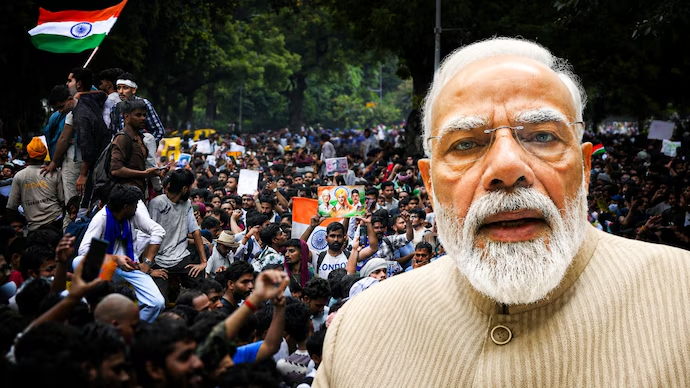
New Delhi, July 24: Prime Minister Narendra Modi released a late-night video message on Thursday addressing students over the NEET paper leak controversy, promising stricter legal measures, fast-track courts and a proposed new law aimed at tackling examination malpractices.
In the video, posted at 11.52 pm, the Prime Minister said the paper leak issue had caused “immense pain” to lakhs of students and their families and assured that the government was taking steps to strengthen accountability.
“I know that the paper leak is not a trivial issue. It has caused immense pain to lakhs of students and their parents,” Modi said, adding that those responsible for the alleged leaks had been arrested and jailed.
The Prime Minister said the government’s immediate priority after the controversy was to ensure that students did not lose an academic year. According to him, examinations for around 22 lakh candidates were conducted in a short period and the results were declared earlier this month.
Modi also said he had directed government departments to prepare provisions for fast-track courts to deal with examination-related offences. He added that the draft would be placed before the Union Cabinet on Friday and that the government would seek to introduce the legislation in Parliament at the earliest.
Earlier on Thursday, the Prime Minister had posted on X that “Nothing is more important than the welfare and future of our youth,” while announcing the government’s decision to establish fast-track courts for paper leak cases.
The Prime Minister’s outreach came amid nationwide protests over alleged irregularities in the NEET examination and growing demands for accountability in the examination system. Student groups, including the Cockroach Janta Party (CJP), have continued demonstrations while seeking the resignation of Union Education Minister Dharmendra Pradhan.
The Centre has also initiated talks with representatives of the protesting students. Separately, activist Sonam Wangchuk ended his 26-day hunger strike late on Thursday after receiving written assurances from the government on examination reforms and discussions in Parliament, according to statements made by Wangchuk and government representatives.
Reactions to the Prime Minister’s video were mixed. Senior journalist Smita Prakash described the selfie-style format as “innovative and effective” in a post on X, noting that it had attracted millions of views shortly after being uploaded.
At the same time, several social media users questioned the timing of the outreach and called for the Prime Minister to directly address demands related to the role of the Education Ministry and the police action during recent protests. Others urged him to hold a press conference instead of issuing a video statement.
The Prime Minister’s video was released against the backdrop of continuing protests over the NEET paper leak issue, with the government preparing additional legislative and administrative measures to address concerns over examination integrity.
FAQs
Q1. Why did PM Modi release a late-night video?
PM Modi addressed students over the NEET paper leak controversy, assuring them that the government would take stronger action against examination malpractices and introduce legal reforms.
Q2. What did PM Modi announce in the video?
He announced plans for fast-track courts to handle paper leak cases and said a new anti-paper leak Bill would be placed before the Union Cabinet and introduced in Parliament.
Q3. What is the proposed anti-paper leak Bill?
According to the Prime Minister, the proposed legislation will strengthen action against examination-related offences and is expected to include stricter penalties and faster judicial processes.
Q4. Why are students protesting?
Student groups have been protesting over alleged irregularities in the NEET examination, demanding greater accountability and reforms in the examination system.
Q5. Has the government started talks with protesters?
Yes. The Centre has initiated discussions with representatives of the protesting students while also announcing legislative and administrative measures aimed at addressing their concerns.
Leave a Reply