A US federal appeals court has refused to reinstate the Trump administration’s $100,000 fee on new H-1B visas, dealing another setback to the government’s immigration policy. The court ruled that the administration had not demonstrated a strong likelihood of overturning an earlier decision that declared the fee unlawful.
The latest ruling means the controversial fee will remain blocked while the legal challenge continues.
Appeals court backs lower court ruling
The 1st US Circuit Court of Appeals in Boston declined the administration’s request to pause a June 8 ruling that struck down the H-1B fee.
The three-judge panel concluded that the government had failed to show it was likely to succeed on appeal in proving it had the legal authority to impose the charge.
The earlier ruling found that the $100,000 fee effectively functioned as a tax that had not been authorized by Congress, making it invalid under federal law.
Legal challenge filed by Democratic states
The lawsuit was brought by a coalition of 20 Democratic state attorneys general, who argued that the administration exceeded its powers by introducing the massive fee without congressional approval.
The lower court agreed, ruling that the administration could not impose such a significant financial burden through executive action alone.
The appeals court has now allowed that decision to remain in effect while the broader appeal moves forward.
Why the H-1B fee was introduced
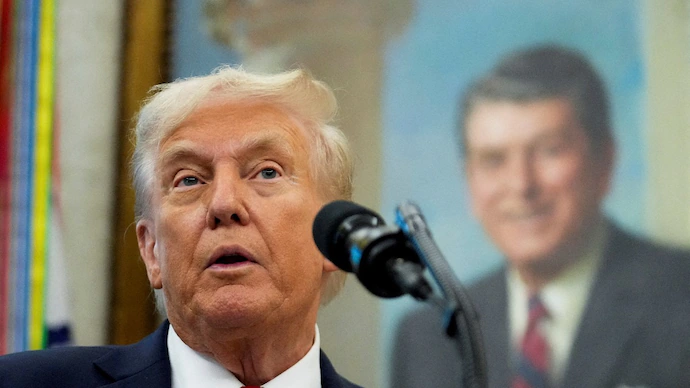
President Donald Trump announced the $100,000 fee in September as part of a broader effort to tighten immigration policies and prioritize American workers.
The administration argued that some employers had used the H-1B program to replace US employees with lower-paid foreign workers instead of addressing genuine skill shortages.
Under the previous system, employers generally paid between $2,000 and $5,000 in fees for an H-1B petition, depending on several factors. The proposed $100,000 charge represented a dramatic increase.
What the ruling means for employers
The court’s decision means employers are not required to pay the $100,000 fee while the case proceeds.
The H-1B program continues to operate under its existing fee structure, allowing companies to sponsor highly skilled foreign professionals under current regulations.
The additional fee also did not apply to foreign nationals already in the United States on student visas, who make up a significant portion of new H-1B recipients each year.
Future of the case
The legal dispute is expected to continue as the Trump administration pursues its appeal.
If the government ultimately loses the case, the proposed fee could be permanently struck down. If it succeeds, the administration may regain authority to enforce the higher charge.
For now, the appeals court ruling keeps the lower court’s order in place, providing temporary relief to employers and foreign professionals relying on the H-1B visa program.
Key Highlights
- US appeals court refused to restore Trump’s $100,000 H-1B visa fee.
- The court upheld a lower court ruling that found the fee unlawful.
- Judges said the administration had not shown it was likely to win the appeal.
- Twenty Democratic state attorneys general challenged the fee in court.
- The H-1B program continues under the existing fee structure.
- The legal battle over the proposed visa fee is still ongoing.
FAQs
Q1. What did the US appeals court decide about Trump’s H-1B visa fee?
The court refused to reinstate the proposed $100,000 fee, allowing a lower court ruling blocking the charge to remain in effect.
Q2. Why was the $100,000 H-1B fee blocked?
A federal judge ruled that the fee amounted to an unauthorized tax that Congress had never approved.
Q3. Who challenged the H-1B visa fee?
A coalition of 20 Democratic state attorneys general filed the lawsuit against the policy.
Q4. What is the current H-1B visa fee?
Employers typically pay between $2,000 and $5,000 in fees, depending on the type of application and other factors.
Q5. Does the ruling end the legal battle?
No. The case remains under appeal, and a final decision is yet to be made.
Q6. Who benefits from the H-1B visa program?
The program allows US employers to hire highly skilled foreign professionals in specialized fields such as technology, engineering, healthcare, and research.