

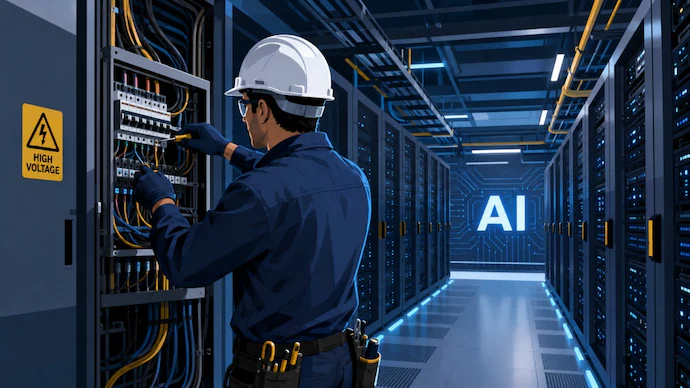
The rapid expansion of artificial intelligence is reshaping the global job market in unexpected ways. While many technology companies continue to reduce white-collar positions, demand for skilled trade professionals—particularly electricians—has surged as businesses race to build AI infrastructure.
Industry discussions suggest that experienced electricians working on AI data centre projects in the United States can earn annual compensation of up to $280,000 (around ₹2.7 crore), highlighting how the AI revolution is creating new opportunities beyond traditional technology roles.
Why AI Companies Need More Electricians
Artificial intelligence relies on powerful computing infrastructure to train and run advanced models.
Behind every AI chatbot, image generator, or large language model are massive data centres filled with thousands of high-performance processors and networking equipment.
Constructing and maintaining these facilities requires skilled professionals who can install complex electrical systems, high-capacity power distribution networks, cooling equipment, and backup infrastructure.
As more AI companies expand their computing capacity, the need for qualified electricians has increased significantly.
Demand Driven by Data Centre Expansion
The growing number of AI data centres has become one of the biggest drivers of hiring in skilled trades.
Technology companies continue investing billions of dollars to expand infrastructure capable of supporting AI workloads.
This construction boom has created strong demand for:
- Electricians
- Electrical technicians
- Welders
- Construction managers
- Mechanical specialists
- HVAC professionals
These roles are essential for ensuring data centres operate safely and efficiently around the clock.
Reports Highlight Rising Salaries
Television personality Mike Rowe, known for promoting skilled trades, recently said that electricians working at AI data centres in Texas were earning between $240,000 and $280,000 annually.
He noted that many of these workers were under 30 years old and had become highly sought-after because of their specialised skills.
According to Rowe, several had reportedly received multiple job offers within a relatively short period as employers competed for experienced professionals.
While compensation varies depending on employer, experience, overtime, certifications, and location, the comments reflect the strong demand for specialised electrical talent in AI infrastructure projects.
Tech Layoffs and Trade Jobs Tell Different Stories
The hiring trend comes at a time when many major technology companies have reduced portions of their workforce as they restructure around AI.
Although software and corporate roles have experienced layoffs in some areas, infrastructure-related positions continue to grow because AI systems require physical facilities before they can operate.
This contrast illustrates how AI is changing—not eliminating—the labour market, with demand shifting toward new categories of work.
Data Centre Construction Is Growing Worldwide
The expansion of AI infrastructure is not limited to the United States.
Several large technology companies have announced major investments in new data centres across different regions.
India is also expected to see increased investment in AI infrastructure, with major projects planned to support cloud computing and artificial intelligence services.
As these facilities expand, demand for electricians, technicians, and construction specialists is expected to rise.
Labour Shortages Continue Across the Industry
Industry studies indicate that finding qualified workers remains one of the biggest challenges for data centre construction projects.
Reports have highlighted shortages of skilled labour across many regions, making experienced electrical professionals even more valuable.
Separate research has also shown significant growth in job postings related to data centres and electrical technicians over the past few years.
The combination of rapid AI investment and limited skilled labour has contributed to higher salaries across the sector.
Skilled Trades Remain Difficult to Replace
Unlike many routine office tasks that can increasingly be automated, electrical installation and maintenance require physical work, technical expertise, and on-site problem-solving.
Professionals working in these roles must comply with strict safety regulations while managing complex electrical systems that power large computing facilities.
Because of these responsibilities, skilled trades continue to remain in high demand even as AI transforms other parts of the workforce.
What This Means for Young Professionals
The growing demand for electricians highlights a broader shift in career opportunities.
Many young professionals are beginning to view vocational training and technical trades as viable alternatives to traditional university pathways, particularly in industries experiencing labour shortages.
As AI infrastructure continues expanding worldwide, careers in electrical work, construction, and engineering are likely to remain important components of the technology ecosystem.
Conclusion
Artificial intelligence is creating opportunities well beyond software development. As companies invest heavily in new data centres, skilled electricians are becoming increasingly valuable, with some earning exceptionally high salaries on specialised projects. While individual earnings depend on qualifications, experience, and location, the broader trend highlights how the AI boom is reshaping employment by increasing demand for essential infrastructure professionals.
Frequently Asked Questions (FAQs)
1. Why are AI companies hiring more electricians?
AI companies need electricians to build and maintain the electrical infrastructure required for large-scale data centres.
2. Can electricians really earn up to ₹2.7 crore annually?
Some experienced electricians working on specialised AI data centre projects in the United States have reportedly earned compensation reaching approximately ₹2.7 crore per year, depending on experience, overtime, and employer.
3. Why are AI data centres increasing demand for skilled workers?
AI systems require powerful computing facilities with complex electrical, cooling, and networking infrastructure that must be installed and maintained by skilled professionals.
4. Which skilled jobs are benefiting from the AI boom?
Electricians, electrical technicians, welders, construction managers, HVAC specialists, and other infrastructure professionals are seeing increased demand.
5. Are tech layoffs related to this hiring trend?
While some technology companies have reduced corporate and software roles, infrastructure jobs continue growing because new AI facilities still need to be built and operated.
6. Is India also expanding AI data centres?
Yes. India is expected to witness increased investment in AI and cloud infrastructure, creating additional opportunities in data centre construction and maintenance.
7. Why are skilled trades becoming more valuable?
The rapid growth of AI infrastructure has created strong demand, while the supply of experienced workers remains limited in many regions.
8. Are electricians likely to be replaced by AI?
Electrical work requires hands-on technical expertise, safety compliance, and physical installation, making it far less susceptible to automation than many office-based tasks.
9. What skills are important for AI data centre electricians?
Knowledge of industrial electrical systems, power distribution, safety standards, troubleshooting, and large-scale infrastructure installation is highly valuable.
10. What does this trend mean for future careers?
It suggests that skilled trades and technical professions will continue to play a critical role in supporting the growth of artificial intelligence and digital infrastructure.
Leave a Reply