

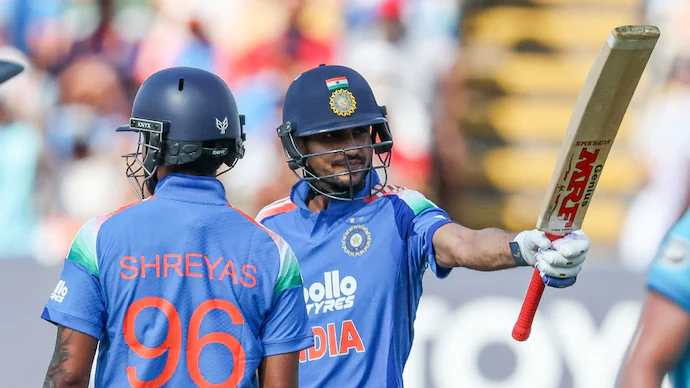
India’s convincing victory over England in the opening ODI was about more than leveling the mood after a disappointing T20I series. It offered a strong indication that the team is adopting a fresh approach to 50-over cricket under captain Shubman Gill, with the 2027 ICC Cricket World Cup firmly in focus.
Rather than relying on explosive batting from the outset, India displayed patience, disciplined bowling and calculated decision-making to secure a six-wicket win in Birmingham.
A Different Identity for India’s ODI Team
India’s performance marked a noticeable departure from the ultra-aggressive style that defined the team’s ODI cricket during the 2023 World Cup campaign.
Instead of attacking relentlessly from the first ball, the visitors chose to build pressure gradually. The bowlers maintained disciplined lines, while the batters approached the chase with composure rather than urgency.
The strategy reflected a team willing to adapt to conditions instead of forcing an aggressive template.
Moving Beyond the 2023 Formula
During the 2023 ODI World Cup, India thrived on fearless cricket.
The opening batters looked to dominate the powerplay, while the pace attack regularly hunted early wickets. That approach produced impressive victories throughout the tournament before ending in disappointment in the final.
Under Shubman Gill’s leadership and the current coaching setup, India’s ODI philosophy appears to be evolving.
The emphasis now is on batting deep, controlling the middle overs and allowing matches to develop rather than trying to decide them inside the opening 15 overs.
Bowlers Set the Foundation
India’s disciplined bowling performance laid the platform for victory.
Jasprit Bumrah created early pressure with a probing opening spell, consistently troubling England’s top order even before taking wickets.
When England threatened to accelerate during the powerplay, debutant Gurnoor Brar recovered impressively after an expensive start to dismiss key batters.
Bumrah returned to remove England captain Harry Brook, triggering a collapse that shifted momentum firmly in India’s favour.
Although Joe Root and Liam Dawson rebuilt the innings with a valuable partnership, India’s bowlers maintained control by restricting boundaries and forcing mistakes.
Axar Patel eventually broke the stand before finishing with an impressive four-wicket haul, helping dismiss England for 259.
Shubman Gill Leading From the Front
Gill once again demonstrated why he has become the centrepiece of India’s ODI batting.
The captain produced another composed innings, scoring 80 before retiring hurt with cramps after putting India in complete control of the chase.
His recent ODI consistency underlines a clear batting philosophy—occupy the crease, build partnerships and remain at the crease deep into the innings.
That approach allows India to have a well-set batter available during the closing overs, particularly in challenging overseas conditions.
Rohit Sharma’s Role Is Also Evolving
India’s tactical shift has also influenced Rohit Sharma’s batting approach.
Rather than attacking from the very first over, Rohit has shown greater willingness to assess conditions, negotiate the new ball and construct longer innings.
This measured style resembles the approach that helped him become one of the world’s most successful ODI batters during the late 2010s.
Preparing for South Africa 2027
The tactical adjustments appear closely linked to India’s preparations for the 2027 ODI World Cup, which will be held in South Africa.
Unlike subcontinental pitches, South African conditions generally offer greater bounce, pace and seam movement, making aggressive stroke play early in the innings far more difficult.
India’s performance in Birmingham mirrored the type of cricket often required in those conditions—patient batting, disciplined bowling and smart game management.
By testing combinations and adapting to similar pitches now, the team hopes to arrive better prepared for the global tournament.
Why the Tactical Change Matters
Modern ODI cricket has increasingly favoured aggressive batting, but India’s latest performance suggests there is still room for a balanced approach.
The opening ODI demonstrated that matches can be controlled through patience, pressure and disciplined execution rather than constant attacking intent.
If the strategy continues to deliver results, it could become the foundation of India’s campaign heading into the next World Cup.
Conclusion
India’s victory over England was more than just a successful start to the ODI series. It highlighted a team developing a clear long-term vision under Shubman Gill. By combining disciplined bowling, calculated batting and tactical flexibility, India appears to be building a blueprint tailored for South African conditions. Whether this measured approach ultimately delivers World Cup success will only be known in 2027, but the early signs suggest the team is moving in a well-defined direction.
FAQs
1. Why is India’s ODI strategy changing?
India appears to be adopting a more patient and calculated approach to prepare for the conditions expected during the 2027 ODI World Cup in South Africa.
2. Who is leading India’s ODI team?
Shubman Gill is leading India’s ODI side and has played a key role in shaping the team’s current approach.
3. How did India defeat England in the first ODI?
India restricted England to 259 through disciplined bowling before completing the chase comfortably with six wickets remaining.
4. Why is South Africa important in India’s planning?
The 2027 ICC Cricket World Cup will be played in South Africa, where pitches generally favour pace and bounce, requiring a different style of ODI cricket.
5. How has Shubman Gill performed recently?
Gill has been in outstanding ODI form, producing several big scores while consistently batting deep into the innings.
6. What role did Jasprit Bumrah play in the victory?
Bumrah created early pressure, removed key batters and helped trigger England’s middle-order collapse.
7. Who was India’s best bowler in the match?
Axar Patel finished with four wickets after breaking England’s crucial middle-order partnership.
8. Is Rohit Sharma changing his batting style?
Recent performances suggest Rohit is focusing more on building longer innings rather than attacking immediately.
9. Why is patience becoming important in ODI cricket again?
Overseas conditions often reward disciplined batting and calculated shot selection, especially on pitches offering movement for fast bowlers.
10. What does this win mean for India’s World Cup preparations?
The victory provides encouraging signs that India is developing a tactical approach suited to the challenges expected at the 2027 ICC Cricket World Cup.
Leave a Reply