

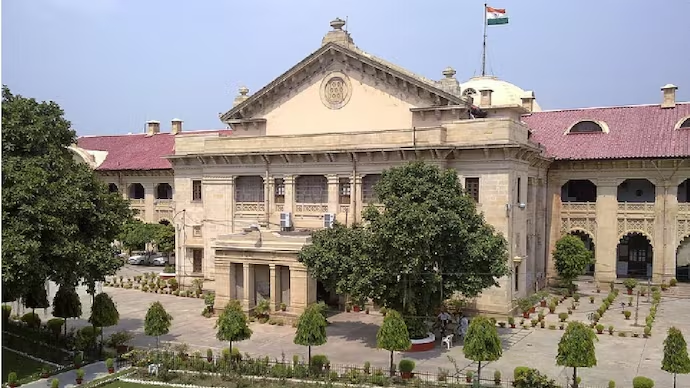
The Allahabad High Court has strongly criticised the prolonged delay in a kidnapping case that has remained pending for nearly 25 years, saying the criminal justice system cannot be reduced to “tareekh pe tareekh” through endless adjournments.
The observations came while the Lucknow Bench heard an anticipatory bail plea filed by Ajay Kumar alias Chingi and Ram Chandra in connection with a kidnapping case registered in 2001 at Payagpur police station in Uttar Pradesh’s Bahraich district.
Justice Rajeev Bharti noted that keeping a criminal case pending for more than two decades undermines the constitutional right to a speedy and fair trial guaranteed under Article 21 of the Constitution. The court also granted anticipatory bail to both accused.
During the hearing, the court was informed that the woman involved in the case had willingly accompanied Ajay Kumar, later married him, and has since been living with him as his wife. The couple now has three children. The state was reportedly unable to effectively challenge these facts before the court.
In its order, the High Court observed that there had been virtually no meaningful progress in the trial for years, reducing the proceedings to a mere formality. It stressed that justice cannot remain pending indefinitely and that repeated adjournments cannot become the defining feature of India’s criminal justice system.
Referring to the popular dialogue “tareekh pe tareekh” from the Bollywood film Damini, the court remarked that the phrase should not reflect the functioning of the judicial process.
The court directed both accused to surrender before the trial court within two weeks. It also ordered that they be released on anticipatory bail subject to the conditions imposed by the court.
At the same time, the High Court clarified that its observations were limited to deciding the bail application and should not influence the trial court while deciding the case on its merits.
FAQs
1. Why did the Allahabad High Court criticise the trial?
The court said the 25-year delay violated the constitutional right to a speedy and fair trial.
2. Which case was the court hearing?
It was hearing a 2001 kidnapping case registered in Bahraich, Uttar Pradesh.
3. Who received anticipatory bail?
Ajay Kumar alias Chingi and Ram Chandra were granted anticipatory bail.
4. What did the court say about “tareekh pe tareekh”?
The court said endless adjournments should not define India’s criminal justice system.
5. What was revealed during the hearing?
The court was told the woman had voluntarily accompanied one of the accused, later married him, and they now have three children.
6. Which constitutional provision did the court refer to?
The court cited Article 21, which guarantees the right to life and includes the right to a speedy and fair trial.
7. What directions did the High Court issue?
The accused were asked to surrender before the trial court within two weeks and were granted anticipatory bail subject to conditions.
8. Will the High Court’s observations affect the trial?
No. The court clarified that its remarks should not influence the trial court’s final decision.
Leave a Reply