

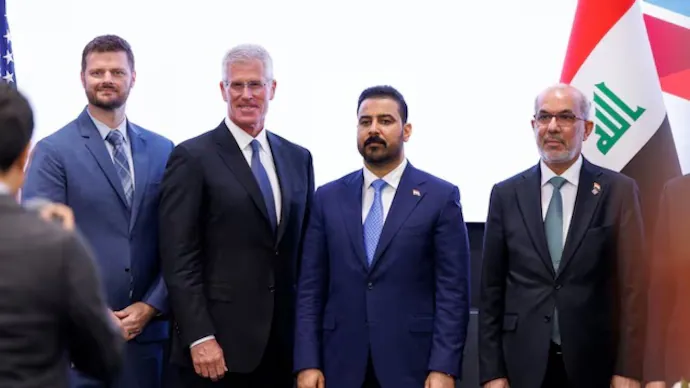
Iraq has signed more than $60 billion worth of energy agreements with several American companies as it looks to strengthen economic ties with the United States and reduce its dependence on the Strait of Hormuz for oil exports.
The agreements were announced during a US-Iraq business summit in Washington, where Iraqi officials and representatives from energy, healthcare and technology companies signed dozens of non-binding memorandums of understanding covering oil, gas and infrastructure projects.
Prime Minister Ali al-Zaidi said Iraq remains open to global investment and is encouraging international companies to participate in the country’s development plans.
Focus on Alternative Oil Export Routes
A key part of the new agreements involves building infrastructure that would reduce Iraq’s reliance on the Strait of Hormuz, one of the world’s busiest energy shipping routes.
Chevron confirmed plans to invest in a proposed pipeline that could transport Iraqi crude oil to Syria’s Mediterranean coast, creating an alternative export corridor if disruptions occur in the Gulf.
The project comes as regional tensions have affected energy shipments through the Strait of Hormuz, a vital route for global oil and gas supplies.
Major US Energy Companies Expand Presence
Chevron also signed agreements to advance discussions on potential investments in Iraq’s West Qurna 2 and Nassiriya oilfields.
Meanwhile, ConocoPhillips announced it will acquire a 42% stake in BP Energy of Kirkuk Ltd, joining BP in the redevelopment of four producing oilfields in northern Iraq.
BP highlighted Iraq’s vast energy resources and said the new partnerships would contribute to both Iraqi development and global energy security.
Iraq Eyes Long-Term Energy Growth
Energy executives believe Iraq has the potential to become one of the Middle East’s major energy trading hubs by expanding production capacity and modernising export infrastructure.
Officials said increased investment, improved technology and new pipeline projects could help Iraq strengthen its position in global energy markets while improving supply resilience.
Growing US-Iraq Economic Cooperation
The agreements were signed during Prime Minister Ali al-Zaidi’s five-day visit to the United States, which included meetings with government officials and business leaders.
The latest deals reflect expanding cooperation between Baghdad and Washington, with both countries seeking greater investment opportunities and long-term economic partnerships.
FAQs
1. What is the value of Iraq’s new energy agreements?
The agreements are valued at more than $60 billion.
2. Which US companies are involved?
Major companies include Chevron and ConocoPhillips, along with several other American firms.
3. Why is Iraq seeking alternative export routes?
Iraq wants to reduce reliance on the Strait of Hormuz, which faces periodic disruptions due to regional tensions.
4. What pipeline project is being discussed?
Chevron plans to support a pipeline that could transport Iraqi oil to Syria’s Mediterranean coast.
5. What stake is ConocoPhillips acquiring?
The company plans to acquire a 42% stake in BP Energy of Kirkuk Ltd.
6. Why is the Strait of Hormuz important?
It is one of the world’s busiest oil shipping routes, carrying a significant share of global energy exports.
7. Are the agreements legally binding?
No. The announcements involve memorandums of understanding and non-binding agreements.
8. What is Iraq aiming to achieve through these deals?
Iraq aims to attract foreign investment, expand energy production, improve export infrastructure and strengthen long-term energy security.
Leave a Reply