

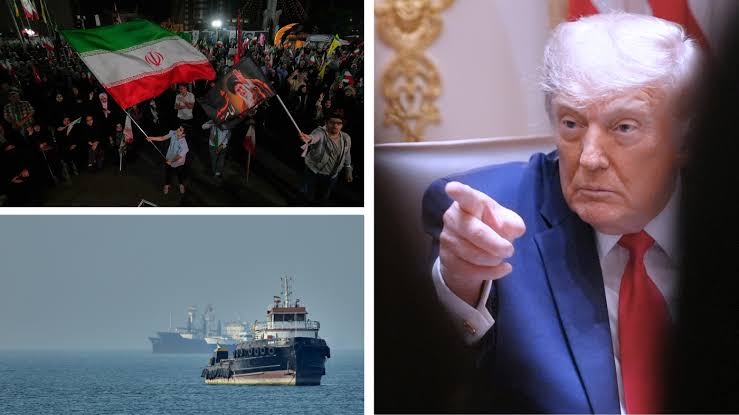
The military standoff between the United States and Iran has entered another dangerous phase, with both sides exchanging daily attacks around the Strait of Hormuz. The renewed escalation is raising concerns over global oil supplies, regional security, and the future of diplomatic efforts to prevent a wider conflict.
The latest developments have drawn international attention because the Strait of Hormuz remains one of the world’s most important energy corridors. Any prolonged disruption could affect fuel prices, international trade, and economic stability across several countries.
Why the Strait of Hormuz Matters
The Strait of Hormuz is one of the busiest maritime routes in the world. A significant portion of global crude oil exports passes through this narrow waterway connecting the Persian Gulf to international markets.
Even temporary disruptions in this region can send oil prices higher, increase shipping costs, and create uncertainty in energy markets worldwide. That is why every escalation between the United States and Iran quickly becomes a matter of global concern.
Military Escalation Continues
Recent days have seen repeated military exchanges between the two countries, with both accusing each other of provoking the conflict.
The United States has maintained military operations targeting Iranian positions while accusing Tehran of threatening commercial shipping and regional stability. Iran, meanwhile, has continued to assert its strategic position in the Gulf, refusing to ease pressure despite growing international concern.
The latest round of violence has also followed the collapse of an earlier pause in hostilities, increasing fears that the situation could spiral into a broader regional war.
Diplomatic Efforts Face Major Challenges
Although military activity has intensified, officials have indicated that diplomatic channels have not been completely closed.
The United States has stated that it remains willing to pursue negotiations if meaningful dialogue becomes possible. However, ongoing attacks and rising mistrust between both sides continue to make diplomatic progress difficult.
Political analysts believe the biggest challenge is the lack of confidence between Washington and Tehran. Years of sanctions, military confrontations, and failed negotiations have created deep divisions that cannot be resolved quickly.
Experts warn that every new exchange of fire reduces the chances of returning to productive talks.
Experts Question Airstrike Strategy
Security analysts say the latest conflict highlights the limitations of relying mainly on air power.
Military strikes can damage infrastructure and military facilities, but they may not be enough to force long-term strategic changes. Iran has spent years strengthening underground facilities, dispersing equipment, and improving its defensive capabilities.
According to defence experts, this makes it increasingly difficult to eliminate military threats through air operations alone.
Some analysts also point out that any larger ground operation would involve enormous financial, political, and human costs, making it an unlikely option for the United States.
Global Oil Markets Watching Closely
Energy markets remain highly sensitive to developments around the Strait of Hormuz.
The possibility of shipping disruptions has already increased concerns over crude oil supplies. If commercial vessels face greater security risks, shipping companies may be forced to reroute cargo or pay significantly higher insurance costs.
Such disruptions could eventually translate into higher fuel prices for consumers across many countries.
Economists also warn that prolonged instability in the Gulf could affect inflation, manufacturing costs, and global economic growth.
Regional Security Risks Continue to Grow
The conflict extends beyond the United States and Iran alone.
Several countries in the Middle East remain concerned that further escalation could involve additional regional groups and widen the crisis.
Military experts have also warned that any disruption to nearby maritime routes could affect international shipping beyond the Strait of Hormuz, placing additional pressure on global supply chains.
The situation remains highly unpredictable, with every new military exchange carrying the risk of unintended escalation.
What Happens Next?
While both sides continue military operations, diplomatic possibilities have not completely disappeared.
International observers believe negotiations remain the only sustainable solution to avoid a prolonged conflict that could destabilize the entire region.
However, rebuilding trust will require significant political commitment from all parties involved.
Until meaningful dialogue resumes, the Strait of Hormuz is likely to remain one of the world’s most closely watched geopolitical flashpoints, with governments, businesses, and energy markets monitoring every development.
As military pressure continues and uncertainty grows, the coming weeks could prove crucial in determining whether the crisis moves toward diplomacy or further confrontation.
Frequently Asked Questions (FAQs)
1. Why is the Strait of Hormuz important?
It is one of the world’s busiest oil shipping routes, carrying a large share of global crude oil exports.
2. Why are the US and Iran in conflict?
The latest tensions stem from military operations, security concerns, and long-standing political disputes between the two countries.
3. Could the conflict affect global oil prices?
Yes. Any disruption to shipping through the Strait of Hormuz can increase oil prices worldwide.
4. Is diplomacy still possible?
Both sides have indicated that negotiations remain possible, although ongoing military actions have complicated talks.
5. Why is the Strait of Hormuz strategically important?
It connects the Persian Gulf to international waters, making it essential for global energy trade.
6. Could the conflict spread across the Middle East?
Security experts warn that continued escalation could involve more regional actors if tensions remain unresolved.
7. How could this affect ordinary consumers?
Higher oil prices could lead to increased fuel costs, transportation expenses, and inflation in many countries.
8. Why are experts questioning airstrike-based strategies?
Many analysts believe air power alone cannot achieve long-term political or military objectives without broader diplomatic efforts.
9. What industries are most affected by this crisis?
Energy, shipping, logistics, aviation, manufacturing, and international trade are among the sectors most exposed.
10. What should the world watch next?
Future diplomatic negotiations, shipping conditions in the Strait of Hormuz, and any further military escalation will be key developments to monitor.
Leave a Reply