

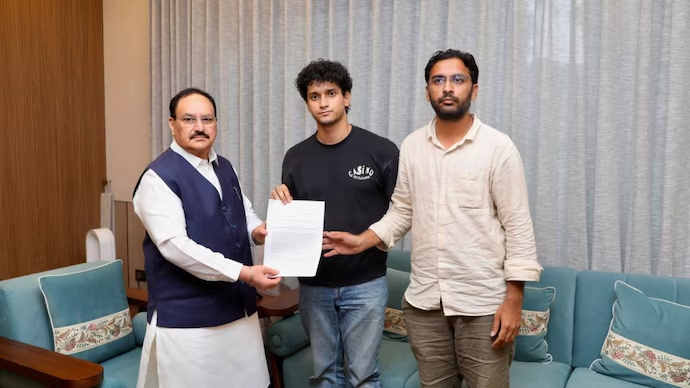
The Cockroach Janata Party (CJP) has criticised its recent discussions with the Central government over the NEET paper leak issue, claiming the talks failed to produce any meaningful outcome.
The party alleged that the Centre did not agree to any of its major demands during two rounds of discussions with Union Health Minister JP Nadda and instead urged protesters to end their ongoing agitation.
The developments came as thousands of demonstrators gathered in New Delhi as part of the CJP’s ‘Chalo Sansad’ campaign demanding greater accountability in the conduct of competitive examinations.
CJP Says Talks Produced No Results
Following the meetings, CJP leaders expressed disappointment over the outcome.
Party representatives claimed they spent several hours waiting for discussions that ultimately lasted only a short time and did not include any commitment from the government on their demands.
The party also disputed the government’s description of the meeting as productive, maintaining that the dialogue failed to address the issues raised by protesters.
Government Urges Protesters to End Agitation
Government sources said the meetings focused on hearing the concerns of the protesters.
Officials stated that the minister requested the delegation to submit its demands in writing before later receiving a formal memorandum.
The government appealed to protesters to withdraw their sit-in and cooperate with authorities so that normal public activity could resume.
However, no official assurance was reportedly given regarding the demands presented by the delegation.
Three Major Demands Raised
According to the memorandum submitted during the meeting, the CJP placed three primary demands before the government.
The party called for the unconditional release of activist Sonam Wangchuk, sought the resignation of Education Minister Dharmendra Pradhan, and demanded compensation of ₹1 crore for the families of NEET aspirants who allegedly died by suicide following the paper leak controversy.
The government did not make any commitments on these demands during the discussions.
Protests Continue in Delhi
The agitation began at Jantar Mantar in early June and has gradually expanded into a larger movement focused on examination transparency and accountability.
The protest gained further attention after Sonam Wangchuk joined the demonstration and later began a hunger strike.
Authorities shifted Wangchuk to a hospital after concerns were raised about his health following several weeks of fasting.
Government Defends Handling of NEET Case
The Centre has maintained that it responded quickly after reports of the NEET paper leak surfaced.
Officials highlighted that a re-examination was conducted within a short period and that investigations led to action against those allegedly involved in the case.
Government sources also pointed out that millions of candidates successfully appeared for major entrance examinations this year and argued that the overall examination process continued without widespread disruption.
Focus on Examination Integrity
The NEET controversy has intensified discussions on examination security and the need for stronger safeguards against paper leaks.
Students and protest groups continue to demand greater transparency, stricter accountability and systemic reforms to ensure the credibility of competitive examinations.
The government, meanwhile, has reiterated its commitment to protecting the integrity of national entrance tests while continuing investigations into examination-related irregularities.
What Happens Next?
With no agreement reached during the latest discussions, the protest movement is expected to continue.
The government has appealed for normalcy, while protest leaders insist they will maintain pressure until their demands receive a concrete response.
The coming weeks are likely to determine whether further negotiations take place or if the confrontation over examination reforms escalates.
FAQs
1. Why did the CJP meet the government?
The party met government representatives to discuss the NEET paper leak and present its demands regarding examination reforms.
2. What did the CJP say after the meeting?
The party claimed the talks were unproductive and said the government did not provide any assurance on its key demands.
3. What were the CJP’s main demands?
The party sought the release of Sonam Wangchuk, the resignation of Education Minister Dharmendra Pradhan and financial compensation for certain affected families.
4. Did the government accept any of the demands?
No official commitment was reportedly made during the discussions.
5. Why are protests being held?
The protests are linked to concerns over the NEET paper leak and demands for greater accountability in competitive examinations.
6. Where are the protests taking place?
The demonstrations have been centred around Jantar Mantar and other locations in New Delhi.
7. What has the government said about the NEET issue?
The government says it acted quickly by conducting a re-examination and initiating action against those allegedly involved in the paper leak.
8. Who is Sonam Wangchuk and why is he being mentioned?
Sonam Wangchuk joined the protest movement and later began a hunger strike, becoming one of its prominent faces.
9. Has the NEET re-examination already been conducted?
Yes. Authorities conducted the re-examination and later announced the results.
10. Will further talks be held?
No official announcement has been made, but discussions could continue if both sides agree to resume negotiations.
Leave a Reply