

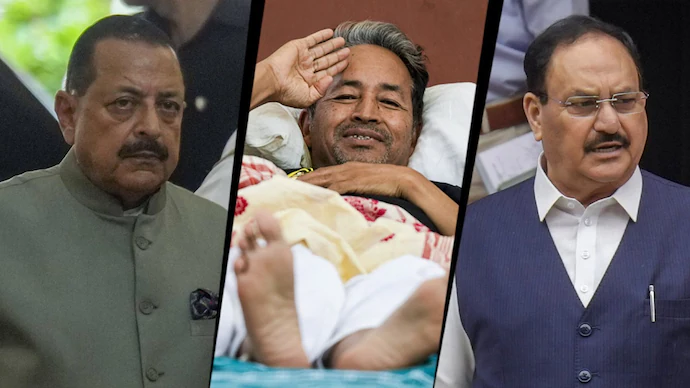
Education reform activist Sonam Wangchuk has been shifted to Medanta Hospital in Gurugram after obtaining permission from the Delhi High Court to receive treatment at a hospital of his choice.
The transfer came on the 25th day of his indefinite hunger strike, with doctors confirming that he remains medically stable while continuing his fast under close supervision.
High Court Relief Led to Hospital Transfer
Wangchuk was moved from Safdarjung Hospital to Medanta on the evening of July 21 after the High Court allowed him to choose a private medical facility for treatment.
The journey from central Delhi to Gurugram took considerably longer than usual because of heavy traffic caused by simultaneous protests across the national capital.
Upon arrival, doctors assessed his condition and said he was stable and in good spirits despite the prolonged fast.
Union Ministers Held Brief Meeting at Hospital
Late on Tuesday night, Union Health Minister JP Nadda and Union Minister Jitendra Singh visited Wangchuk in the intensive care unit.
The ministers spent around 10 minutes with the activist. Medical staff reportedly stepped outside during the meeting, and no official details about the discussion have been released.
The visit comes amid continuing protests over alleged examination irregularities and growing calls for education reforms.
Doctors Closely Monitoring Health
A team of specialists at Medanta is closely monitoring Wangchuk’s health, with particular attention being paid to his electrolyte balance.
Fresh blood tests have been ordered, and doctors are expected to review the reports before deciding whether he can be shifted from the intensive care unit to a private ward.
Medical experts are especially monitoring sodium and potassium levels, as prolonged fasting can significantly affect heart rhythm, nerve function and overall metabolism.
Why Prolonged Fasting Is Medically Risky
After several weeks without food, the human body gradually exhausts its glucose reserves before relying on stored fat for energy.
As fasting continues, muscle tissue begins breaking down to supply glucose needed by vital organs, leading to muscle loss alongside weight reduction.
Doctors also remain cautious about how nutrition is reintroduced after an extended fast because of the risk of refeeding syndrome, a potentially serious condition caused by rapid electrolyte shifts when food intake resumes.
Hunger Strike Continues
Despite remaining under medical observation, Wangchuk has indicated that he intends to continue his hunger strike.
His immediate medical condition and the results of the latest blood investigations are expected to determine the next course of treatment, while attention also remains on any possible developments following the ministers’ hospital visit.
FAQ
Why was Sonam Wangchuk shifted to Medanta Hospital?
He was moved after the Delhi High Court allowed him to receive treatment at a hospital of his choice instead of remaining at Safdarjung Hospital.
Who met Sonam Wangchuk at Medanta?
Union Ministers JP Nadda and Jitendra Singh visited him in the intensive care unit and held a brief meeting.
What is Wangchuk’s current health condition?
Doctors have described him as stable, but he remains under close medical observation with regular monitoring of his electrolyte levels and overall health.
Why are doctors concerned about prolonged fasting?
Extended fasting can cause muscle loss, electrolyte imbalance and complications such as irregular heart rhythms. Medical teams must also carefully manage the reintroduction of food to avoid refeeding syndrome.
Leave a Reply