

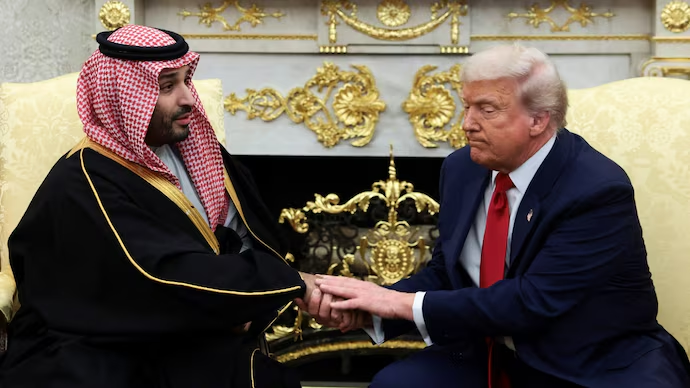
US President Donald Trump has approved a landmark civil nuclear cooperation agreement with Saudi Arabia, paving the way for American companies to help develop the kingdom’s nuclear energy programme. However, the proposed deal has drawn international attention because it reportedly excludes several long-standing safeguards designed to prevent civilian nuclear technology from being used to develop nuclear weapons.
The agreement, expected to remain in force for 30 years and valued at tens of billions of dollars, is likely to be submitted to the US Congress in the coming days for review.
Saudi Arabia Could Enrich Uranium Under New Pact
One of the most significant aspects of the proposed agreement is that Saudi Arabia would reportedly be allowed to enrich uranium on its own territory.
Unlike many previous US nuclear cooperation agreements, the framework does not include restrictions commonly referred to as the “Gold Standard.” These provisions typically prohibit partner nations from enriching uranium or reprocessing spent nuclear fuel—two activities that can potentially be used to produce material for nuclear weapons.
If approved, the agreement would allow US companies to play a major role in establishing Saudi Arabia’s civilian nuclear infrastructure while reducing opportunities for competing international firms.
Key International Safeguards Reportedly Excluded
The proposed pact also reportedly excludes the International Atomic Energy Agency (IAEA) Additional Protocol, a monitoring framework that gives the UN nuclear watchdog expanded authority to inspect undeclared nuclear facilities and verify that civilian programmes remain peaceful.
Instead of relying on internationally recognised inspection mechanisms, oversight arrangements would reportedly be negotiated directly between the United States and Saudi Arabia.
Experts argue that excluding internationally accepted safeguards could increase concerns about nuclear proliferation, particularly if domestic uranium enrichment proceeds without broader international monitoring.
Why Experts Are Concerned
Uranium enrichment and plutonium reprocessing are widely regarded as the two primary methods for obtaining fissile material used in nuclear weapons.
Most countries operating civilian nuclear power plants import enriched uranium under international supervision rather than producing it themselves. Allowing domestic enrichment without internationally recognised safeguards has prompted concerns among non-proliferation experts about the potential long-term security implications.
Regional Security Remains a Major Factor
Saudi Crown Prince Mohammed bin Salman has previously stated that the kingdom would seek nuclear weapons if regional rival Iran were to acquire one.
Those earlier remarks continue to fuel debate over whether expanded civilian nuclear capabilities could alter the strategic balance in the Middle East if strict oversight mechanisms are not maintained.
Supporters of the agreement argue that it could strengthen US-Saudi strategic cooperation and help Saudi Arabia diversify its energy mix, while critics believe stronger international safeguards remain essential to prevent future nuclear proliferation risks.
Key Highlights
- Donald Trump has approved a proposed 30-year civil nuclear agreement with Saudi Arabia.
- The deal reportedly allows Saudi Arabia to enrich uranium domestically.
- The agreement excludes the traditional US “Gold Standard” restrictions.
- The IAEA’s Additional Protocol is also reportedly absent from the framework.
- Experts warn the lack of international safeguards could raise nuclear proliferation concerns.
- The proposed agreement is expected to be reviewed by the US Congress.
FAQs
What is the Trump-Saudi nuclear deal?
It is a proposed civil nuclear cooperation agreement that would enable US companies to assist Saudi Arabia in developing its civilian nuclear energy programme.
Why is the deal controversial?
The agreement reportedly does not include key international safeguards that traditionally limit uranium enrichment and strengthen independent nuclear inspections.
What is the “Gold Standard” in US nuclear agreements?
The Gold Standard refers to provisions that prevent partner countries from enriching uranium or reprocessing spent nuclear fuel, reducing the risk of nuclear weapons development.
What is the IAEA Additional Protocol?
It is an enhanced inspection framework that allows the International Atomic Energy Agency to conduct broader monitoring of civilian nuclear facilities and investigate undeclared nuclear activities.
Has Saudi Arabia expressed interest in nuclear weapons?
Saudi Crown Prince Mohammed bin Salman has previously stated that the kingdom would pursue nuclear weapons if Iran were to obtain one.
Leave a Reply