

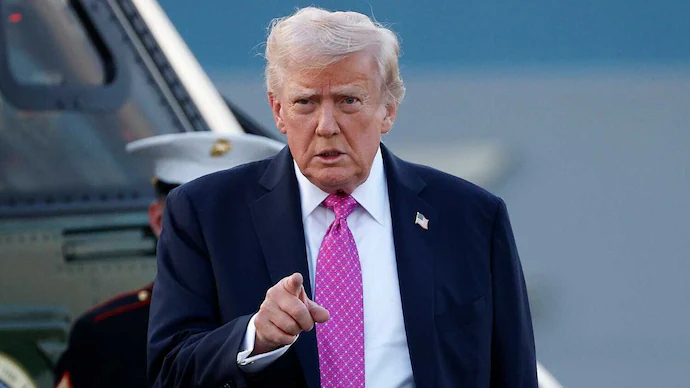
US President Donald Trump has announced a new tariff policy targeting imported generic medicines, a move aimed at encouraging pharmaceutical companies to manufacture more drugs within the United States.
The decision could have significant consequences for India, which is the world’s largest supplier of generic medicines and a key exporter to the American healthcare market.
New Tariff Timeline Explained
Under the new policy, imported generic medicines will continue to enter the United States without tariffs for two years, beginning August 1, 2026.
The tariff structure will then be introduced in phases:
- August 1, 2026 – July 31, 2028: 0% tariff
- August 1, 2028 – July 31, 2029: 100% tariff
- From August 1, 2029 onward: 200% tariff
The phased rollout is intended to provide pharmaceutical companies with time to relocate manufacturing operations to the United States before higher duties take effect.
India’s Pharmaceutical Industry Could Be Among the Most Affected
India stands to be one of the countries most impacted by the proposed policy due to its heavy dependence on the US market.
According to data from the Global Trade Research Initiative (GTRI), India exported $9.7 billion worth of pharmaceutical products to the United States in 2025. This represented approximately 38% of India’s total pharmaceutical exports, valued at $25.8 billion globally.
Indian manufacturers supply a large share of generic medicines used in the US to treat conditions including:
- Diabetes
- High blood pressure
- Cancer
- Infectious diseases
- Mental health disorders
A prolonged increase in import duties could therefore affect export revenues and alter global pharmaceutical supply chains.
Trump Says Policy Will Boost US Manufacturing
Announcing the decision on his Truth Social platform, Trump said the measure is designed to encourage pharmaceutical companies to establish manufacturing facilities inside the United States.
According to the President, companies that fail to shift production during the transition period will be subject to the higher tariff rates.
Trump also stated that the policy for patented, branded and innovative medicines will remain unchanged, with the new tariffs applying specifically to imported generic drugs.
Industry Faces Supply Chain Questions
Trade experts believe the proposed tariffs could reshape global pharmaceutical manufacturing over the coming years.
Companies that currently rely on overseas production may have to reconsider their manufacturing strategies, while exporters—particularly in India—could face increased costs and competitive pressure if production is not shifted to the US.
The proposal is the latest addition to Trump’s broader “America First” economic agenda, which focuses on expanding domestic manufacturing through higher import duties.
Key Highlights
- Donald Trump announced tariffs of up to 200% on imported generic medicines.
- Generic drugs will remain tariff-free until August 2028.
- Tariffs will increase to 100% in 2028 and 200% from 2029.
- India exported $9.7 billion worth of pharmaceuticals to the US in 2025.
- The policy aims to encourage pharmaceutical companies to manufacture drugs in the United States.
- Industry experts expect the move to reshape global pharmaceutical supply chains.
FAQs
Why has Donald Trump announced tariffs on generic medicines?
The policy aims to encourage pharmaceutical companies to move manufacturing operations to the United States and strengthen domestic drug production.
When will the new tariffs take effect?
Generic medicines will remain tariff-free until July 31, 2028. A 100% tariff will apply from August 2028 for one year, followed by a 200% tariff from August 2029.
Why could India be affected?
India is one of the largest suppliers of generic medicines to the US and relies heavily on the American market for pharmaceutical exports.
Will branded medicines also face the new tariffs?
According to the announcement, the existing policy for patented, branded and innovative medicines will remain unchanged.
How much does India export to the US pharmaceutical market?
India exported pharmaceutical products worth $9.7 billion to the United States in 2025, accounting for around 38% of its total global pharmaceutical exports.
Leave a Reply