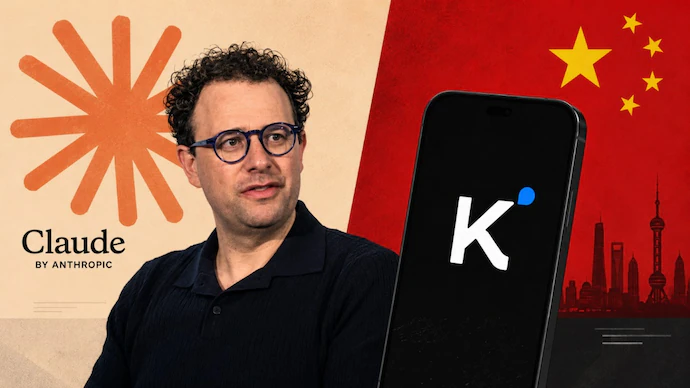
Anthropic CEO Dario Amodei has clarified the company’s position on open-weight artificial intelligence (AI) models after questions emerged over its absence from a joint industry letter urging the US government not to ban Chinese AI models.
While several major technology companies supported the appeal to the White House, Anthropic chose not to sign it. Amodei explained that the decision does not reflect opposition to open-weight AI models but stems from concerns about national security and the potential misuse of increasingly powerful AI systems.
Anthropic Supports Open-Weight AI Models
In a detailed statement, Amodei said Anthropic has never advocated banning open-weight AI models. He acknowledged that such models provide significant benefits for developers, businesses and researchers by making advanced AI more accessible and affordable.
Unlike closed AI systems, open-weight models allow developers to run them locally without depending entirely on cloud infrastructure, reducing operational costs and encouraging innovation.
Why Anthropic Is Concerned About China
Amodei emphasized that his primary concern is not open-source AI itself but the possibility of authoritarian governments gaining access to highly advanced AI capabilities.
He argued that if China develops or acquires AI systems surpassing those of the United States, such technology could be used for military advancements, surveillance operations and large-scale state-controlled monitoring.
According to Amodei, the rapid progress of Chinese AI companies has made the issue increasingly important for policymakers and the global technology industry.
Open-Weight Models Carry Higher Security Risks
The Anthropic chief also highlighted the broader risks associated with releasing powerful open-weight AI models.
He noted that once model weights are publicly released, they cannot be withdrawn, making it difficult to monitor usage or enforce safety safeguards. This, he warned, could increase the possibility of cyberattacks, biological research misuse or other malicious applications by bad actors.
While acknowledging the benefits of open AI development, Amodei stressed that safety mechanisms become significantly harder to enforce after unrestricted public release.
Anthropic Proposes Stronger AI Safeguards
Instead of supporting a blanket ban on Chinese open-weight AI models, Amodei suggested a series of targeted policy measures aimed at protecting technological leadership while promoting responsible AI development.
Among his recommendations were:
- Restricting exports of advanced AI chips and semiconductor manufacturing equipment to China.
- Strengthening enforcement against illegal chip smuggling.
- Taking action against industrial-scale AI model distillation practices.
- Introducing mandatory safety evaluations for advanced AI models before public release.
He argued that comprehensive safety testing should apply to both open-weight and closed AI systems to reduce cybersecurity, biological and alignment risks.
Industry Divided Over Chinese AI Models
The debate has highlighted growing differences within the AI industry.
Several leading technology companies have publicly supported continued access to Chinese open-weight AI models, arguing that open ecosystems accelerate innovation, research and software development.
Meanwhile, Anthropic believes that unrestricted access to increasingly capable AI models raises national security concerns that deserve greater attention alongside innovation.
The discussion comes as Chinese AI developers continue launching competitive models that challenge leading American AI systems, intensifying the global race for AI leadership.
Key Highlights
- Anthropic CEO Dario Amodei clarified that the company is not opposed to open-weight AI models.
- Anthropic did not sign the industry letter urging the US not to restrict Chinese AI models.
- Amodei cited national security concerns related to China’s AI development.
- He warned that powerful open-weight AI models could be misused for cyber and biological threats.
- Anthropic supports stricter export controls on advanced AI chips to China.
- The company also advocates mandatory safety testing for advanced AI systems.
- The debate reflects growing divisions within the global AI industry over open AI development and security.
FAQs
1. Why did Anthropic not sign the White House AI letter?
Anthropic said it did not agree with certain claims in the letter and wanted to highlight national security concerns surrounding advanced AI.
2. Is Anthropic against open-weight AI models?
No. CEO Dario Amodei clarified that Anthropic supports open-weight AI models but believes stronger safeguards are necessary.
3. What are open-weight AI models?
Open-weight AI models make their trained parameters available, allowing developers to run, customize and deploy them on their own systems.
4. What concerns did Dario Amodei raise about China?
He warned that advanced AI could potentially be used for military purposes, surveillance and authoritarian control if developed without adequate safeguards.
5. Why does Anthropic believe open-weight models pose security risks?
Because once released publicly, they cannot be withdrawn, making it difficult to monitor misuse or enforce safety controls.
6. What solutions did Anthropic propose?
The company suggested tighter chip export controls, preventing AI model distillation, and mandatory safety testing for advanced AI systems.
7. What is AI model distillation?
Distillation is the process of training a smaller AI model using outputs generated by a larger, more capable model.
8. Which companies supported the White House letter?
Several leading technology companies backed the letter, advocating continued access to Chinese open-weight AI models.
9. Why is the debate important?
It reflects the growing balance policymakers must strike between encouraging AI innovation and protecting national security.
10. How is China influencing the global AI race?
Chinese AI firms are rapidly releasing competitive, lower-cost models that increasingly rival leading AI systems developed in the United States.