
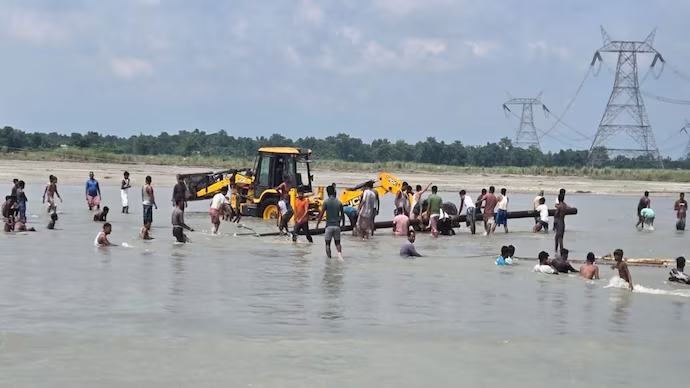
The flood situation in Assam witnessed a slight improvement on Tuesday as water levels receded in several regions and the number of affected residents declined to over 4.45 lakh. Despite the positive trend, six districts continue to face the impact of flooding, with relief and restoration efforts underway.
According to official updates, no fresh fatalities or missing persons were reported, keeping the flood-related death toll at 68.
Six Districts Continue to Battle Floods
Authorities stated that flooding continues to affect the following districts:
- Charaideo
- Sivasagar
- Jorhat
- Golaghat
- Nagaon
- Kamrup (Metropolitan)
Among them, Charaideo remains the worst-hit district with approximately 1.88 lakh affected residents. Sivasagar follows with around 1.44 lakh people impacted, while Jorhat has reported 74,458 affected residents.
The overall number of flood-affected people has declined from more than 5.24 lakh reported earlier, indicating gradual improvement in the state’s flood situation.
Relief and Rescue Operations Continue
Government agencies continue large-scale relief and rescue operations across affected districts.
Currently:
- 90 relief camps are sheltering 28,695 displaced people.
- 94 relief distribution centres are providing essential supplies to affected communities.
Teams from the National Disaster Response Force (NDRF), State Disaster Response Force (SDRF), and civil defence personnel remain deployed to assist residents and support ongoing rescue efforts.
River Levels and Agricultural Losses
While water has receded in many locations, the Dhansiri (South) River continues to flow above the danger mark at Numaligarh in Golaghat district, keeping authorities on alert.
Floodwaters have submerged approximately 37,139.52 hectares of agricultural land, causing significant losses to crops. Damage to houses, roads, and public infrastructure has also been reported from several districts.
Central Team Reviews Flood Situation
A five-member central government team visited Sivasagar, one of the worst-affected districts, to assess the flood situation in Upper Assam.
The delegation reviewed the extent of damage, ongoing relief operations, and restoration measures along with state ministers and district officials.
Power Supply Being Restored in Phases
State authorities have accelerated efforts to restore electricity in flood-affected areas.
According to the state government, the number of households without power has reduced significantly as floodwaters continue to recede. Restoration work is being carried out in phases to reconnect electricity in remaining affected villages.
Health Measures Intensified
With floodwaters gradually receding, authorities have started disinfection and fogging drives across affected villages to reduce the risk of waterborne and vector-borne diseases.
Officials have also initiated the scientific disposal of livestock that perished during the floods to prevent water contamination and protect public health.
Situation Improving but Challenges Remain
Although the flood situation has shown signs of improvement, thousands of families remain displaced, and restoration of essential services continues across affected districts.
Authorities are closely monitoring river levels while continuing relief distribution, infrastructure repairs, and rehabilitation measures to help affected communities recover.
FAQs
1. How many people are currently affected by the Assam floods?
More than 4.45 lakh people remain affected across six districts.
2. What is the current flood death toll in Assam?
The flood-related death toll stands at 68, with no new fatalities reported.
3. Which district is the worst affected?
Charaideo is the worst-hit district, followed by Sivasagar and Jorhat.
4. How many districts are still affected by flooding?
Floods continue to impact six districts in Assam.
5. How many relief camps are operating?
Authorities are running 90 relief camps and 94 relief distribution centres.
6. How many displaced people are staying in relief camps?
Around 28,695 people are currently taking shelter in relief camps.
7. Which agencies are involved in rescue operations?
The NDRF, SDRF, civil defence personnel, and local administration are conducting rescue and relief work.
8. How much agricultural land has been affected?
Approximately 37,139.52 hectares of crop area remain submerged.
9. What steps are being taken to prevent disease outbreaks?
Authorities have launched disinfection, fogging, sanitation drives, and scientific disposal of dead livestock.
10. Is the flood situation improving in Assam?
Yes. Water levels are receding in several areas, the number of affected people has declined, and restoration work is progressing, though relief efforts continue in the worst-hit districts.