
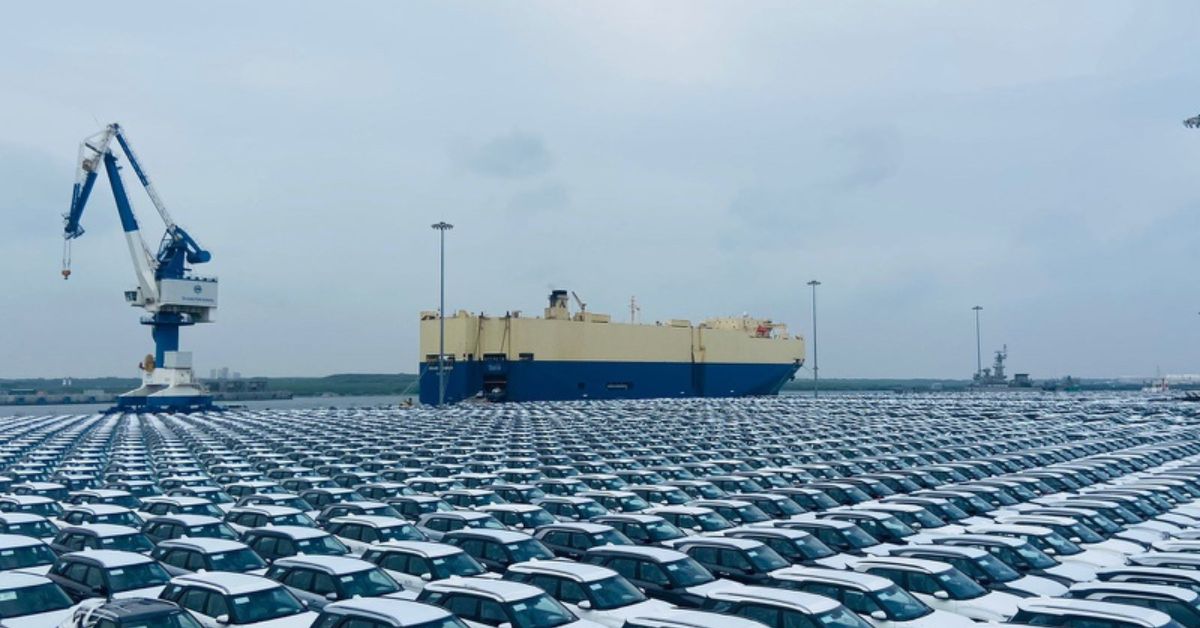
Hambantota International Port has clarified that the backlog of imported vehicles at its facility is primarily the result of delays by importers in completing documentation and financial formalities, rather than any shortcomings in port operations.
The statement comes after media reports suggested that more than 1,000 imported vehicles remained uncleared at the Sri Lankan port. The Hambantota International Port Group (HIPG), which manages the facility, emphasized that the port continues to function efficiently as a major regional roll-on/roll-off (RoRo) transshipment hub.
Port Focused on Fast Cargo Movement
HIPG stated that ports are designed to facilitate the smooth movement of cargo rather than serve as long-term storage facilities.
According to the operator, prolonged storage of imported vehicles occupies valuable operational space needed to process new shipments and support the continued growth of Sri Lanka’s automotive logistics sector.
The company said it is currently managing more than 50,000 vehicles, highlighting the scale of operations handled at Hambantota Port.
Long-Stay Vehicles Linked to Importer Delays
The port operator explained that the majority of long-stay vehicles belong to the domestic import segment and remain uncleared because of importer-related issues such as:
- Documentation delays
- Banking procedures
- Financing arrangements
- Administrative clearances
HIPG stressed that these factors fall outside the port’s operational responsibilities.
According to the latest figures, 1,278 vehicles have remained at the port for more than three months, while 581 vehicles have been stored for over a year.
Import Restrictions Contributed to the Backlog
The company noted that many of the delayed vehicles are connected to Sri Lanka’s vehicle import restrictions introduced during the COVID-19 pandemic.
Vehicle imports resumed in 2025 after nearly five years of restrictions, but several consignments imported before and during the ban continue to face clearance delays.
HIPG also revealed that some vehicles have remained at the facility since before it assumed management of Hambantota Port in December 2017.
Storage Policy and Operational Measures
Under the current policy:
- Imported vehicles receive 10 days of free storage before charges apply.
- Transshipment cargo is allowed 21 days of free storage.
HIPG stated that it has also provided substantial demurrage waivers and concessions for thousands of vehicles that remained at the port for extended periods before being cleared or re-exported.
Strategic Importance of Hambantota Port
Hambantota Port is one of South Asia’s key automotive logistics and transshipment hubs, strategically located along one of the world’s busiest east-west shipping routes in the Indian Ocean.
The facility operates under a public-private partnership between the Sri Lanka Ports Authority and China Merchants Port Holdings, with the Chinese company holding an 85% stake.
Originally built with Chinese financing, the port was leased to China Merchants Port Holdings in 2017 for 99 years after Sri Lanka faced difficulties servicing its external debt. The agreement has frequently been cited in discussions surrounding China’s overseas infrastructure investments.
HIPG reaffirmed that despite isolated delays involving domestic importers, the port remains committed to ensuring efficient cargo handling, minimizing storage time and strengthening its position as a leading regional RoRo logistics hub.
Frequently Asked Questions (FAQs)
1. Why is there a vehicle backlog at Hambantota Port?
According to the port operator, the backlog is mainly caused by importer-side delays involving documentation, banking procedures and financing, not port operations.
2. How many vehicles is Hambantota Port currently handling?
HIPG says the port is currently handling more than 50,000 vehicles.
3. How many vehicles have remained at the port for extended periods?
The operator reported that 1,278 vehicles have stayed for more than three months, while 581 vehicles have remained for over a year.
4. What is a RoRo port?
A Roll-on/Roll-off (RoRo) port is designed to handle wheeled cargo, including cars, trucks and heavy equipment, which are driven directly onto and off ships.
5. Did COVID-19 contribute to the backlog?
Yes. Sri Lanka’s vehicle import restrictions during the pandemic contributed significantly to delays in clearing imported vehicles.
6. How long is free vehicle storage at Hambantota Port?
Imported vehicles receive 10 days of free storage, while transshipment cargo receives 21 days before storage charges apply.
7. Who operates Hambantota International Port?
The port is managed by Hambantota International Port Group (HIPG), a joint venture between the Sri Lanka Ports Authority and China Merchants Port Holdings.
8. Why is Hambantota Port strategically important?
Its location along major Indian Ocean shipping lanes makes it an important regional hub for maritime trade and automotive transshipment.
9. When was Hambantota Port leased to China Merchants Port Holdings?
The port was leased in 2017 under a 99-year agreement.
10. Has HIPG offered relief to importers?
Yes. The company says it has provided demurrage waivers and concessions for thousands of vehicles delayed for extended periods.