South Asia has witnessed a series of powerful youth-led movements over the past few years, with students and young activists driving political change in countries including India, Bangladesh, Sri Lanka and Nepal. These movements have reshaped national debates, forced policy changes and, in some cases, contributed to leadership transitions.
Despite facing many of the same economic and political pressures, Pakistan has remained noticeably absent from this regional trend of large-scale youth mobilization.
Regional Youth Movements Gain Momentum
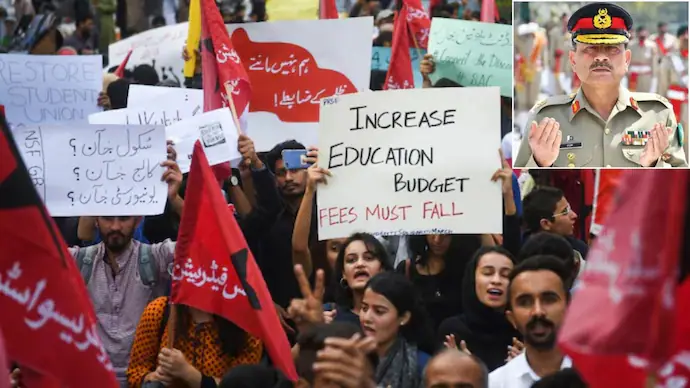
Recent student-led demonstrations across South Asia have highlighted the growing political influence of younger generations. Youth movements have increasingly become platforms for demanding accountability, education reforms, employment opportunities and greater democratic participation.
While neighboring countries have experienced mass mobilizations, Pakistan has yet to witness a comparable nationwide student-driven campaign.
Pakistan Faces Similar Challenges
On paper, Pakistan appears to have many of the conditions that often fuel public protests.
The country continues to grapple with:
- High youth unemployment
- Economic instability
- Repeated IMF bailout programs
- Rising cost of living
- Political uncertainty
- Growing public dissatisfaction
Despite these issues, large-scale youth-led protests have not emerged at the national level.
Weak Student Politics Seen as a Major Factor
Analysts believe one of the biggest reasons lies in Pakistan’s weakened student political culture.
Student unions, once an important part of political activism, were banned during General Zia-ul-Haq’s military rule in the 1980s. Although activists have repeatedly demanded their restoration, organized student politics has never fully recovered.
Without strong campus organizations, Pakistan lacks the networks that have helped mobilize youth movements in countries such as India and Bangladesh.
Legacy of Student Activism
Pakistan once had a vibrant history of student participation in politics.
Student organizations played a significant role in the mass protests of 1968-69 that contributed to the resignation of then-President Ayub Khan.
However, decades of restrictions on student unions significantly reduced universities’ role as centers of political organization and activism.
Regional Protests Remain Isolated
Pakistan has witnessed several protest movements in recent years, particularly in:
- Balochistan
- Pakistan-occupied Kashmir
These demonstrations have focused on regional issues including:
- Provincial rights
- Enforced disappearances
- Rising electricity prices
- Political representation
- Local governance concerns
However, these movements have largely remained confined to specific regions and have not evolved into a united nationwide campaign.
Lack of National Unity
Observers also point to deep political, ethnic and sectarian divisions that make nationwide mobilization more difficult.
Unlike broader youth movements elsewhere in South Asia, Pakistan’s various protest groups have generally pursued separate agendas instead of forming a unified platform capable of attracting nationwide participation.
Many young Pakistanis have acknowledged this challenge, noting that achieving collective action across different communities remains difficult.
Social Media Reflects Growing Frustration
Although nationwide protests have not materialized, discussions among Pakistani youth continue to grow online.
Many young users have expressed admiration for student-led movements across South Asia while debating whether similar mobilization could happen inside Pakistan.
Social media has become an outlet for political discussions, but it has yet to translate into sustained nationwide street protests.
Future Outlook
Experts believe Pakistan’s youth possess the energy and motivation for political participation, but structural barriers continue to limit organized activism.
Unless stronger student organizations emerge and various regional movements find common ground, Pakistan is likely to remain an exception in South Asia’s recent wave of youth-driven political mobilization.
FAQs
1. Why has Pakistan not experienced large youth-led protests like other South Asian countries?
Experts cite weak student organizations, restrictions on student unions and fragmented protest movements as key reasons.
2. When were student unions banned in Pakistan?
Student unions were largely banned during General Zia-ul-Haq’s military rule in the 1980s.
3. Does Pakistan face economic challenges similar to its neighbors?
Yes. Pakistan continues to struggle with unemployment, inflation, economic instability and repeated IMF support programs.
4. Have there been protests in Pakistan in recent years?
Yes. Regional protests have taken place in Balochistan and Pakistan-occupied Kashmir, but they have not developed into nationwide youth movements.
5. Why are student organizations important for protest movements?
They provide leadership, organization, communication networks and sustained mobilization among young people.
6. What role has social media played in Pakistan?
Social media has become a platform for political discussion and expression among young people, although it has not resulted in widespread nationwide protests.
7. How do Pakistan’s youth movements differ from those in neighboring countries?
Most Pakistani protests remain regional or issue-specific, while neighboring countries have witnessed broader nationwide youth coalitions.
8. Can Pakistan see a nationwide youth movement in the future?
Analysts believe it is possible if stronger student organizations emerge and different movements unite around common national issues.
9. What are the biggest challenges facing Pakistan’s Gen Z?
Youth unemployment, economic uncertainty, education concerns and limited avenues for organized political participation remain major issues.
10. Why is Pakistan considered an exception in South Asia’s recent protest wave?
Unlike neighboring countries, Pakistan has not seen a unified student-led movement capable of mobilizing nationwide support despite facing similar socioeconomic challenges.