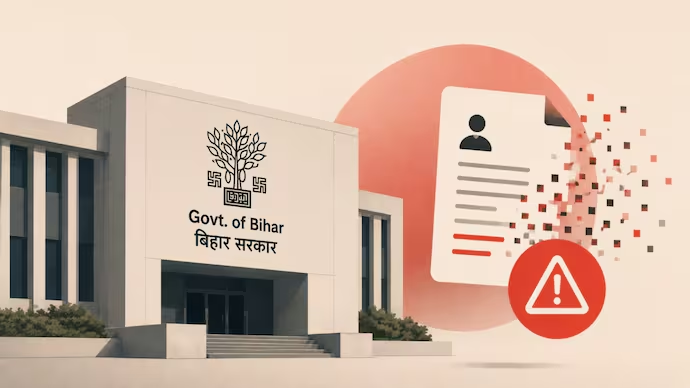
A 21-year-old cybersecurity researcher has uncovered a critical security vulnerability in the Bihar Mahadalit Vikas Mission (BMVM) website that could have exposed sensitive personal information belonging to millions of citizens.
The flaw reportedly had the potential to provide unauthorized access to confidential government databases containing Aadhaar details, pension records, bank account information, welfare scheme data and login credentials of government officials.
The vulnerability has since been fixed after being responsibly reported to the concerned authorities.
Critical Security Flaw Identified in Government Portal
The Bihar Mahadalit Vikas Mission (BMVM) portal is an official government platform used to manage and monitor various welfare schemes for beneficiaries across the state.
According to the cybersecurity researcher, the vulnerability existed in the website’s “Forgot Password” feature and was caused by an SQL Injection flaw. The weakness could have allowed attackers to access, modify or even delete sensitive information stored in the backend database without proper authorization.
The researcher immediately reported the issue to the Indian Computer Emergency Response Team (CERT-In), which escalated the matter to the website administrators. Officials subsequently patched the vulnerability.
How the Vulnerability Worked
The flaw reportedly existed because the website relied primarily on client-side security validation instead of implementing proper server-side input validation.
This weakness made it possible for attackers to inject malicious SQL queries through the password recovery page, potentially bypassing authentication mechanisms.
Cybersecurity experts generally consider SQL Injection among the most dangerous web application vulnerabilities because it can provide direct access to backend databases if adequate protections are not in place.
What Information Was Potentially at Risk?
According to the researcher, the compromised database account reportedly had access to dozens of databases containing highly sensitive information, including:
- Aadhaar numbers
- PAN card details
- Mobile numbers
- Bank account numbers
- IFSC codes
- Pension beneficiary records
- Welfare scheme beneficiary data
- Land records
- MGNREGA-related information
- Voter-related records
- Driver training applicant details
- Recruitment applicant information
- Login credentials of hundreds of government officials
The researcher also claimed that administrative credentials belonging to several government officers could have been accessed if the vulnerability had been exploited.
Vulnerability Reported Responsibly
Rather than exploiting the flaw, the cybersecurity researcher followed responsible disclosure practices by notifying CERT-In immediately after identifying the issue.
Following the report, the security loophole was addressed and fixed before any confirmed misuse was publicly reported.
Responsible disclosure plays a crucial role in strengthening cybersecurity by allowing organizations to resolve vulnerabilities before they can be exploited by malicious actors.
Growing Need for Stronger Government Cybersecurity
The incident highlights the importance of regular security audits, secure coding practices and continuous vulnerability assessments across government digital infrastructure.
With government portals storing large volumes of citizens’ personal and financial information, experts recommend implementing stronger server-side validation, regular penetration testing, encrypted credential storage and proactive monitoring to reduce cybersecurity risks.
As India continues expanding digital governance services, cybersecurity remains a key priority for protecting citizen data and maintaining public trust.
Key Highlights
- A 21-year-old cybersecurity researcher identified a critical vulnerability in the Bihar Mahadalit Vikas Mission website.
- The flaw reportedly involved an SQL Injection vulnerability in the password recovery page.
- Sensitive citizen data, including Aadhaar, pension and bank details, was potentially at risk.
- Government officials’ login credentials were also reportedly accessible through the vulnerability.
- The issue was responsibly reported to CERT-In.
- Authorities patched the vulnerability after receiving the report.
- The incident underscores the importance of stronger cybersecurity measures for government portals.
FAQs
1. What security flaw was discovered on the Bihar government website?
A critical SQL Injection vulnerability was reportedly found in the Bihar Mahadalit Vikas Mission website.
2. Who discovered the vulnerability?
The flaw was identified by a 21-year-old cybersecurity researcher through responsible security research.
3. What information was potentially exposed?
The affected databases reportedly contained Aadhaar numbers, PAN details, pension information, bank account details, welfare records and government official credentials.
4. Was the vulnerability fixed?
Yes. The issue was reported to CERT-In, and the website administrators patched the flaw.
5. What is SQL Injection?
SQL Injection is a web security vulnerability that allows attackers to manipulate database queries if user inputs are not properly secured.
6. Was there any confirmed data breach?
The report describes a vulnerability that could have exposed data. It does not confirm that citizen data was actually accessed or stolen.
7. Why is server-side validation important?
Server-side validation helps prevent attackers from bypassing security checks by manipulating data from their own devices.
8. What is responsible vulnerability disclosure?
It is the practice of privately informing affected organizations about security flaws so they can fix them before public disclosure.
9. Why are government websites frequent cybersecurity targets?
Government portals store sensitive citizen information, making them attractive targets for cybercriminals.
10. How can such incidents be prevented?
Regular security audits, penetration testing, secure coding practices, encryption, server-side validation and continuous monitoring help strengthen cybersecurity.