

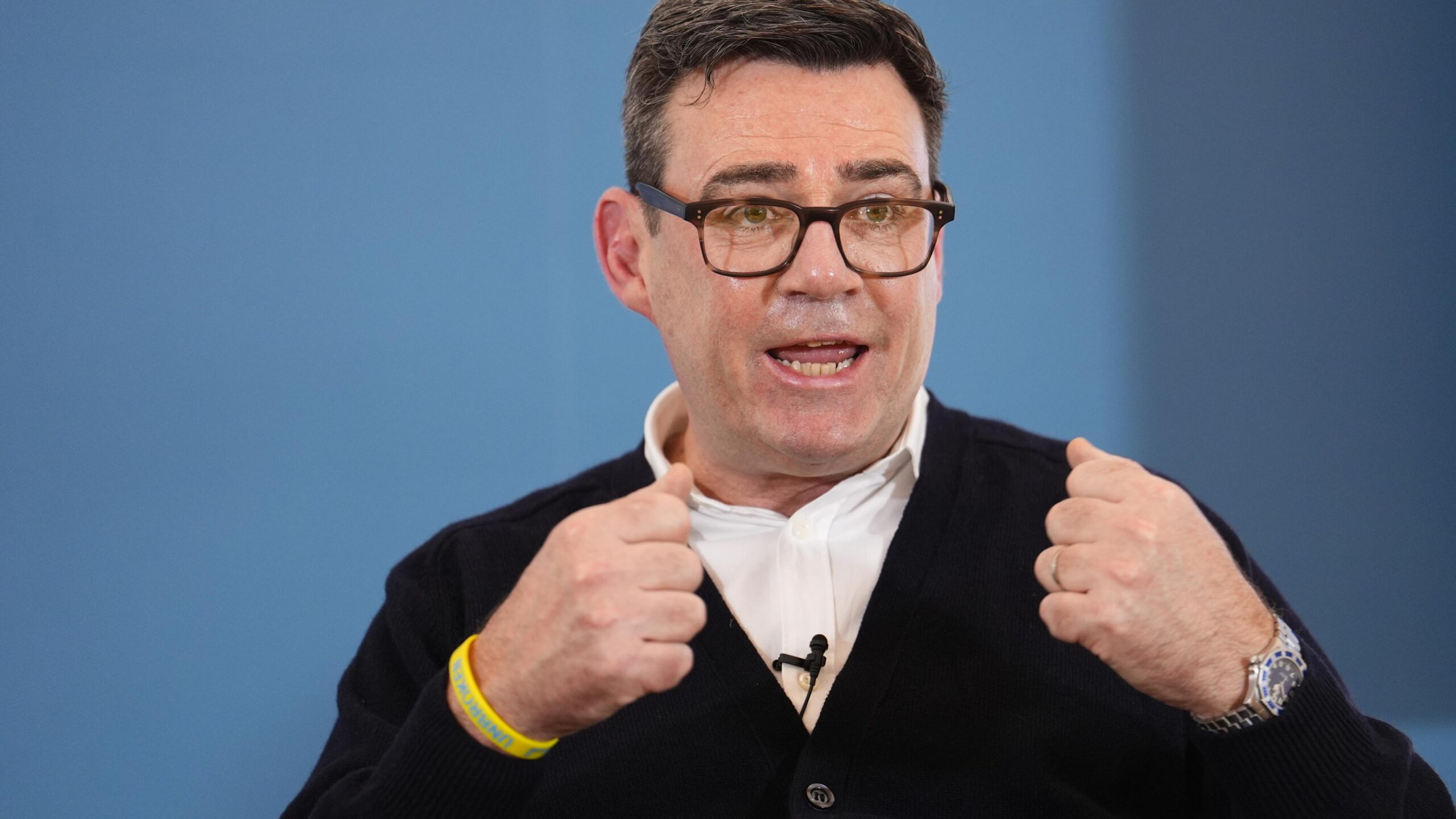
Andy Burnham is set to become the United Kingdom’s new prime minister on Monday after succeeding Keir Starmer as leader of the Labour Party. His appointment marks another leadership transition in British politics, with expectations centered on restoring stability, shaping a new Cabinet, and delivering on key economic and governance promises.
The leadership change comes without a general election, in line with Britain’s parliamentary system, where the governing party can elect a new leader who automatically becomes prime minister if the party retains its majority in the House of Commons.
Formal Transition at Buckingham Palace
The official transfer of power will begin with Keir Starmer traveling to Buckingham Palace to formally submit his resignation to King Charles III.
Following that, Andy Burnham will meet the King, who will invite him to form a government in the traditional constitutional ceremony known as “kissing hands.” Despite its historic name, the ceremony no longer involves any physical hand-kissing and serves as the formal appointment of the new prime minister.
Burnham will then head to 10 Downing Street, where he is expected to deliver his first public address as Britain’s new leader.
Burnham Promises Stability After Years of Political Change
Britain has witnessed frequent changes in leadership over the past decade, and Burnham has acknowledged public frustration over the political uncertainty.
In his first speech as Labour leader, he pledged to bring greater stability to government and rebuild public confidence in politics.
He has also promised to:
- Reduce political divisions.
- Improve living standards across the UK.
- Focus on economic growth.
- Restore trust in government institutions.
Burnham said he wants to build “a new politics” that offers hope and long-term stability.
Labour Leadership Contest Ends Without Opposition
Burnham’s rise to the top came through an uncontested Labour leadership race.
He secured nominations from 379 of Labour’s 403 Members of Parliament, making him the sole candidate to replace Keir Starmer.
The overwhelming backing from Labour lawmakers reflects strong internal support as the party prepares for its next phase in government.
Cabinet Appointments Under Spotlight
One of Burnham’s first major decisions will be selecting his Cabinet.
Political observers expect changes in several key departments, including:
- Chancellor of the Exchequer (Treasury)
- Foreign Secretary
- Home Secretary
Although Burnham has indicated that discussions are ongoing, he has not confirmed any appointments.
The composition of his Cabinet is expected to provide early signals about his governing priorities.
Economic Growth Seen as Biggest Challenge
While Burnham has outlined an ambitious political agenda, analysts believe delivering stronger economic growth will determine the success of his government.
Experts argue that improving productivity, boosting investment, and raising living standards will be critical to maintaining public confidence.
The UK continues to face challenges including slowing economic growth, pressure on public finances, and demands for improved public services.
Starmer Defends His Record
Before leaving office, Keir Starmer defended his government’s achievements during his final appearance in Parliament.
He highlighted progress in several areas, including:
- Continued support for Ukraine.
- Stronger workplace protections.
- Measures aimed at reducing child poverty.
- Legislation designed to improve government accountability.
- Increased defence spending.
Starmer said he believed he was leaving the country in a stronger position than when he entered office.
What Happens Next?
The next few weeks will be crucial for Burnham’s administration.
His immediate priorities are expected to include forming a new Cabinet, outlining policy priorities, and reassuring both financial markets and the public about the government’s direction.
Although a general election is not required until 2029, Burnham has the constitutional authority to call one earlier if he chooses.
Conclusion
Andy Burnham’s appointment as Britain’s new prime minister signals a fresh chapter for the Labour government following Keir Starmer’s departure. While his promises of political stability and economic renewal have generated expectations, attention will quickly shift to his Cabinet choices and his ability to deliver meaningful results on the issues that matter most to voters.
FAQs
1. Who is the new UK prime minister?
Andy Burnham is set to become the new prime minister after succeeding Keir Starmer as Labour Party leader.
2. Why did Keir Starmer step down?
Starmer resigned after acknowledging political setbacks and saying he would leave the leadership following recent challenges.
3. How does the UK appoint a new prime minister?
The leader of the governing party is formally invited by King Charles III to form a government after the outgoing prime minister resigns.
4. Does Britain need a general election for a new prime minister?
No. Under the UK’s parliamentary system, the governing party can change its leader without holding a general election.
5. What are Andy Burnham’s main priorities?
He has pledged to restore political stability, improve living standards, promote economic growth and rebuild trust in politics.
6. Will Andy Burnham appoint a new Cabinet?
Yes. He is expected to announce Cabinet appointments soon after taking office.
7. When is the next UK general election due?
The next general election is scheduled to take place by 2029, although the prime minister can call one earlier.
8. What role does King Charles III play in appointing the prime minister?
The King formally invites the leader capable of commanding a parliamentary majority to form a government, following constitutional tradition.
Leave a Reply