

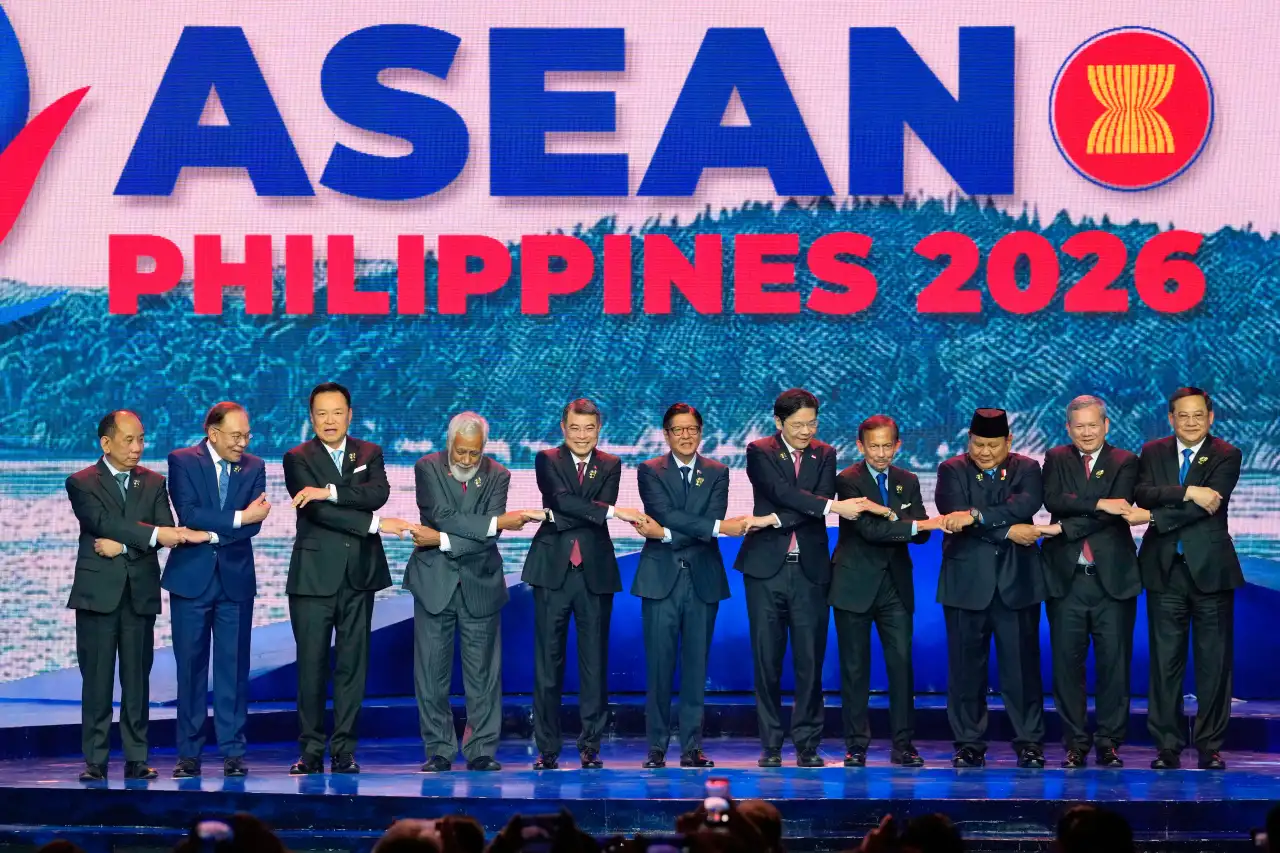
ASEAN foreign ministers meeting in Manila this week are expected to issue a joint statement expressing alarm over the escalating hostilities between the United States and Iran and urging both sides to return to negotiations.
The three-day summit, hosted by the Philippines as ASEAN chair for 2026, brings together the 10-member Southeast Asian bloc and major external partners, including the United States, China, Russia and the European Union.
US Secretary of State Marco Rubio, Chinese Foreign Minister Wang Yi and Russian Foreign Minister Sergey Lavrov are among the senior officials attending the meetings in the Philippine capital.
Joint Statement Expected on US-Iran Hostilities
ASEAN ministers are scheduled to meet among themselves before the broader dialogue sessions with external partners.
Diplomatic sources indicated that the bloc plans to express concern over the widening Middle East conflict and call for renewed diplomatic engagement between Washington and Tehran.
The renewed fighting has raised fears of a broader regional war and renewed concerns about disruptions to shipping through the Strait of Hormuz, a critical route for global oil supplies.
Southeast Asia Faces Energy Security Risks
The Middle East crisis carries significant economic implications for Southeast Asia.
ASEAN’s more than 680 million people depend heavily on imported oil and gas from the Middle East, making the region vulnerable to supply disruptions and price spikes.
The Philippines has already taken emergency measures to protect fuel and food supplies amid concerns over the impact of higher energy costs and potential shortages.
Governments across the region are closely monitoring oil markets as the conflict threatens to prolong volatility in global energy prices.
US Seeks to Reassure Indo-Pacific Allies
Rubio’s participation in the Manila meetings is expected to focus on reaffirming US commitments to a free and open Indo-Pacific.
Washington is also seeking to reassure regional partners that its increased military and diplomatic focus on the Middle East will not diminish attention to security challenges in the Asia-Pacific, including developments involving China in the South China Sea and around Taiwan.
On the sidelines of the summit, Rubio is also expected to participate in a meeting of the Quad, comprising the United States, India, Japan and Australia.
Myanmar Remains a Major Test for ASEAN
Beyond the Middle East crisis, ASEAN ministers face growing pressure to address Myanmar’s continuing civil conflict.
Since the military takeover in 2021, thousands of people have been killed and many more detained, while ASEAN’s five-point peace consensus has failed to halt the violence.
The bloc continues to bar Myanmar’s military leaders and foreign minister from its top-level meetings because of the junta’s non-compliance with the peace plan.
Earlier this month, ASEAN diplomats held rare talks with Myanmar’s foreign minister in Bangkok and separately met representatives of ethnic armed groups in Thailand in an effort to revive dialogue.
The outreach drew criticism from some rights organisations, which argued that engagement with junta representatives risked weakening ASEAN’s existing restrictions.
South China Sea Talks to Continue
ASEAN foreign ministers will also meet Wang Yi to discuss negotiations on a proposed code of conduct for the South China Sea.
The long-running disputes involve China, Taiwan and several ASEAN members, including Brunei, Malaysia, the Philippines and Vietnam.
Confrontations between Chinese and Philippine coast guard and naval forces have intensified in recent years, increasing the urgency of efforts to establish rules aimed at preventing incidents from escalating.
A Summit Shaped by Global and Regional Crises
The Manila meetings are expected to be dominated by a combination of global and regional security challenges.
ASEAN is attempting to craft a coordinated response to the Middle East crisis while simultaneously addressing the unresolved conflicts in Myanmar and the South China Sea.
The summit will therefore serve as an important test of the bloc’s ability to maintain unity and diplomatic relevance amid mounting geopolitical tensions.
Conclusion
As ASEAN foreign ministers gather in Manila, the bloc faces the difficult task of balancing global concerns over escalating US-Iran hostilities with urgent regional challenges in Myanmar and the South China Sea. The expected call for renewed US-Iran talks underscores ASEAN’s preference for diplomacy and de-escalation, while the broader agenda highlights the growing security pressures confronting Southeast Asia.
Frequently Asked Questions (FAQs)
1. Why are ASEAN ministers discussing the US-Iran conflict?
The escalating hostilities threaten regional stability, global oil supplies and energy prices, all of which directly affect Southeast Asian economies.
2. What statement is ASEAN expected to issue?
The bloc is expected to express alarm over the conflict and urge the United States and Iran to resume negotiations.
3. Why is the Strait of Hormuz important to ASEAN?
A significant share of global oil shipments passes through the strait, and disruptions could raise fuel costs across Southeast Asia.
4. Who are the major external participants at the Manila summit?
US Secretary of State Marco Rubio, Chinese Foreign Minister Wang Yi and Russian Foreign Minister Sergey Lavrov are among the senior officials attending.
5. What is the Quad meeting mentioned in connection with the summit?
The Quad is a strategic grouping of the United States, India, Japan and Australia focused on Indo-Pacific security cooperation.
6. Why is Myanmar a major issue for ASEAN?
ASEAN’s 2021 five-point peace plan has failed to stop the violence following Myanmar’s military takeover.
7. Is Myanmar participating in the summit?
Myanmar’s military leaders and foreign minister remain barred from ASEAN’s top-level meetings because of non-compliance with the peace consensus.
8. What is the South China Sea code of conduct?
It is a proposed agreement aimed at preventing territorial disputes and maritime confrontations from escalating.
9. Which ASEAN countries are involved in South China Sea disputes?
Brunei, Malaysia, the Philippines and Vietnam have overlapping claims with China and Taiwan.
10. Why is this summit considered important?
It brings together major powers and ASEAN leaders at a time of heightened global and regional security tensions, making it a key test of ASEAN’s diplomatic coordination and influence.
Leave a Reply