

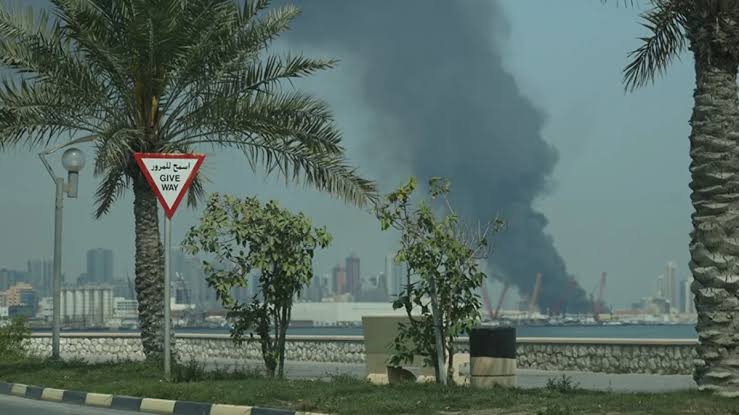
Bahrain issued emergency sirens and urged residents to seek shelter after detecting incoming threats as the US-Iran conflict entered another intense phase. The latest escalation has heightened concerns over the security of key maritime trade routes, oil exports, and overall stability in the Gulf region.
The growing confrontation has also pushed global energy markets higher, with fears mounting over possible disruptions in the Strait of Hormuz and the Bab el-Mandeb Strait, two of the world’s most critical shipping corridors.
Bahrain Activates Emergency Alert System
Authorities in Bahrain sounded nationwide sirens early Friday and advised people to move to safe shelters after detecting hostile activity.
The alert came amid continued military operations involving the United States and Iran, with tensions spreading across the Gulf and neighboring regions.
Officials have not disclosed the full nature of the detected threat, but the warning reflects growing regional security concerns.
US Continues Military Operations Against Iran
The United States confirmed that it carried out another round of military strikes targeting Iranian positions, marking the 13th consecutive night of operations.
According to military officials, the objective of the strikes was to reduce Iran’s ability to threaten commercial vessels and civilian maritime traffic moving through regional waters.
Several explosions were reported in different parts of Iran, including areas housing military and naval infrastructure.
Strait of Hormuz Remains Under Global Focus
The Strait of Hormuz remains at the center of the ongoing confrontation.
The narrow waterway is one of the world’s busiest energy corridors, with a significant share of global crude oil and liquefied natural gas shipments passing through it every day.
Any disruption in the region could have major consequences for:
- Global oil prices
- International shipping
- Energy security
- Supply chains
Red Sea Shipping Also Faces Growing Risks
The conflict is no longer limited to the Persian Gulf.
The Iran-backed Houthi movement has claimed attacks on oil tankers operating in the Red Sea and warned of further action near the Bab el-Mandeb Strait, another strategic maritime route connecting the Red Sea with the Gulf of Aden.
The development has increased concerns over global trade, as the corridor handles a substantial portion of cargo moving between Europe and Asia.
Oil Prices Jump on Supply Concerns
Global crude oil prices reacted sharply to the escalating conflict.
Brent crude rose by more than 6%, approaching the $100 per barrel mark as traders assessed the possibility of prolonged disruptions to Middle East energy exports.
Analysts warn that continued instability in both the Strait of Hormuz and the Red Sea could place additional pressure on global fuel markets.
Iraq Pushes for Diplomatic Solution
Amid rising tensions, Iraq has intensified diplomatic efforts aimed at reducing hostilities.
Iraqi officials have called for dialogue and pledged that Iraqi territory will not be used to launch attacks against neighboring countries.
The move reflects Baghdad’s attempt to balance its relationships with both Washington and Tehran while preventing the conflict from spreading further.
Shipping Industry on High Alert
Maritime operators continue to closely monitor developments across the Gulf.
Shipping companies are reviewing routes, increasing security measures, and assessing operational risks as tensions remain elevated.
Industry experts warn that prolonged instability could lead to:
- Higher shipping insurance costs
- Delays in cargo movement
- Increased freight charges
- Supply chain disruptions worldwide
Key Highlights
- Bahrain activated emergency sirens and advised residents to seek shelter.
- The US continued military operations against Iranian targets.
- Tensions remain high around the Strait of Hormuz.
- The Red Sea and Bab el-Mandeb shipping corridor also face security threats.
- Brent crude prices climbed above 6% amid supply concerns.
- Iraq has called for dialogue to reduce regional tensions.
- Global shipping companies remain on alert as the conflict continues.
FAQs
1. Why did Bahrain sound emergency sirens?
Bahrain activated its emergency alert system after detecting potential incoming threats linked to the escalating regional conflict.
2. Why is the Strait of Hormuz important?
It is one of the world’s most important oil shipping routes, carrying a significant portion of global energy exports.
3. Why are oil prices rising?
Markets fear that continued military tensions could disrupt crude oil exports from the Gulf region.
4. What is the Bab el-Mandeb Strait?
It is a strategic shipping route connecting the Red Sea with the Gulf of Aden and serves as a major trade corridor between Europe and Asia.
5. What impact could the conflict have on global trade?
Disruptions could delay shipping, increase transportation costs, and affect global supply chains.
6. What is the US objective behind the recent strikes?
US officials say the operations are intended to reduce threats to commercial shipping and regional maritime security.
7. How is Iraq responding to the crisis?
Iraq is urging diplomatic dialogue while seeking to prevent its territory from becoming part of the conflict.
8. Are shipping companies changing their operations?
Many maritime operators are increasing security measures and reviewing shipping routes due to heightened risks.
9. Could fuel prices increase globally?
Yes. Any prolonged disruption to Gulf oil exports could contribute to higher global fuel prices.
10. Why is the Gulf region strategically important?
The region contains major energy reserves and vital shipping lanes that are critical to international trade and global energy supplies.
Leave a Reply