

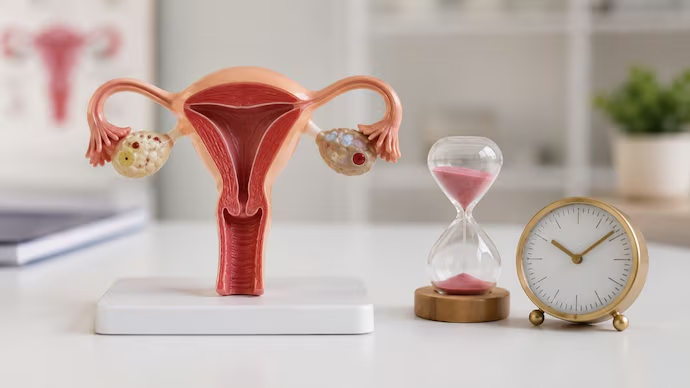
Girls today are reaching puberty at younger ages than previous generations, prompting many women to wonder whether an early first period (menarche) could also mean experiencing menopause earlier in life. While scientific studies have found a possible association, health experts say the relationship is far more complex than it appears.
The timing of menopause depends on several factors, including genetics, lifestyle, and overall reproductive health—not simply the age at which menstruation begins.
Is There a Link Between Early Menarche and Early Menopause?
Research suggests that women who experience their first menstrual cycle at a younger age may have a slightly higher chance of entering menopause earlier than others.
However, experts stress that this is an association rather than a direct cause-and-effect relationship. Having your first period at age 10 or 11 does not automatically mean you will experience menopause sooner than expected.
Many women who begin menstruating early continue to have normal reproductive years and reach menopause around the average age.
Does an Early First Period Mean You Lose Eggs Faster?
A common misconception is that girls who start menstruating early “use up” their eggs more quickly.
Medical experts explain that women are born with a fixed number of eggs, and this ovarian reserve naturally declines with age. The age at which menstruation starts does not directly accelerate this process.
Instead, ovarian aging is influenced primarily by:
- Genetics
- Hormonal factors
- Lifestyle habits
- Environmental exposures
- Certain medical conditions
For women concerned about fertility, ovarian reserve assessments such as Anti-Müllerian Hormone (AMH) testing and antral follicle count (AFC) provide more reliable information than the age at first menstruation.
What Determines the Age of Menopause?
Several factors influence when menopause occurs. The strongest predictor is often family history, particularly the age at which a woman’s mother experienced menopause.
Other factors that may contribute include:
- Smoking
- Thyroid disorders
- Endometriosis
- Polycystic Ovary Syndrome (PCOS)
- Chemotherapy
- Radiotherapy
- Obesity
- Certain autoimmune conditions
- Overall reproductive health
When Should Early Menstruation Be a Concern?
An early first period alone is usually not a medical problem.
However, women should consider consulting a healthcare professional if early menstruation is accompanied by:
- Highly irregular menstrual cycles
- Heavy or extremely painful periods
- Severe acne
- Excessive facial or body hair
- Sudden or unexplained weight changes
- A strong family history of early menopause
- Difficulty conceiving
These symptoms may indicate hormonal imbalances or reproductive health conditions that require evaluation.
Should Women Plan Fertility Earlier?
For most women, starting periods early does not mean they need to change their family planning decisions.
However, those with a family history of premature or early menopause may benefit from discussing fertility goals with a gynecologist earlier in adulthood. In some situations, ovarian reserve testing during the late twenties or early thirties can provide valuable information for future family planning.
How to Support Long-Term Reproductive Health
Experts recommend focusing on overall health rather than worrying about the age of the first menstrual cycle.
Healthy habits include:
- Maintaining a healthy body weight
- Avoiding smoking
- Eating a balanced diet
- Exercising regularly
- Managing chronic medical conditions
- Scheduling routine gynecological check-ups
- Seeking medical advice for persistent menstrual irregularities
Taking these steps can help support reproductive health throughout adulthood.
Key Highlights
- Early menstruation may be associated with earlier menopause but does not directly cause it.
- Genetics is the biggest factor influencing menopause timing.
- Starting periods early does not mean ovarian reserve declines faster.
- AMH and AFC tests provide better insight into fertility than age at first period.
- Smoking, thyroid disorders, PCOS, endometriosis, and obesity can influence menopause timing.
- Medical evaluation is recommended if early periods occur with abnormal symptoms.
- Most women do not need to alter family planning based solely on early menarche.
FAQs
1. Does getting your first period early mean you’ll reach menopause early?
No. Although some studies suggest an association, an early first period does not guarantee early menopause.
2. What is the average age of menopause?
Most women naturally reach menopause between the ages of 45 and 55, with the average around 51 years.
3. Does an early first period reduce fertility?
Not necessarily. Fertility depends on several factors, including ovarian reserve, age, and overall reproductive health.
4. What is the biggest factor that determines menopause timing?
Genetics, especially family history, is considered the strongest predictor.
5. Can lifestyle affect menopause?
Yes. Smoking, obesity, chronic illnesses, and certain medical treatments can influence when menopause occurs.
6. Should women who had early periods undergo fertility testing?
Routine testing isn’t necessary for everyone, but women with a family history of early menopause or fertility concerns should consult a healthcare professional.
7. What are AMH and AFC tests?
AMH (Anti-Müllerian Hormone) and Antral Follicle Count (AFC) are tests used to estimate ovarian reserve and fertility potential.
8. Is early puberty becoming more common?
Research indicates that girls are reaching puberty earlier than previous generations, influenced by genetics, nutrition, environmental, and lifestyle factors.
9. When should I see a doctor after an early first period?
Seek medical advice if early menstruation is accompanied by irregular cycles, heavy bleeding, severe pain, hormonal symptoms, or a family history of early menopause.
10. How can women maintain reproductive health?
A healthy lifestyle, balanced diet, regular exercise, avoiding smoking, managing medical conditions, and routine gynecological check-ups can support long-term reproductive health.
Leave a Reply