

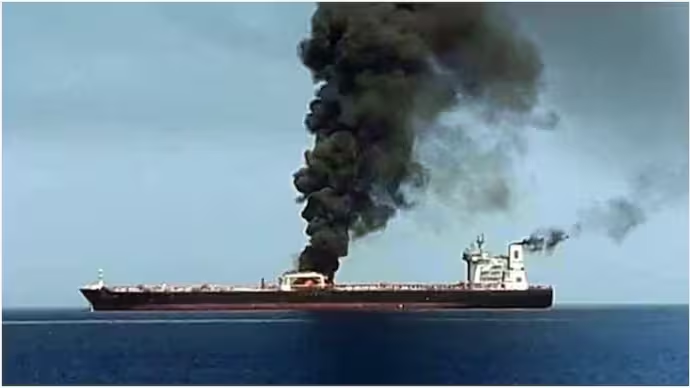
An Indian marine engineer who had been missing since the attack on the commercial vessel GFS Galaxy near the coast of Oman has died, marking the second death of an Indian seafarer in the Strait of Hormuz region within three days.
The incident has heightened concerns over the safety of Indian crew members working aboard commercial vessels as tensions continue to rise across West Asia.
Marine Engineer Confirmed Dead
The deceased has been identified as Heramb Karmarkar, a 30-year-old marine engineer serving aboard the Cyprus-flagged container vessel GFS Galaxy.
He had been reported missing after the ship was struck on Sunday while operating near the coast of Oman.
Family members said the vessel’s operating company informed them of his death. An official confirmation from Indian authorities was awaited at the time of reporting.
GFS Galaxy Was Carrying 24 Crew Members
The GFS Galaxy had a crew of 24 personnel, including 11 Indian nationals, when it came under attack.
Cyprus authorities said the vessel was hit by an unidentified projectile.
Iran later claimed responsibility for striking the ship, alleging that it attempted to use an unauthorised maritime route despite repeated warnings to alter its course.
Second Indian Seafarer Killed in Three Days
Karmarkar’s death is the second involving an Indian sailor in the Gulf region within a span of three days.
Earlier, another Indian seafarer was killed after two commercial vessels were attacked while passing through the Strait of Hormuz.
The back-to-back incidents have intensified concerns over the safety of merchant shipping as hostilities continue in the region.
India Steps Up Maritime Safety Measures
Following the recent attacks, the Central Government announced a series of measures aimed at improving the safety and monitoring of Indian seafarers operating in high-risk waters.
An inter-ministerial meeting chaired by Union Minister for Ports, Shipping and Waterways Sarbananda Sonowal decided to introduce:
- A real-time operational dashboard to monitor Indian seafarers on vessels across the world.
- Dedicated liaison officers for families of affected crew members.
- Enhanced coordination between government agencies and shipping companies.
- Continued monitoring of developments in the Strait of Hormuz.
Officials said the government’s response would remain focused on protecting Indian seafarers and supporting their families.
Rising Tensions in the Strait of Hormuz
The latest attack comes amid renewed tensions in the Gulf region following escalating hostilities involving Iran and the United States.
The Strait of Hormuz remains one of the world’s most critical maritime trade routes, carrying a significant share of global oil and gas shipments.
Recent attacks on commercial vessels have disrupted shipping operations and increased security concerns for international shipping companies.
More Indian Crew Members Affected
The government’s latest response also follows attacks on the UAE-flagged vessels MT Al Bahiyah and MT Mombasa, which together had 30 Indian seafarers among their combined crew of 46.
Authorities continue to monitor the security situation while maintaining contact with shipping operators and Indian missions in the region.
What Happens Next?
With maritime tensions showing little sign of easing, Indian authorities are expected to continue reviewing safety protocols for merchant vessels operating through the Strait of Hormuz.
The government has also indicated that it will maintain close coordination with shipping companies to safeguard Indian crew members working in conflict-prone waters.
FAQs
1. Who was the Indian sailor killed in the GFS Galaxy attack?
The deceased was Heramb Karmarkar, a 30-year-old Indian marine engineer serving aboard the Cyprus-flagged GFS Galaxy.
2. Where did the attack take place?
The GFS Galaxy was attacked off the coast of Oman near the Strait of Hormuz.
3. How many Indians were on board the vessel?
The ship had 24 crew members, including 11 Indian nationals.
4. Why is the Strait of Hormuz important?
The Strait of Hormuz is one of the world’s busiest shipping routes and carries a significant portion of global oil and natural gas exports.
5. What safety measures has India announced?
The government has introduced a real-time monitoring dashboard for Indian seafarers, appointed liaison officers for affected families and strengthened coordination with shipping companies.
6. Is this the first Indian casualty in the recent Gulf attacks?
No. Karmarkar is the second Indian seafarer to lose his life in the region within three days.
7. Which other vessels were recently attacked?
The UAE-flagged vessels MT Al Bahiyah and MT Mombasa were also attacked while transiting the Strait of Hormuz.
8. How is the Indian government responding?
The Centre is closely monitoring the security situation, coordinating with maritime authorities and providing support to Indian seafarers and their families.
Leave a Reply