


- March 03, 2026
“Survival Is Our Politics Now”: CBCI President Archbishop Mar Andrews Thazhath on Christians’ Insecurity in India
CBCI president Archbishop Mar Andrews Thazhath warns of political sidelining and rising insecurity among Christians, calling survival the new priority.
- January 09, 2026
- in National
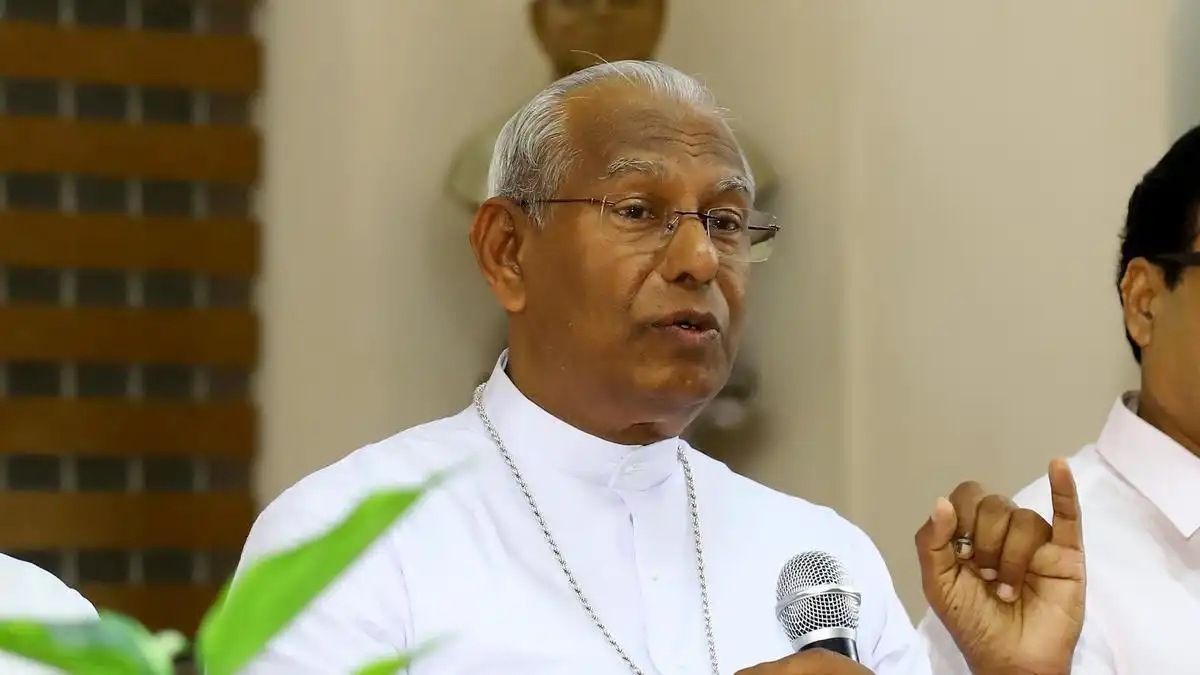
Archbishop Mar Andrew Thazhath, President of the Catholic Bishops’ Conference of India (CBCI) and Archbishop of Thrissur, has expressed deep concern over what he describes as a growing sense of insecurity among Christians across India, particularly in Kerala.
In an interview, the Archbishop said Christians are increasingly being pushed out of political influence, economic opportunity, and decision-making spaces. “This is not accidental. It is systemic,” he said, adding that the community’s immediate priority has shifted from political alignment to survival.
He pointed to policies such as Kerala’s 80:20 minority scholarship formula as evidence of political marginalisation. According to him, support for such measures across party lines signals that smaller communities like Christians are becoming electorally expendable in a numbers-driven political system.
Archbishop Thazhath argued that discrimination against Christians has moved beyond isolated incidents to structured political neglect. He said political parties increasingly focus on larger vote banks, leaving smaller communities without meaningful representation or protection.
He also warned that Christians are often treated as “soft targets” because of their non-violent and less confrontational nature. “That moral strength has paradoxically turned into our biggest vulnerability,” he noted.
Shift to Issue-Based Politics
Explaining the Church’s evolving political stance, the CBCI president said it is no longer emotionally aligned with any single party. Instead, the Church encourages voters to support candidates and policies that ensure community safety and contribute to national development. Political positions, he clarified, may vary by region depending on ground realities.
The Archbishop cautioned against what he described as a dangerous pattern in some regions, where Christians face attacks from one communal force and are then compelled to seek protection from another. Such forced dependence, he said, undermines democratic values and constitutional secularism.
Concerns Over ‘Love Jihad’ Narrative
Addressing anxieties surrounding allegations of “love jihad”, Archbishop Thazhath said such narratives are deepening fear and division within Kerala’s Christian community, particularly the Syro-Malabar Church, which runs one of India’s largest education and healthcare networks. He alleged that vested interests are attempting to weaken the community’s collective influence by fuelling internal divisions.
Economic and Political Marginalisation
Despite their extensive contribution to education and healthcare, Christians are witnessing a decline in government employment, political participation, and business ownership, the Archbishop said. Citing surveys from Thrissur, he noted that even in areas with significant Christian populations, representation in government services remains disproportionately low. Migration of Christian youth, he added, has become both a symptom and a consequence of insecurity, resulting in social and political weakening of the community. This, he said, prompted his call for greater youth participation in politics, business, agriculture, and public service.
The Syro-Malabar Church’s decision to declare 2026 as the “Year of Community Empowerment” must be understood in this context, he said, stressing that self-preservation should not be misread as communalism.
Silence on Attacks and Constitutional Concerns
Archbishop Thazhath was particularly critical of the lack of strong political condemnation following attacks on Christmas celebrations in several parts of the country. He said vandalism of Christmas events and shops amounted to constitutional violations.
As CBCI president, he conveyed these concerns directly to Prime Minister Narendra Modi. “If fringe groups are responsible, why is there silence? Silence is not neutrality — it is complicity,” he said, warning that inaction sends dangerous signals to society.
Rejecting claims that Christianity is a foreign religion or that conversions are forced, he cited historical and demographic data, noting Christianity’s presence in India since the first century and its declining population share.
While acknowledging that extremism manifests differently across regions, the Archbishop warned that narratives used in North India to consolidate votes are gradually entering Kerala as well. Yet, he asserted that political irrelevance is not inevitable. “Christians still have the capacity to influence decision-making in Kerala. Quiet service cannot become enforced silence,” he said, adding that while persecution may be part of Christian history, eradication will never be accepted.
you may also like


- March 03, 2026
Gulf Tensions Rise; Evacuation Flights Reach India

- March 03, 2026
Chhattisgarh Private Schools Announce RTE Protest
- March 02, 2026
India Rejects Report Linking Officials to Nijjar Killing
- March 02, 2026