

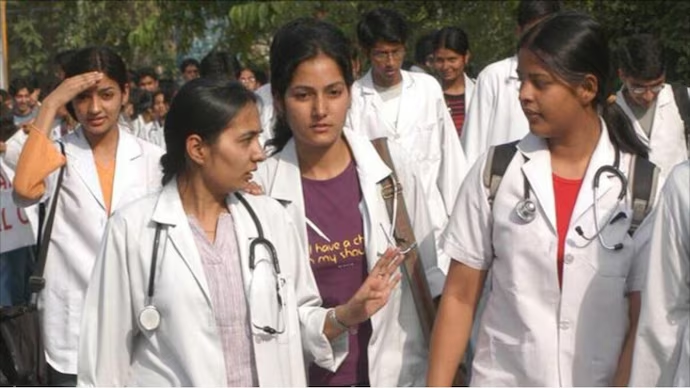
The Centre has approved additional MBBS seats in several government medical colleges for the 2026-27 academic session, creating fresh opportunities for thousands of aspiring doctors. While the move expands access to affordable medical education, healthcare experts believe simply increasing undergraduate admissions will not be enough to overcome India’s long-standing shortage of doctors.
They argue that the country also needs stronger medical infrastructure, more teaching faculty, additional postgraduate seats and better incentives for doctors to serve in rural areas if the expansion is to deliver lasting improvements in healthcare.
Government Medical Education Continues to Expand
India has witnessed rapid growth in medical education over the past decade. The number of MBBS seats has more than doubled from nearly 51,000 in 2013-14 to over 1.18 lakh by 2024-25. The number of medical colleges has also increased significantly, giving more students access to medical education.
The latest approvals form part of the Centre’s broader plan to strengthen government medical colleges. Earlier this year, more than 10,000 additional medical seats were sanctioned under centrally sponsored schemes for the period between 2025-26 and 2028-29, with the objective of improving the doctor-to-population ratio, particularly in underserved regions.
Government institutions remain the preferred choice for most students because they offer quality education at a fraction of the cost charged by private medical colleges.
More MBBS Seats Alone Won’t Deliver Immediate Results
Healthcare experts say expanding admissions is only the beginning.
An MBBS degree takes five and a half years to complete, including the mandatory internship. As a result, students admitted under the newly approved seats will only enter the healthcare workforce well into the next decade.
Medical professionals point out that increasing admissions today will not immediately ease the shortage of doctors in hospitals or primary healthcare centres.
Experts also warn that the benefits of higher admissions could be limited if colleges fail to improve teaching quality and clinical training at the same pace.
Faculty and Infrastructure Need Equal Attention
One of the biggest concerns surrounding the expansion is whether medical colleges have enough qualified teachers, hospital facilities and patient exposure to train larger batches of students effectively.
Many government medical colleges continue to face shortages of faculty members and struggle to meet National Medical Commission (NMC) norms. Experts believe expanding seats without strengthening classrooms, laboratories, teaching hospitals and faculty recruitment could compromise the quality of medical education.
They recommend regular inspections and stricter implementation of NMC standards to ensure institutions maintain high academic and clinical training standards.
India’s Bigger Challenge Is Rural Healthcare
Producing more doctors does not automatically guarantee better healthcare access across the country.
A major challenge remains the unequal distribution of doctors. Urban centres continue to attract most medical professionals, while many rural and remote areas struggle with severe shortages.
Doctors working in rural healthcare facilities often face inadequate diagnostic equipment, limited infrastructure, unreliable utilities and a lack of residential facilities. These challenges discourage many young graduates from accepting rural postings, with several preferring to prepare for postgraduate entrance examinations instead.
Experts believe better salaries, housing, security and improved healthcare infrastructure could encourage more doctors to work in underserved regions.
The Growing Pressure on Postgraduate Medical Seats
While MBBS seats have expanded rapidly, postgraduate medical education has not kept pace.
The increase in undergraduate admissions has created intense competition for NEET PG, leaving many graduates waiting years to secure seats in their preferred specialties.
This imbalance also contributes to shortages of specialist doctors in public hospitals, affecting healthcare delivery across the country.
Public health experts say expanding postgraduate education should become the next priority so that India can produce enough specialists to meet rising healthcare demands.
Medical Education Must Evolve With Modern Healthcare
Experts also recommend broader reforms to improve India’s healthcare workforce.
Greater focus on Family Medicine could strengthen primary healthcare, while introducing artificial intelligence, digital health tools and telemedicine into medical education would prepare future doctors for evolving healthcare systems.
Communication skills, research training and patient-centred care are also increasingly viewed as essential components of modern medical education.
The Road Ahead
The expansion of MBBS seats marks another important milestone in India’s efforts to strengthen healthcare capacity. However, experts believe the real success of this initiative will depend on whether medical colleges receive adequate infrastructure, qualified faculty and stronger postgraduate opportunities.
Ultimately, addressing India’s doctor shortage will require more than simply producing additional graduates. Building a well-trained workforce, creating more specialists and ensuring doctors are available where patients need them most will determine whether these reforms translate into better healthcare outcomes.
FAQs
1. Why is the government increasing MBBS seats?
The Centre aims to improve access to medical education and strengthen India’s doctor-to-population ratio by creating more opportunities in government medical colleges.
2. How many MBBS seats are available in India?
India has more than 1.18 lakh MBBS seats across government and private medical colleges for the 2024-25 academic year, with further expansion planned.
3. Will more MBBS seats solve India’s doctor shortage?
Not entirely. Experts say improvements in faculty, infrastructure, postgraduate education and rural healthcare are also necessary.
4. Why are government medical colleges preferred?
Government colleges offer significantly lower tuition fees while maintaining quality education, making them the first choice for many aspiring doctors.
5. What is the biggest challenge after increasing MBBS seats?
Ensuring sufficient faculty, hospital infrastructure and clinical training to maintain educational quality.
6. Why is there a shortage of doctors in rural India?
Many doctors prefer urban jobs because rural areas often lack adequate facilities, housing, equipment and career growth opportunities.
7. Why are postgraduate medical seats important?
PG seats produce specialist doctors. Without enough postgraduate opportunities, shortages of specialists can continue despite more MBBS graduates.
8. How long does it take for new MBBS students to become doctors?
An MBBS programme takes five and a half years, including a compulsory internship.
9. What role does the National Medical Commission play?
The NMC regulates medical education standards, approves medical colleges and monitors faculty and infrastructure requirements.
10. What should India focus on next to improve healthcare?
Experts recommend expanding postgraduate seats, strengthening rural healthcare, recruiting more faculty, improving infrastructure and integrating modern technologies such as AI and telemedicine into medical education.
Leave a Reply