


- March 03, 2026
OpenAI Accuses DeepSeek of ‘Free-Riding’
OpenAI tells US lawmakers that China’s DeepSeek is using distillation and bypassing safeguards to copy AI models, raising concerns over fair competition.
- February 13, 2026
- in National
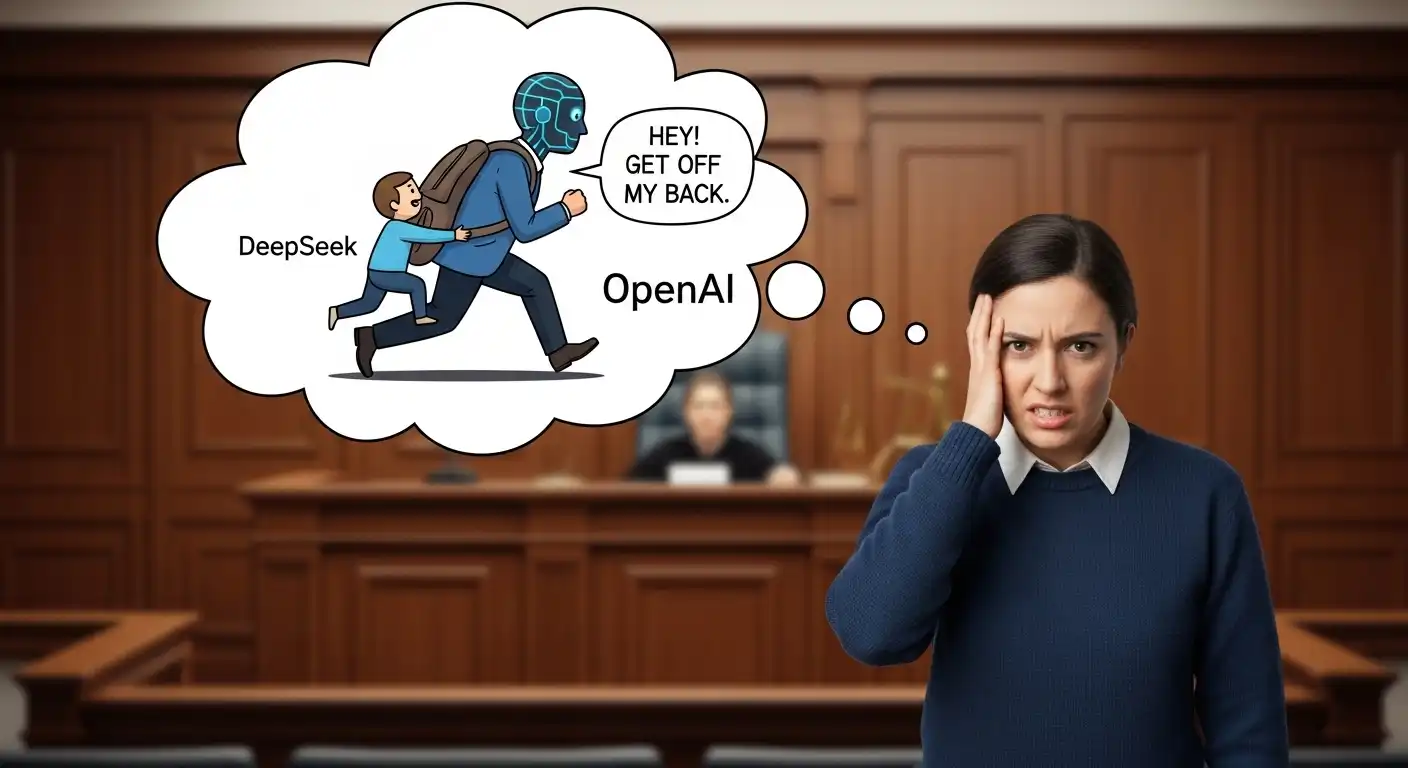
Months after OpenAI CEO Sam Altman described China’s DeepSeek R1 model as “impressive,” the company has now formally accused the Chinese AI firm of unfair practices.
In a memo sent to US lawmakers, OpenAI alleged that DeepSeek is attempting to copy advanced American AI models using a technique known as distillation.
What OpenAI Claims
According to the memo addressed to the US House Select Committee on China, OpenAI claims DeepSeek is “free-riding” on capabilities developed by US-based AI labs.
The company said it has observed activity that it believes is consistent with attempts to extract outputs from OpenAI’s systems and use them to train competing models.
OpenAI also alleged that some accounts linked to DeepSeek employees tried to bypass access restrictions using third-party routing methods that hide their origin.
These claims have not been independently verified, and DeepSeek has not publicly responded to the allegations at the time of publication.
What Is Distillation?
Distillation is a widely used AI training method in which smaller models learn from the outputs of larger, more advanced systems.
OpenAI said the method itself is legitimate when done within allowed frameworks. However, it does not permit its outputs to be used to create imitation frontier models that replicate its capabilities.
The company warned that unauthorized distillation could result in systems that lack strong safety measures and governance safeguards.
Broader Concerns Raised
In its memo, OpenAI also raised concerns about censorship and political bias in DeepSeek’s responses, alleging that the model aligns closely with official narratives of the Chinese government.
The company suggested that some responses on politically sensitive topics are either refused or altered.
These observations reflect OpenAI’s assessment and have not been independently confirmed.
OpenAI further argued that China is making rapid gains in energy generation and computing capacity, which are critical for AI development.
Infrastructure and AI Competition
The memo highlights what OpenAI describes as a broader competition between democratic and state-controlled AI systems.
OpenAI emphasized the importance of compute power — including chips, electricity and data centers — in shaping global AI leadership.
The company noted that it is expanding its own infrastructure through its Stargate Project, aiming to increase AI capacity in the United States.
It also reported growth in usage of its products, including ChatGPT and its coding model GPT-5.3-Codex.
Call for Government Action
OpenAI urged US policymakers to consider measures such as:
-
Greater intelligence and information sharing
-
Industry-wide standards to prevent unauthorized model copying
-
Restrictions on access to critical computing infrastructure
-
Stronger export controls
The company said a coordinated “ecosystem security” approach is needed, as strengthening one provider alone may not be sufficient.
Deepening AI Rivalry
The development signals rising tensions in the global AI race, particularly between US and Chinese firms.
While OpenAI previously acknowledged DeepSeek’s technical progress, its latest memo suggests growing concerns about intellectual property, model safety and infrastructure competition.
As AI continues to shape economic and national security discussions, policy debates around innovation, safeguards and global competition are likely to intensify.
you may also like


- March 03, 2026
Gulf Tensions Rise; Evacuation Flights Reach India

- March 03, 2026
Chhattisgarh Private Schools Announce RTE Protest

- March 02, 2026
India Rejects Report Linking Officials to Nijjar Killing

- March 02, 2026