

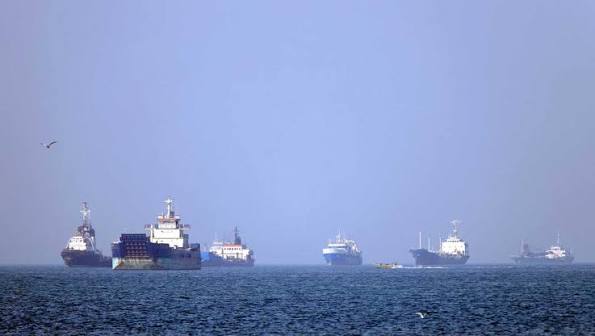
The United States has reinstated its blockade on Iranian ports after accusing Tehran of targeting vessels operating near the Strait of Hormuz, a move that has significantly increased tensions in the Middle East and placed a fragile ceasefire under severe strain.
The renewed restrictions come as diplomatic efforts to prevent further conflict continue to lose momentum. Fresh military operations, missile exchanges and threats to regional energy exports have fueled fears that the situation could escalate into a wider regional war.
US restores blockade amid renewed security concerns
Washington announced the return of the blockade after alleging that Iranian-backed forces had launched attacks against ships attempting to transit the Strait of Hormuz, one of the world’s most strategically important maritime routes.
The blockade had previously been suspended following an interim agreement designed to create a temporary window for negotiations on Iran’s nuclear programme and regional security issues.
However, with talks making little progress and military incidents increasing, US authorities decided to restore the restrictions.
Strait of Hormuz remains at the centre of global tensions
The Strait of Hormuz carries roughly one-fifth of the world’s oil and liquefied natural gas shipments during normal trading conditions, making it one of the most critical energy corridors on the planet.
Any disruption to shipping through the narrow waterway immediately affects global energy markets and international trade.
The latest developments have renewed concerns that commercial shipping could once again face delays, higher insurance costs and increased security risks.
Military exchanges continue despite diplomatic efforts
Following the restoration of the blockade, the United States carried out another round of military strikes targeting multiple locations linked to Iranian military infrastructure.
Meanwhile, missile alerts were reported in Bahrain and Kuwait after incoming projectiles were detected. Jordan also confirmed intercepting several missiles approaching its airspace.
Iran maintained that it had launched operations against countries hosting American military bases, while US officials accused Tehran of continuing aggressive actions that threaten regional stability.
The growing cycle of retaliation has made the already fragile truce increasingly difficult to sustain.
Iran warns energy exports could be disrupted
Iran’s Revolutionary Guard issued a strong warning following the US decision, stating that regional energy exports could face major disruption if restrictions remain in place.
Officials argued that if Iranian exports continue to face obstacles, broader energy shipments across the Gulf could also be affected.
The warning has heightened anxiety among global energy traders, shipping companies and governments dependent on oil supplies passing through the Gulf.
Trump signals continued pressure on Tehran
President Donald Trump indicated that Washington would continue applying pressure until negotiations resume.
While discussing maritime security, he revealed that his administration had briefly considered imposing additional charges on commercial vessels using the Strait of Hormuz before abandoning the proposal after consultations with regional allies.
The administration has instead focused on military pressure and diplomatic efforts aimed at pushing Iran back to the negotiating table.
Trump also warned that additional military operations remain an option if negotiations fail to restart.
Oil markets react to rising uncertainty
The renewed tensions briefly pushed international oil prices higher as investors reacted to concerns over possible supply disruptions.
Although prices later eased after clarification over shipping fees, analysts continue to monitor developments closely because prolonged instability around the Strait of Hormuz could significantly impact global energy markets.
Shipping companies are also reviewing security measures as insurance premiums and transportation costs remain vulnerable to further escalation.
International mediation efforts continue
Several regional governments continue working behind the scenes to revive negotiations between Washington and Tehran.
Diplomatic channels remain open, but recent military exchanges and the renewed blockade have complicated efforts to rebuild trust between both sides.
The coming days are expected to be crucial in determining whether diplomacy can regain momentum or whether the confrontation moves toward a broader regional conflict.
What happens next?
The return of the US blockade marks another major setback for efforts to stabilise the Gulf region.
With military operations continuing, threats against commercial shipping increasing and negotiations stalled, the risk of further escalation remains high.
Global markets, energy producers and governments will closely watch developments around the Strait of Hormuz, where even a limited disruption could have far-reaching economic and geopolitical consequences.
FAQs
1. Why did the US restore the blockade on Iranian ports?
The United States reinstated the blockade after accusing Iran of attacking ships operating near the Strait of Hormuz.
2. Why is the Strait of Hormuz important?
The Strait of Hormuz is one of the world’s busiest energy shipping routes, carrying around 20% of global oil and natural gas exports during normal conditions.
3. How could the blockade affect global oil prices?
Any disruption to shipping through the Strait of Hormuz can reduce supply confidence, potentially leading to higher crude oil prices and increased transportation costs.
4. What is the current status of US-Iran negotiations?
Negotiations remain stalled despite ongoing diplomatic efforts by regional mediators.
5. Has military action increased after the blockade?
Yes. Fresh US strikes and missile exchanges involving Iran and neighbouring countries have raised regional security concerns.
6. Which countries reported missile alerts?
Bahrain, Kuwait and Jordan reported missile-related incidents during the latest escalation.
7. What has Iran said about the blockade?
Iran warned that continued restrictions could affect energy exports across the wider Gulf region.
8. Why does the Strait of Hormuz matter to the global economy?
A large share of the world’s energy supplies passes through the waterway, making it vital for international trade and energy security.
9. How have financial markets responded?
Oil prices initially rose amid fears of supply disruption before easing as uncertainty over proposed shipping fees diminished.
10. What should the world watch next?
Attention will remain on diplomatic negotiations, military developments and shipping activity in the Strait of Hormuz, as these factors will determine whether tensions escalate further or move toward de-escalation.
Leave a Reply