

Key Highlights
- The US and Saudi Arabia have signed a civil nuclear cooperation agreement.
- The deal now moves to Congress for review and approval.
- The agreement allows Saudi Arabia to pursue civil nuclear energy using US technology.
- Critics have raised concerns over uranium enrichment, oversight and regional security.
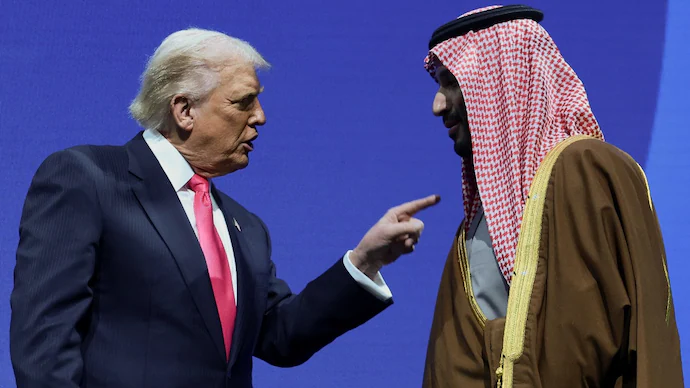
The United States and Saudi Arabia have signed a landmark civil nuclear cooperation agreement, advancing years of negotiations aimed at strengthening energy ties and strategic cooperation between the two allies.
The agreement, known as a 123 Agreement, was signed by US Energy Secretary Chris Wright and Saudi Energy Minister Prince Abdulaziz bin Salman. It will now undergo review by the US Congress before it can take effect.
What the Nuclear Agreement Includes
The deal will allow Saudi Arabia to develop its civilian nuclear energy programme using American technology and expertise.
According to the US Department of Energy, the agreement is intended to:
- Expand exports of US nuclear technology
- Strengthen long-term strategic cooperation between Washington and Riyadh
- Support economic growth and job creation
- Promote nuclear safety and nonproliferation standards
US officials said the agreement complies with the requirements of the US Atomic Energy Act and maintains strict nuclear safety measures.
Oversight and Enrichment Concerns
Despite government assurances, the agreement has drawn criticism from lawmakers and nonproliferation experts.
Unlike earlier proposals negotiated under previous administrations, the current pact does not include an International Atomic Energy Agency (IAEA) Additional Protocol, which would have provided broader inspection powers for international nuclear watchdogs.
The agreement also permits Saudi Arabia to pursue uranium enrichment and nuclear fuel reprocessing—activities considered highly sensitive because they can potentially be used in the production of nuclear weapons if diverted from peaceful purposes.
Regional Security Debate
Saudi Arabia has repeatedly maintained that its nuclear programme is intended solely for peaceful energy generation.
However, past remarks by Crown Prince Mohammed bin Salman, indicating that Saudi Arabia could pursue nuclear weapons if Iran developed them, have heightened concerns among analysts about the possibility of a regional nuclear arms race.
Critics argue that stronger safeguards should accompany any agreement involving advanced nuclear technology in the Middle East.
Comparison With UAE Agreement
The agreement differs from the nuclear cooperation pact signed between the United States and the United Arab Emirates in 2009.
Under that arrangement, the UAE permanently agreed not to pursue uranium enrichment or nuclear fuel reprocessing, a commitment often referred to as the “gold standard” for US civil nuclear agreements.
Saudi Arabia has maintained that it should retain the right to develop a complete civilian nuclear fuel cycle.
Congressional Review Ahead
The agreement will now be examined by the US Congress, which has a statutory review period to assess the proposal.
Lawmakers may raise objections, although blocking the agreement would require sufficient congressional support to overcome a potential presidential veto.
Several Democratic lawmakers have already called for stronger nonproliferation safeguards before the agreement is allowed to proceed.
With congressional scrutiny expected in the coming weeks, the pact is likely to remain at the centre of debates over energy security, regional stability and nuclear nonproliferation.
FAQs
1. What is the US-Saudi nuclear agreement?
It is a civil nuclear cooperation agreement that allows Saudi Arabia to develop nuclear energy using American technology under the framework of a US 123 Agreement.
2. What is a 123 Agreement?
A 123 Agreement is a legal framework under the US Atomic Energy Act that governs civilian nuclear cooperation between the United States and another country.
3. Why is the agreement controversial?
Critics argue that allowing uranium enrichment and the absence of stronger international inspection measures could increase nuclear proliferation risks.
4. Does the agreement allow Saudi Arabia to build nuclear weapons?
No. The agreement is designed for peaceful civilian nuclear energy. However, some experts have raised concerns because uranium enrichment technology could potentially be diverted for military purposes.
5. What role does Congress play?
The agreement must undergo congressional review before it can take effect. Lawmakers can debate or challenge the proposal during the review period.
6. How does this differ from the UAE nuclear agreement?
Unlike the UAE, Saudi Arabia has not agreed to permanently give up uranium enrichment and nuclear fuel reprocessing activities.
7. Why is Saudi Arabia pursuing nuclear energy?
Saudi Arabia aims to diversify its energy sources, support future electricity demand and reduce reliance on fossil fuels as part of its long-term economic strategy.
Leave a Reply