

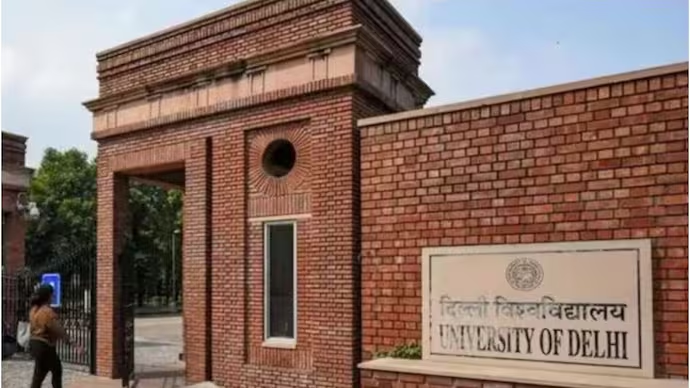
Delhi University has recorded a strong response to its first undergraduate admission list for the 2026-27 academic session, with more than 66,000 candidates accepting their allotted seats within 24 hours under the Common Seat Allocation System (CSAS).
The first allocation round saw the university offer seats to over 93,000 candidates across 221 undergraduate programmes in 67 affiliated colleges, despite having just over 71,000 available seats. The higher number of allocations reflects Delhi University’s practice of issuing extra offers to account for withdrawals and unfilled seats during subsequent admission rounds.
More Than 66,000 Candidates Accept Allotted Seats
According to admission data released by the university, 66,251 candidates accepted their allotted seats by Friday following the release of the first allocation list.
Among these:
- 6,826 applications reached the “Approved by Principal” stage.
- 896 students completed the admission process by paying the required fees.
The university expects these numbers to rise as verification and fee payment continue over the coming days.
Over 93,000 Seat Allocations Made
Delhi University announced its first allocation list on July 16, offering admission to 93,033 candidates for the 2026-27 academic year.
The allocations covered:
- 221 undergraduate programmes
- 67 Delhi University colleges
- More than 71,000 available seats
The admission process was conducted through the Common Seat Allocation System (CSAS) based on candidates’ programme and college preferences.
More Than Two Lakh Students Participated
The university received a massive response during the admission process.
Admission figures released by DU show:
- 2,18,284 candidates completed registration on the CSAS portal.
- 2,08,043 students completed Phase 2, submitting programme and college preferences.
- 15.94 million unique programme-college preferences were processed during the allocation exercise.
Among the allocated candidates:
- 42,019 were male
- 51,014 were female
The university said the overall allocation rate stood at 86.1% during the first admission round.
Thousands Receive Preferred Colleges and Courses
The first allocation round also saw many candidates secure their preferred choices.
Delhi University said:
- 5,141 students received their first programme-college preference.
- 1,243 Single Girl Child candidates secured admissions.
- 242 orphan category candidates also received seat allocations, including 109 male and 133 female applicants.
These admissions were made under the university’s supernumerary quota provisions.
What Candidates Should Do Next
Students allotted seats in the first round can accept their allocation until 11:59 pm on July 18.
After accepting the seat:
- Colleges will verify the submitted documents.
- The Principal will approve eligible applications.
- Candidates must complete the admission by paying the prescribed fee.
Students seeking admission to a higher-preference programme or college in later rounds can choose the “Upgrade” option after accepting their current seat.
The second allocation list is scheduled to be released on July 25.
Sports Quota Trials Schedule Announced
Delhi University has also released the schedule for undergraduate Sports Supernumerary Quota admissions.
The sports trials will be conducted from July 29 to August 3 at different venues across Delhi.
The first day of trials will include:
- Archery
- Women’s Badminton
- Women’s Basketball
- Boxing
- Men’s Cricket
- Women’s Football
- Hockey
- Squash
- Table Tennis
- Weightlifting
Other events, including athletics, chess, fencing, kabaddi, shooting, swimming, tennis and wrestling, will be held over the following days.
Candidates must report 30 minutes before their scheduled trial with:
- Printed CSAS (UG) 2026 application form
- Valid identity proof
- Proper sports kit
The university has also clarified that parents and guardians will not be allowed inside trial venues.
Academic Session to Begin on July 28
Delhi University has confirmed that the 2026-27 academic session will begin on July 28, with admission formalities continuing alongside sports quota selections and subsequent allocation rounds.
Students who have received seats are advised to complete document verification and fee payment within the prescribed deadlines to avoid cancellation of their allotments.
FAQs
How many students accepted Delhi University UG seats in the first round?
A total of 66,251 candidates accepted their allotted undergraduate seats within a day of the first CSAS allocation list.
How many seats were allocated in the first DU admission list?
Delhi University allocated 93,033 seats across 221 undergraduate programmes in the first round.
How many undergraduate seats are available at Delhi University?
The university has more than 71,000 undergraduate seats for the 2026-27 academic session.
When is the last date to accept the first allotted seat?
Candidates can accept their allocated seats until 11:59 pm on July 18, 2026.
When will Delhi University release the second allocation list?
The second CSAS allocation list is scheduled to be released on July 25, 2026.
What is the DU Upgrade option?
The Upgrade option allows students to be considered for a higher-preference course or college in subsequent admission rounds while retaining their current allotted seat.
When are DU Sports Quota trials scheduled?
Sports quota trials will be conducted from July 29 to August 3, 2026.
Can parents attend the sports trials?
No. Delhi University has stated that parents and guardians will not be permitted inside the trial venues.
When will the new Delhi University academic session begin?
The new academic session is scheduled to commence on July 28, 2026.
Which admission system does Delhi University use?
Delhi University conducts undergraduate admissions through the Common Seat Allocation System (CSAS) based on candidates’ preferences and eligibility.
Leave a Reply