

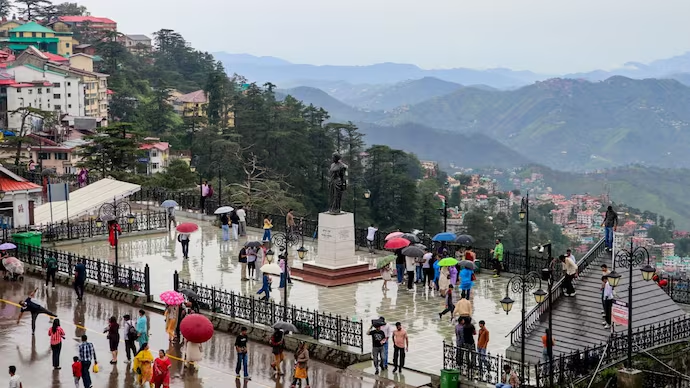
India is set to witness an intense spell of monsoon activity on Tuesday, July 21, 2026, with the India Meteorological Department (IMD) issuing weather alerts for several states. A red alert has been issued for parts of Himachal Pradesh due to the possibility of extremely heavy rainfall, while Delhi-NCR remains under a yellow alert for rain, thunderstorms, and gusty winds.
The fresh spell of rain also comes as flood conditions continue to affect Assam, where thousands of residents remain impacted by rising water levels.
Why Is the Monsoon Becoming More Active?
Meteorologists say the current weather pattern is being driven by multiple upper-air cyclonic circulations spread across different parts of the country.
These weather systems are located over Punjab, southern Uttar Pradesh, the Jharkhand-Bihar region, southwest Rajasthan, the west-central Bay of Bengal, and central Assam. A low-pressure trough connecting several of these systems is helping draw moisture across northern, eastern, and northeastern India, resulting in widespread rainfall.
The combination of these weather systems is expected to produce heavy showers, thunderstorms, and isolated incidents of very heavy rainfall in several regions.
Himachal Pradesh Faces Red Alert
The IMD has placed Chamba, Kangra, Kullu, Mandi, and Sirmaur under a red alert as rainfall in isolated areas could exceed 204.4 mm within 24 hours, meeting the department’s criteria for extremely heavy rainfall.
Authorities have also announced school closures in several affected districts as a precautionary measure.
Residents have been advised to avoid unnecessary travel, particularly in hilly areas vulnerable to landslides, overflowing streams, and flash floods.
Flash Flood Risk Remains High in Himalayan States
Heavy rainfall over the past several days has left many Himalayan regions with saturated soil, increasing the likelihood of flash floods and landslides.
The IMD has identified several districts in Jammu and Kashmir, including Poonch, Rajouri, Kulgam, Srinagar, and Anantnag, as areas facing elevated flash flood risk.
In Uttarakhand, districts such as Dehradun, Uttarkashi, Chamoli, and Rudraprayag are also under close monitoring because additional rainfall could trigger rapid surface runoff and landslides.
The warnings follow recent flood-related incidents in parts of the Himalayan region earlier this month.
Delhi-NCR to Receive Rain and Cooler Temperatures
Delhi and the National Capital Region are expected to experience cloudy skies, light to moderate rainfall, and isolated heavy showers during the day.
The IMD has also forecast thunderstorms accompanied by wind speeds reaching 50 km/h in some locations.
Daytime temperatures are expected to remain between 31°C and 33°C, while minimum temperatures may range from 24°C to 26°C, offering some relief from recent humidity.
Flood Situation Continues in Assam
Flood conditions continue to affect several districts of Assam, where more than 57,000 people remain impacted.
Disaster management authorities have reported multiple flood-related casualties during the current monsoon season, while emergency response teams remain on standby.
Fresh spells of heavy rainfall expected over Assam and Meghalaya could further complicate rescue and relief operations, particularly in low-lying areas already inundated by floodwaters.
Meanwhile, neighbouring Nagaland continues recovery efforts following recent landslides triggered by persistent rain.
Mumbai Under Orange Alert
Western India is also expected to receive significant rainfall, with Mumbai remaining under an orange alert.
Heavy showers are likely in several parts of the city, prompting authorities to advise commuters to monitor local weather updates and traffic conditions before travelling.
In contrast, several parts of southern India are expected to witness relatively lighter rainfall compared with northern and northeastern regions.
Understanding IMD’s Weather Alert Colours
The IMD uses four colour-coded alerts to indicate the severity of weather conditions:
Green Alert
No weather-related action is required, and conditions are considered normal.
Yellow Alert
Residents should remain aware of changing weather conditions and exercise caution.
Orange Alert
People should be prepared for potentially severe weather and follow official advisories.
Red Alert
Immediate action is recommended due to the possibility of dangerous weather conditions that may cause significant disruption.
What Residents Should Do
People living in areas under heavy rainfall alerts should monitor official weather updates, avoid travelling through waterlogged or landslide-prone regions, and follow instructions issued by local authorities.
Residents in flood-prone districts are also encouraged to keep emergency supplies ready and stay alert for evacuation advisories if required.
Frequently Asked Questions (FAQs)
1. Which states are under a red alert today?
Parts of Himachal Pradesh, including Chamba, Kangra, Kullu, Mandi, and Sirmaur, are under a red alert for extremely heavy rainfall.
2. Will Delhi receive rain on July 21, 2026?
Yes. Delhi-NCR is expected to experience light to moderate rain, isolated heavy showers, thunderstorms, and gusty winds.
3. Why is the monsoon so active right now?
Multiple upper-air cyclonic circulations and a connected low-pressure trough are drawing large amounts of moisture across northern and eastern India.
4. Which areas face flash flood risk?
Several districts in Himachal Pradesh, Jammu and Kashmir, and Uttarakhand are vulnerable to flash floods due to saturated soil and continued heavy rainfall.
5. What does an IMD red alert mean?
A red alert indicates extremely severe weather conditions where immediate precautions and official action may be necessary.
6. How many people are affected by floods in Assam?
More than 57,000 people across multiple districts have been affected by flooding during the current monsoon spell.
7. Is Mumbai also expecting heavy rain?
Yes. Mumbai remains under an orange alert with heavy rainfall expected in several areas.
8. What wind speeds are expected in Delhi?
Thunderstorms in Delhi-NCR may be accompanied by gusty winds reaching up to 50 km/h.
9. Why are Himalayan states more vulnerable during heavy rain?
Steep terrain and already saturated soil increase the risk of flash floods, landslides, and rapid runoff during intense rainfall.
10. Where can people get official weather updates?
Residents should follow updates from the India Meteorological Department (IMD), state disaster management authorities, and local administration for the latest forecasts and advisories.
Leave a Reply