AI May Reshape Jobs, But India Can Turn Disruption Into Opportunity: CP Gurnani
CP Gurnani said India should focus on using AI to improve skills, build affordable solutions and create new opportunities instead of viewing the technology only as a threat to jobs.
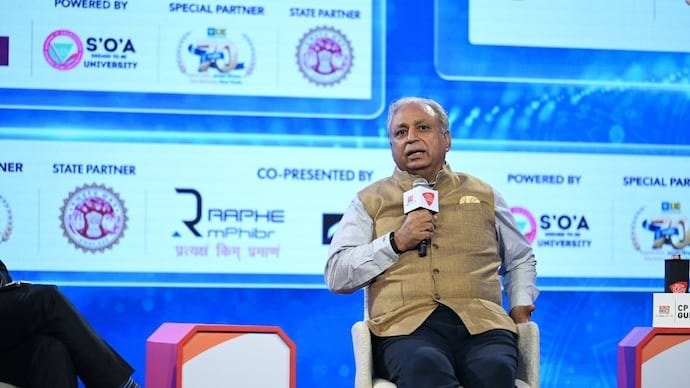
Artificial intelligence is changing the way people work, but India should view the technology as more than a threat to employment. The country can use AI to upgrade skills, develop affordable solutions and create new opportunities, CP Gurnani, Co-Founder and Vice Chairman of AIONOS, said at the India Today BRICS Roundtable in New Delhi.
Gurnani said artificial intelligence itself is not entirely new, but the way people interact with it has changed significantly. Conversational AI that works across multiple languages is making the technology accessible to a much wider audience, including people who may not be comfortable with traditional digital tools.
He believes AI could eventually become as commonplace as electricity, with people using it routinely without needing to understand the technology that powers it.
According to Gurnani, India should focus less on owning every component of the AI technology stack and more on developing applications and services that solve real-world problems. Access to advanced chips and other infrastructure can be affected by geopolitical tensions and supply restrictions, but India can continue building products and platforms around the technology available to it.
He pointed to India's experience in dealing with technology restrictions in the past as evidence that the country can develop alternatives when access to foreign technology becomes challenging. The larger opportunity, he said, is to create solutions designed for India's requirements and subsequently take them to international markets.
Data could be one of India's biggest advantages in the AI race. The country has a large and diverse pool of data, along with extensive real-world use cases across sectors such as healthcare, payments and transportation.
Combining this data with practical applications could allow Indian companies to develop AI solutions that can also be adapted for other emerging economies. Gurnani also suggested that India should remain open to learning from technological developments in other countries, including China, rather than automatically ruling out potential lessons or experiments.
India's long experience with building affordable products and services at scale could provide another advantage. The country has developed low-cost solutions across areas including telecommunications, pharmaceuticals, automobiles and financial technology.
Gurnani believes a similar approach can be applied to AI, particularly for markets where expensive technology solutions may not be viable. Indian companies could focus on developing competitive AI products and services while keeping costs accessible.
On the employment debate, Gurnani said concerns about AI eliminating jobs could be greater than the impact seen so far. He pointed to the continued growth of India's technology sector and the emergence of new forms of work involving independent businesses, creators and technology-driven entrepreneurs.
The bigger challenge, he said, is employability. Workers will need to continuously learn and update their skills as technology changes the nature of jobs. AI could also help smaller businesses improve productivity and create new opportunities beyond large corporations, an important consideration for India's vast small-business sector.
Gurnani's message to workers is to focus on learning rather than fearing technological change. Traditional educational institutions are no longer the only route to acquiring new skills, with online courses, certifications and digital tools making continuous learning more accessible.
He also argued that India needs to expand beyond its traditional strength as a services economy by developing stronger capabilities in products, platforms and critical technologies.
Geopolitical tensions and the possibility of greater deglobalisation could create challenges, but India can respond by reducing dependence in strategically important areas and strengthening domestic capabilities.
For Gurnani, artificial intelligence represents part of a much broader technological transformation. Instead of focusing only on what AI could replace, India can use the technology to raise productivity, build affordable solutions, strengthen skills and create new economic opportunities.
The ability to adapt, develop relevant capabilities and make technology work for India's specific needs will be critical as AI reshapes the global economy and workforce.