Why Houthis Remain Strong Despite Years of Saudi, US Airstrikes
Years of airstrikes have failed to weaken Yemen’s Houthis, whose missiles, drones and territorial advances continue to threaten Saudi Arabia and Red Sea shipping.
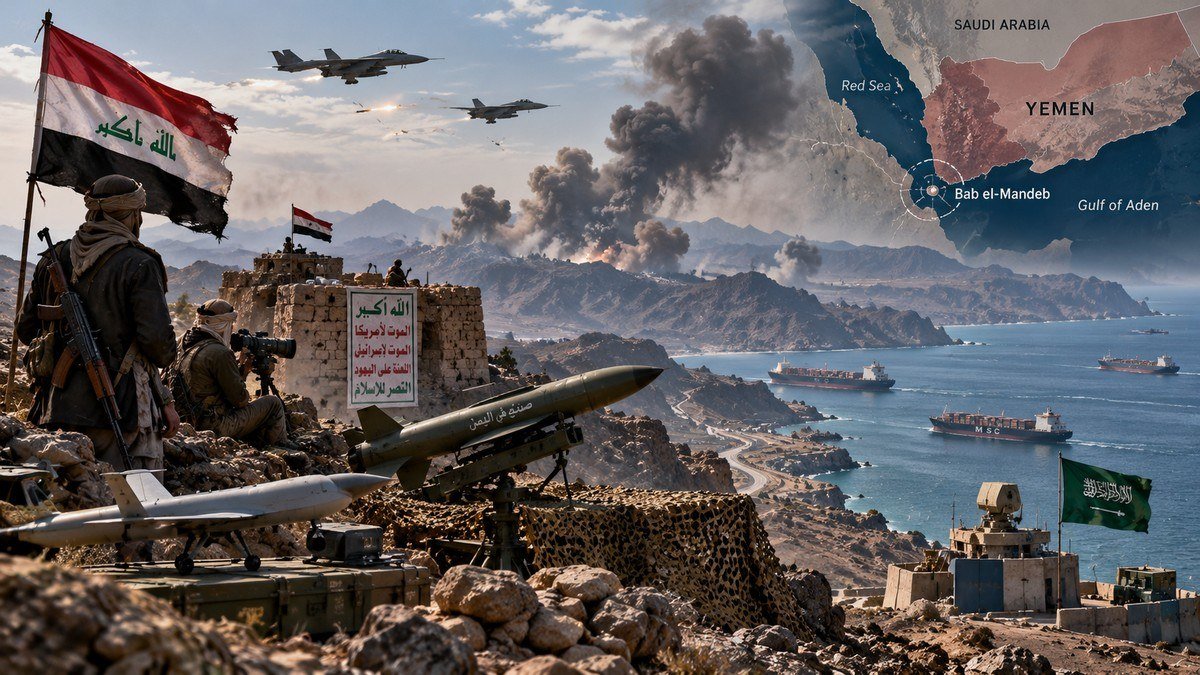
Years of airstrikes by Saudi Arabia, the UAE, the United States, Britain and Israel have not significantly weakened Yemen’s Houthi movement. Instead, the Iran-backed group has retained its military capabilities and is now expanding pressure around the Bab el-Mandeb, a strategically important maritime chokepoint.
The Houthis possess ballistic and cruise missiles, drones and anti-ship weapons capable of threatening targets across the Gulf and Israel. While Iran is accused of providing expertise and advanced components, the group is also believed to manufacture a substantial portion of its weapons inside Yemen. Iranian officials have denied directly arming the Houthis, although weapons and components reportedly linked to Iran have been intercepted on their way to Yemen.
Saudi Arabia began its military campaign against the Houthis in 2015 after the group captured Sanaa and large parts of northern and central Yemen. Years of airstrikes failed to produce a decisive battlefield shift, while a 2022 ceasefire largely froze front lines.
The conflict changed again after the Gaza war, when the Houthis began targeting Red Sea shipping and later expanded attacks against regional targets. US and British strikes, followed by an intensified American campaign, also failed to eliminate the group’s ability to launch attacks.
Analysts attribute the Houthis’ resilience not only to Iranian support but also to divisions among their opponents. Saudi-backed government forces and UAE-backed southern separatists have frequently pursued competing interests, making a coordinated ground campaign difficult.