UK Parliament Rejects Assisted Dying Bill After Two-Year Debate
UK lawmakers rejected legislation allowing assisted dying for terminally ill adults in England and Wales, ending a two-year parliamentary debate.
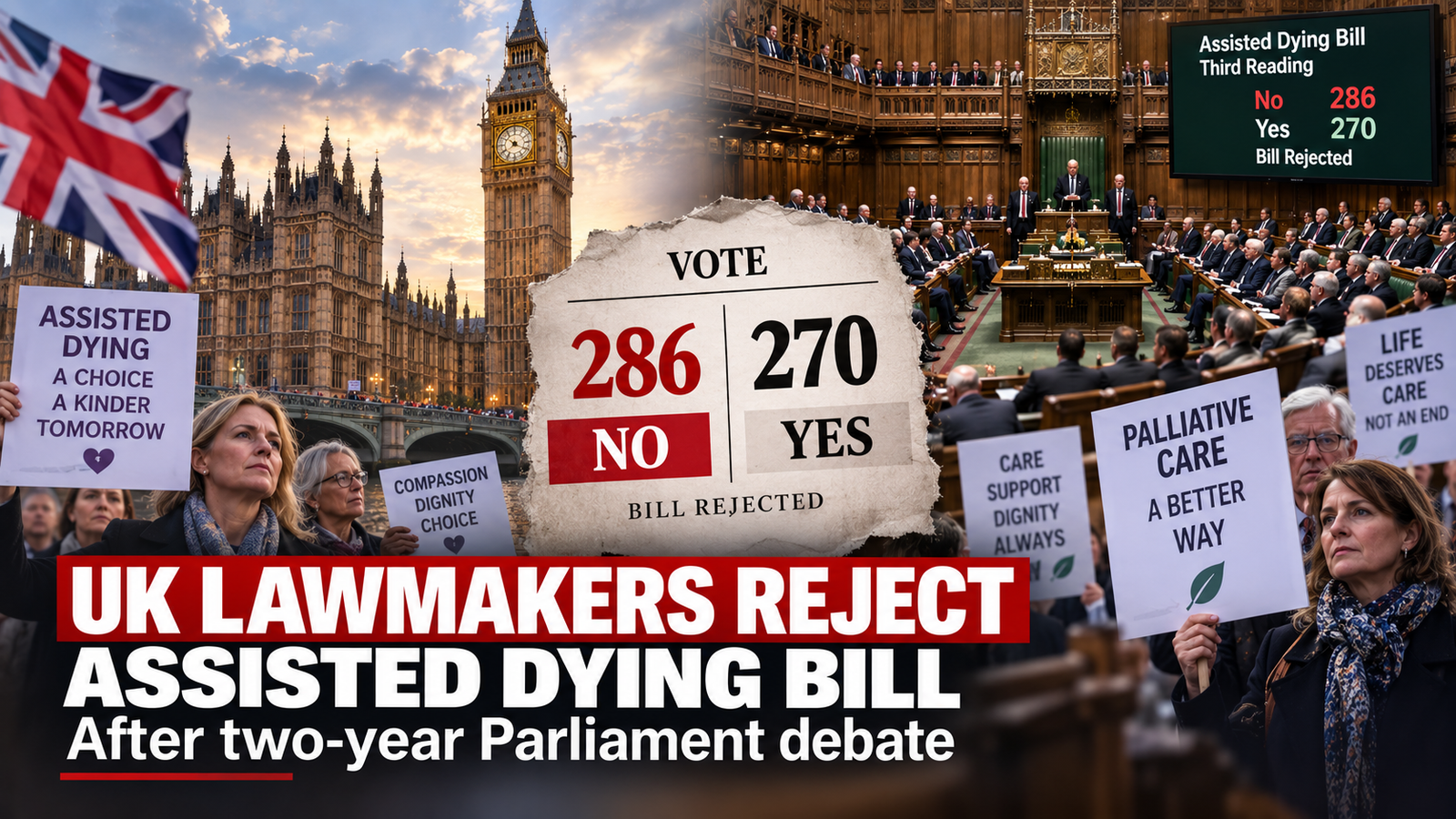
UK lawmakers have rejected a bill that would have allowed terminally ill adults in England and Wales to seek an assisted death, ending a two-year parliamentary debate on the controversial issue. The Terminally Ill Adults (End of Life) Bill was defeated by 286 votes to 270.
The legislation had previously passed the House of Commons in 2024 and 2025 but failed to become law after opposition and procedural delays in the House of Lords. The government maintained a neutral position, treating assisted dying as a matter of individual conscience.
Under the proposed legislation, adults in England and Wales with fewer than six months to live could have applied for an assisted death. Requests would have required approval from two doctors and an independent expert panel.
Opponents argued that the safeguards were insufficient and warned that vulnerable people, including those with disabilities, could face pressure or coercion. Questions were also raised about the reliability of medical predictions concerning a patient’s remaining lifespan.
Supporters argued that assisted dying would give terminally ill people greater control over their final days and reduce the need for patients to travel abroad to access the practice.
The defeat means the proposed changes will not become law in England and Wales, leaving the country’s existing rules unchanged. The vote brings the latest major parliamentary effort on assisted dying to an end after years of debate over patient choice, medical responsibility and safeguards.