

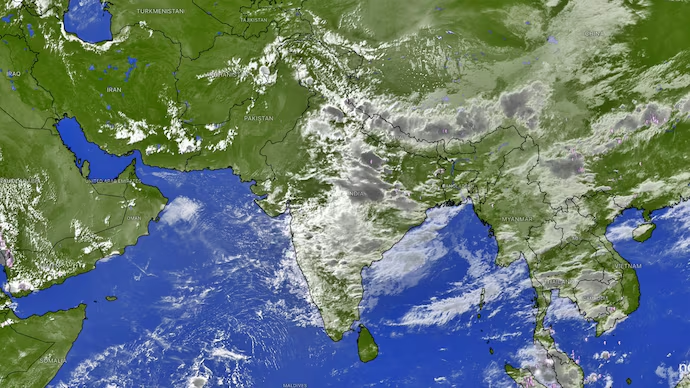
Despite thick rain-bearing clouds covering large parts of India, the southwest monsoon continues to deliver uneven rainfall, leaving some states facing flood threats while others remain hot, humid and relatively dry. Weather experts say the developing El Niño is altering the normal monsoon circulation, causing rainfall to become concentrated in specific regions instead of spreading evenly across the country.
Latest satellite images show widespread cloud cover stretching from central India to the Indo-Gangetic plains and the eastern coast. However, these dense cloud formations have not translated into widespread heavy rain, highlighting the unusual behaviour of this year’s monsoon.
Why Is the Monsoon Behaving Unevenly?
According to the India Meteorological Department (IMD), the current weather pattern is being influenced by the active monsoon trough, which extends from Amritsar across northern India to West Bengal.
This alignment is directing moisture mainly towards eastern and peninsular India, while several northern and northwestern regions continue to experience only scattered showers and uncomfortable humidity instead of sustained rainfall.
Meteorologists say this uneven distribution is a typical feature of El Niño conditions, which often weaken or redistribute the Indian monsoon rather than stopping it altogether.
Heavy Rain Forecast for Eastern and Southern India
The IMD has forecast very heavy rainfall in several parts of the country over the coming days.
States expected to receive intense rainfall include:
- Odisha
- Chhattisgarh
- Kerala
- Coastal Karnataka
Some areas could receive more than 12 centimetres of rainfall, increasing the possibility of flooding, waterlogging and disruptions to normal life.
Authorities have advised residents in vulnerable districts to stay alert as rainfall activity is expected to remain active over the next few days.
Himalayan States Face Flood and Landslide Risk
The Himalayan region is also expected to witness prolonged heavy rainfall during the coming week.
States likely to be affected include:
- Uttarakhand
- Himachal Pradesh
- Other adjoining hill regions
Continuous rainfall could trigger:
- Landslides
- Flash floods
- Rising river levels
- Road blockages in hilly areas
Residents and travellers have been advised to monitor local weather advisories before planning journeys.
Delhi-NCR to Remain Hot and Humid
Unlike eastern and southern India, Delhi-NCR is expected to receive only light rainfall over the next few days.
The limited showers are unlikely to provide significant relief from the prevailing heat and humidity. Weather officials have also issued a heat and humidity alert, warning that uncomfortable conditions may continue despite occasional rain.
Punjab and Haryana May Receive Rain Later
Punjab and Haryana have so far recorded relatively subdued monsoon activity.
However, weather experts expect rainfall to increase after the next two to three days as the monsoon trough gradually shifts towards the northwest, potentially bringing heavier showers to both states.
How El Niño Is Affecting India’s Monsoon
El Niño is a climate phenomenon associated with unusually warm sea surface temperatures in the central and eastern Pacific Ocean. Although it develops thousands of kilometres away, it can significantly influence weather patterns across the globe, including India’s southwest monsoon.
Instead of producing widespread and consistent rainfall, El Niño often causes:
- Uneven rainfall distribution
- Longer dry spells
- Localised heavy downpours
- Increased flood risk in some regions
- Water shortages in others
This creates a challenging situation where neighbouring states may experience completely different weather conditions during the same period.
Weather Challenges Likely to Continue
Meteorologists believe the developing El Niño could strengthen further in the coming months, increasing the likelihood of continued regional contrasts in rainfall.
This means authorities may have to deal with two different challenges simultaneously:
- Flood management in regions receiving excessive rainfall.
- Water conservation and drought preparedness in areas witnessing rainfall deficits.
As the monsoon season progresses, weather experts advise people to stay updated with official forecasts, especially those living in flood-prone or landslide-prone regions.
FAQs
Why is India receiving uneven rainfall despite thick cloud cover?
The developing El Niño is affecting monsoon circulation, causing rainfall to concentrate in certain regions while other areas receive only scattered showers despite widespread cloud cover.
Which states are expected to receive heavy rainfall?
Odisha, Chhattisgarh, Kerala and coastal Karnataka are expected to receive very heavy rainfall, with some places likely to record more than 12 cm of rain.
Is Delhi expected to receive heavy rain?
No. Delhi-NCR is likely to receive only light showers, with heat and humidity expected to continue over the next few days.
Which regions face the highest flood and landslide risk?
The Himalayan states, including Uttarakhand and Himachal Pradesh, along with parts of eastern and southern India, face a higher risk of flooding, landslides and rising river levels due to prolonged heavy rainfall.
What is El Niño and how does it affect the Indian monsoon?
El Niño is a climate pattern caused by warmer Pacific Ocean temperatures. It often weakens or redistributes India’s southwest monsoon, leading to uneven rainfall, longer dry spells and isolated heavy downpours.
Leave a Reply