


- March 03, 2026
FIR Over Unpublished Naravane Memoir Sparks Political Row, Reopens Ladakh Clash Debate
Delhi Police file FIR over leaked excerpts of ex-Army chief Naravane’s unpublished memoir, triggering political and security concerns.
- February 09, 2026
- in National
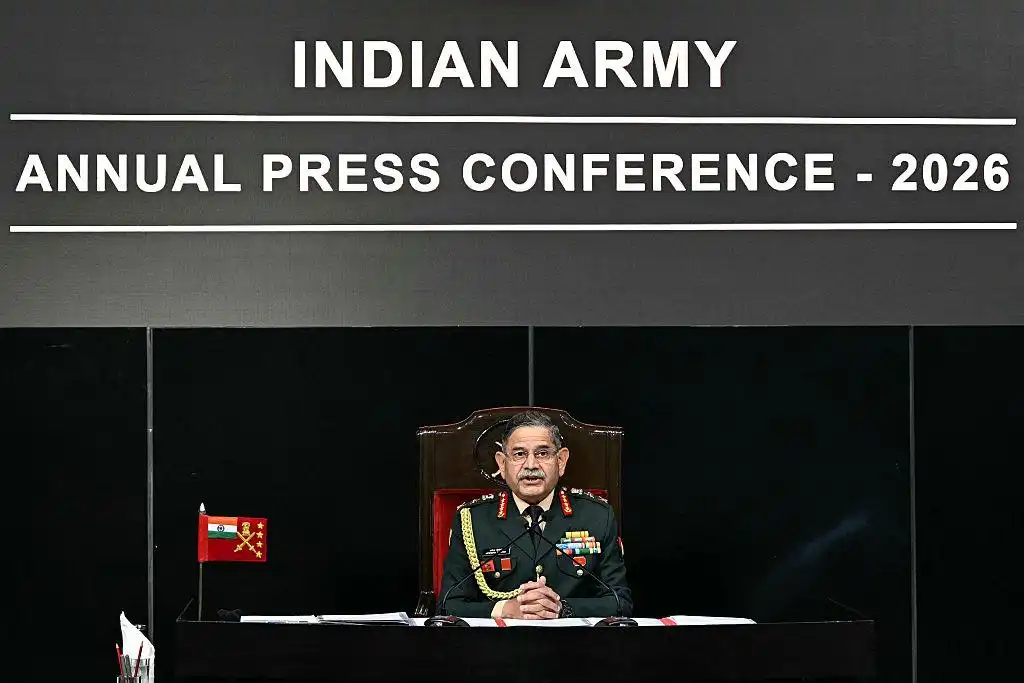
The Delhi Police has registered a First Information Report (FIR) over the circulation of an unpublished memoir attributed to former Chief of Army Staff Manoj Mukund Naravane. The case follows the viral spread of excerpts from the manuscript on social media platforms, raising serious concerns around the unauthorised disclosure of sensitive military material.
The controversy escalated rapidly after Rahul Gandhi, Leader of Opposition in the Lok Sabha, cited portions of the yet-to-be-released book during parliamentary proceedings. He alleged lapses in political accountability during the 2020 India–China military standoff in eastern Ladakh, directly targeting Narendra Modi and questioning crisis-time decision-making at the highest level.
What followed was not just a political face-off, but a legal and institutional alarm over how far retired military leaders can go in the public domain—and who gets to decide that boundary.
The unpublished book at the centre of the row
The memoir, titled “Four Stars of Destiny”, remains officially unpublished. According to available information, the manuscript is pending mandatory clearance from the Ministry of Defence due to its references to:
-
The 2020 Line of Actual Control (LAC) standoff with China
-
High-level military and political decision-making
-
The Agnipath military recruitment scheme
Indian regulations require former senior military officers to obtain prior approval before publishing material that may touch upon classified operations, strategic assessments, or sensitive diplomatic engagements—even after retirement.
Why the police stepped in
The FIR focuses not on the act of writing the memoir, but on the circulation of its contents without authorisation. Authorities are examining whether the leak violates provisions of the Official Secrets Act, along with other laws governing classified information and national security.
Officials have also indicated that if rules are breached, consequences could extend beyond criminal liability, including penalties under CCS (Pension) Rules, which allow the government to withhold part or all of a retired officer’s pension in cases of serious misconduct.
At the heart of the investigation lies a critical question:
Was the material shared authentic, and if so, how did it enter the public domain without clearance?
Parliament turns into a battleground
The issue exploded politically after Rahul Gandhi insisted on reading excerpts in the Lok Sabha, prompting repeated objections. Senior government figures denied the book’s official existence, triggering a tense standoff inside Parliament and drawing the Speaker into the controversy.
The episode renewed scrutiny of parliamentary privilege versus national security, and whether elected representatives can cite unverified or unpublished material related to defence matters during debates.
The Ladakh context: why nerves are raw
The backdrop to this dispute is the 2020 India–China military confrontation along the LAC, including the deadly Galwan Valley clash in June that year, where 20 Indian soldiers lost their lives. It marked the most violent India–China encounter in decades and led to massive troop mobilisation on both sides.
Under General Naravane’s command, India and China engaged in prolonged military-level talks, resulting in phased disengagements at several friction points. While tensions have eased since then, forward deployment by both armies continues, making the subject extremely sensitive even today.
Security experts warn that selective disclosures or political weaponisation of such events could inflame diplomatic tensions or complicate ongoing disengagement mechanisms.
Bigger questions the controversy raises
Beyond personalities and politics, the episode has reopened a broader national debate:
-
Should retired military leaders have greater freedom to publish memoirs?
-
Where should transparency end and national security begin?
-
Can political discourse responsibly handle sensitive defence material?
For now, answers remain elusive. Neither the publisher nor the author has issued a public clarification on the status of the manuscript or the authenticity of the leaked excerpts.
The Nation With Tea take
In India, wars may pause—but narratives never do. An unpublished book has managed to stir Parliament, activate the police, and reopen wounds from one of the country’s most serious military confrontations in recent memory.
When memoirs become ammunition and leaks become headlines, the real casualty may not be secrecy—but trust.
you may also like


- March 03, 2026
Gulf Tensions Rise; Evacuation Flights Reach India

- March 03, 2026
Chhattisgarh Private Schools Announce RTE Protest
- March 02, 2026
India Rejects Report Linking Officials to Nijjar Killing
- March 02, 2026