After Gen Z’s nationwide protests over competitive exams, paper leaks and education policies, India’s youngest generation of students has begun raising its voice over a different issue—basic school infrastructure.
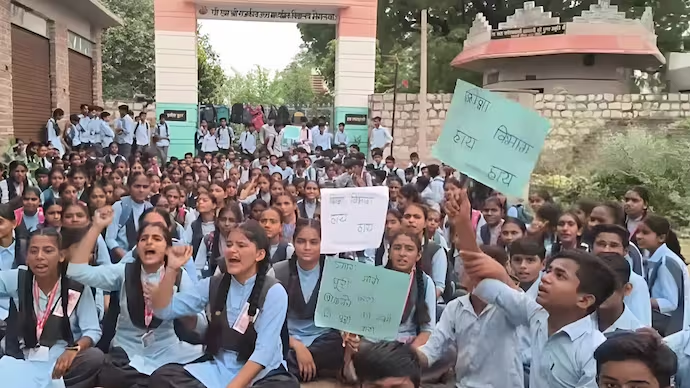
Government school students across Uttar Pradesh, Rajasthan and Bihar have organised demonstrations demanding essential facilities such as adequate teachers, clean drinking water, hygienic toilets, electricity, classroom furniture and improved learning conditions. The protests reflect increasing dissatisfaction with long-standing issues affecting government schools.
Students Protest Poor Facilities in Uttar Pradesh
One of the biggest demonstrations took place at Sarvodaya Inter College in Fatehpur, Uttar Pradesh, where nearly 1,500 students staged a sit-in protest lasting around six hours.
Students alleged that classrooms lacked electricity and fans, toilets were unhygienic, drinking water was unavailable, benches were insufficient and overall campus maintenance had been ignored for years.
Following the protest, the District Inspector of Schools visited the institution and assured students that the reported issues would be addressed.
Teacher Shortage Sparks Demonstrations in Rajasthan
Students in several government schools across Rajasthan have also protested against severe teacher shortages.
In Barmer, students locked the gates of their Government Senior Secondary School and staged a sit-in, demanding immediate deployment of teachers until permanent appointments are made.
Meanwhile, students in Jalore’s Megalwa village gathered outside PM SHRI Government Senior Secondary School, claiming multiple teaching positions remain vacant, leaving several subjects without instructors.
Protesting students said the shortage has disrupted their studies and affected exam preparation. They urged the education department to appoint first, second and third-grade teachers, including Level 1 and Level 2 educators, without delay.
Bihar Students Demand Better School Management
The wave of protests has now extended to Bihar.
More than 40 students from Simuara Middle School in Gaya marched to the Tikari Sub-Divisional Office to highlight issues including poor-quality midday meals, a non-functional hand pump, dirty toilets and the absence of sports facilities.
The students insisted on presenting their grievances directly before the Sub-Divisional Magistrate. After hearing their concerns, the official directed the school administration to resolve the issues within five days.
A three-member inquiry committee has also been constituted to investigate the complaints and submit a detailed report.
Focus Shifts from Policies to Ground-Level Problems
The protests underscore a widening gap between education policy goals and conditions on the ground. While the National Education Policy (NEP) 2020 aims to provide equitable and quality education, many government schools continue to face shortages of teachers, inadequate infrastructure and poor maintenance.
Unlike previous student movements centred on examination reforms, these demonstrations focus on everyday necessities required for effective learning.
As Generation Alpha begins speaking out, the debate around education is expanding beyond policies to include the quality of classrooms, teaching resources and the overall school environment.
Frequently Asked Questions (FAQs)
Q1. Why are students protesting in Uttar Pradesh, Bihar and Rajasthan?
Students are protesting over inadequate school infrastructure, teacher shortages, unhygienic toilets, lack of drinking water, electricity, classroom furniture and poor maintenance.
Q2. Where did the major student protests take place?
Major protests were reported in Fatehpur (Uttar Pradesh), Barmer and Jalore (Rajasthan), and Gaya (Bihar).
Q3. What are the students demanding?
Students are seeking adequate teachers, clean classrooms, functioning toilets, safe drinking water, electricity, fans, benches and better overall learning conditions.
Q4. What action have authorities taken?
Education officials have inspected affected schools, assured corrective measures and, in Bihar, formed an inquiry committee to investigate students’ complaints.
Q5. How are these protests different from Gen Z education protests?
While Gen Z protests largely focused on competitive exams, paper leaks and recruitment issues, Gen Alpha students are demanding basic school infrastructure and improved learning environments.