


- March 03, 2026
How Switzerland Became the World’s Most Nuclear-Ready Nation
Switzerland has enough nuclear bunker space for its entire population. Here’s how Cold War laws turned neutrality into a nationwide shelter system.
- March 02, 2026
- in International
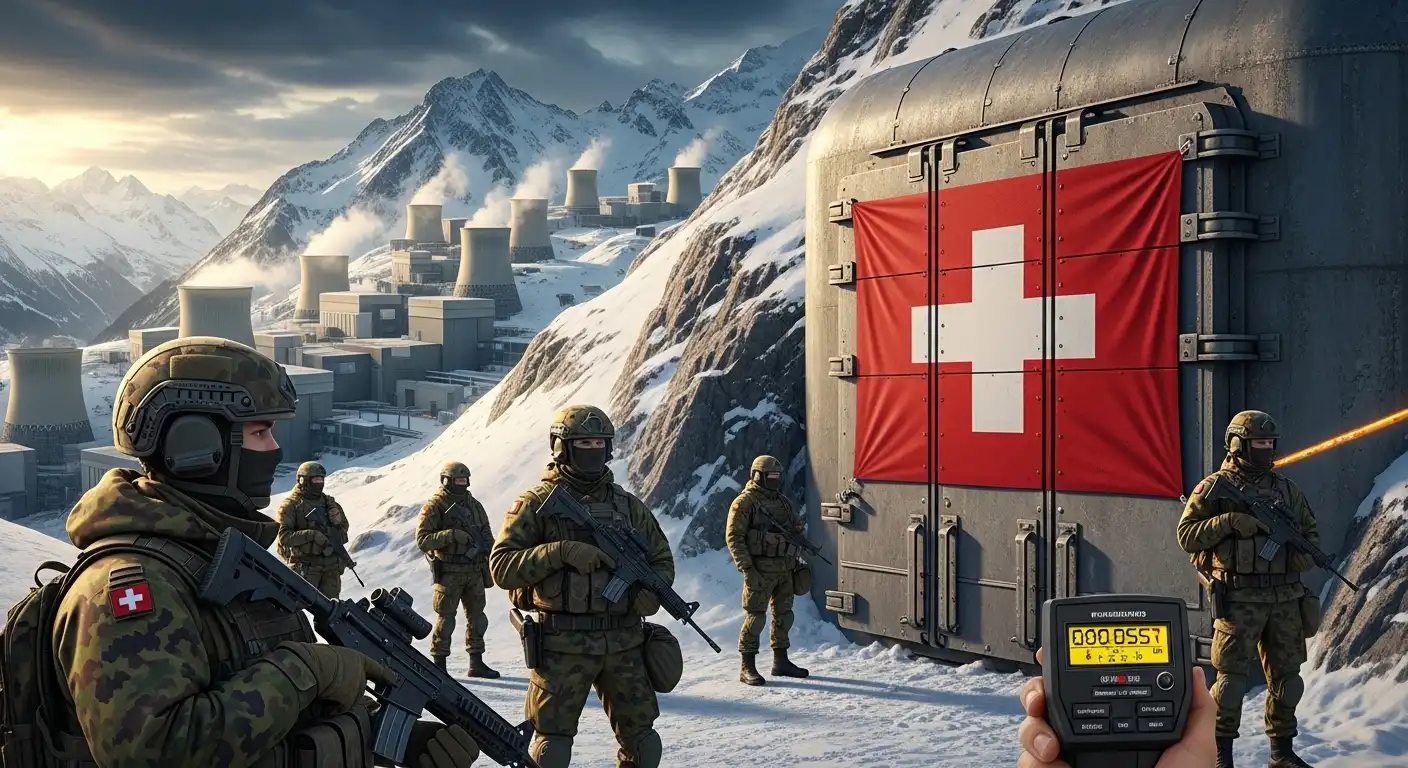
When the world thinks of Switzerland, it imagines snow-covered Alps, quiet diplomacy and armed neutrality.
What most people don’t imagine? Nearly nine million nuclear bunker spaces hidden beneath homes, schools and public buildings.
Yes — Switzerland may be the most bunker-ready country on Earth.
The Cold War That Never Left
During the Cold War, Switzerland sat between NATO and Warsaw Pact territories. Though neutral, it was geographically surrounded by potential flashpoints.
Instead of betting on alliances, the Swiss bet on preparedness.
By the 1950s and 1960s, rising nuclear tensions pushed the country to invest heavily in civil defence. The logic was simple: If you cannot prevent a nuclear war, you must survive one.
And survive it — systematically.
The 1963 Law That Changed Everything
In 1963, Switzerland passed a civil protection law that made access to nuclear shelters mandatory.
Every new residential building had to include a fallout shelter — or developers had to pay into a public fund that financed shared bunkers nearby.
Over decades, that law quietly reshaped the country.
Today, Switzerland reportedly has around 9 million shelter spaces for a population of about 8.8 million. That is near one bunker slot per resident — something no other country matches at scale.
Not Just Empty Concrete Rooms
Swiss bunkers are not symbolic relics.
Many include:
-
Reinforced blast-resistant doors
-
Air filtration systems
-
Radiation-proof ventilation
-
Emergency sanitation
-
Thick concrete shielding
Some are large communal facilities beneath schools and hospitals. Others are compact reinforced rooms in private homes.
And they are not abandoned.
Owners are required to keep shelters functional. Authorities inspect them. Ventilation systems must work. Structural integrity must be maintained.
Preparedness here is not nostalgia — it’s policy.
Why Switzerland Didn’t Dismantle Them
After the Soviet Union collapsed, many countries decommissioned Cold War bunkers.
Switzerland did not.
Officials argued that threats evolve but never vanish — nuclear accidents, terrorism, geopolitical instability, and technological warfare still exist.
Maintaining shelters, they reasoned, is cheaper than rebuilding them in panic.
Back in the Spotlight
Recent global conflicts have renewed attention to the bunker network.
Residents reportedly began checking their assigned shelters again after tensions rose in Europe. Authorities reassured the public that the civil protection infrastructure remains operational.
Neutrality does not mean complacency — that seems to be the Swiss doctrine.
Geography + Law + Culture
Switzerland’s mountainous terrain helped. Decentralised federal governance helped more.
Instead of a few massive shelters, the system is distributed across thousands of local sites. That reduces congestion and ensures accessibility within minutes.
But perhaps the real foundation is cultural.
Swiss civil defence is rooted in responsibility and long-term planning. Shelters are viewed less as panic rooms and more as insurance policies — unlikely to be used, but necessary to have.
Fear or Foresight?
Critics argue that Cold War-style bunkers may not match modern warfare realities. Supporters say civilian protection should never go out of style.
Either way, Switzerland’s underground network stands as one of the world’s most extensive civil defence systems — built not in reaction to one crisis, but through decades of steady legislation and public buy-in.
In a world that often reacts late, Switzerland prepared early.
And quietly kept the doors reinforced.
you may also like


- March 02, 2026
Trump Says Iran Operations May Last 4–5 Weeks

- March 02, 2026
Middle East War Escalates; Oil, Air Travel Hit
- March 02, 2026
US-Iran Conflict: Missiles, Airstrikes, Global Disruption

- March 02, 2026