


- March 03, 2026
Parliament Budget Session 2026 Erupts as Opposition Targets Speaker, Trade Deal
Parliament Budget Session 2026 turns chaotic as Opposition targets Speaker Om Birla, trade deal and House rules.
- February 09, 2026
- in National
The Big Picture
India’s Parliament witnessed a stormy start to the Budget Session on Monday, with disruptions, adjournments, sharp political exchanges and a looming confrontation between the government and the Opposition. What was meant to be a detailed debate on the Union Budget 2026–27 quickly spiralled into a wider political standoff involving parliamentary procedure, free speech inside the House, and the controversial India–US trade framework.
The Opposition signalled its most aggressive move yet by indicating plans to bring a no-confidence motion against Om Birla, escalating tensions beyond routine budget disagreements.
Budget at the Centre, But Not the Focus
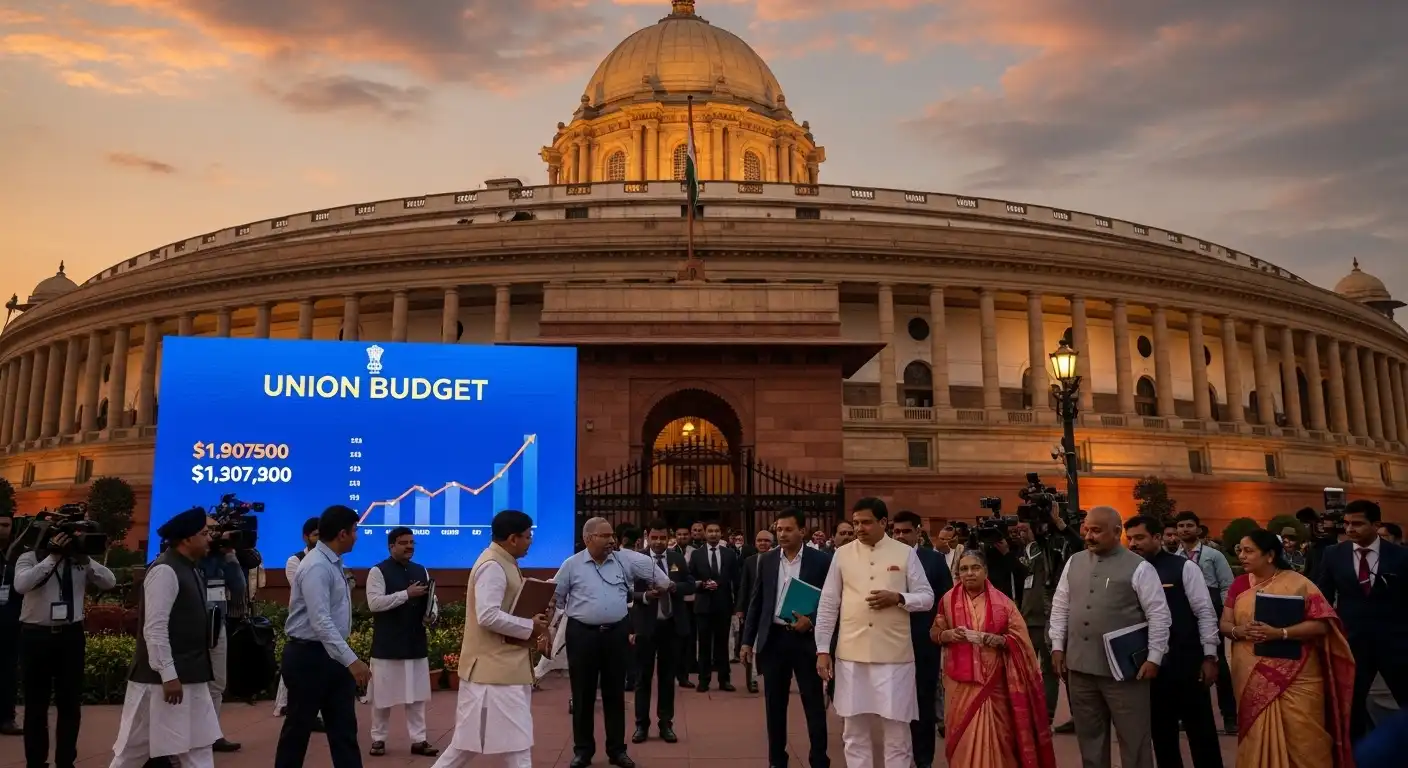
The Union Budget 2026–27, presented earlier this month by Nirmala Sitharaman, was positioned by the government as a long-term roadmap driven by “Yuvashakti” and anchored around three kartavyas. Key announcements include:
-
Seven high-speed rail corridors
-
New dedicated freight corridors
-
Operationalisation of 20 national waterways over five years
-
Higher Securities Transaction Tax on futures and options to curb speculative trading
While the ruling NDA described the Budget as visionary and growth-oriented, the Opposition accused the government of ignoring marginalised communities and prioritising optics over inclusivity.
Opposition Strategy: Disruption With Direction
Opposition parties, led by the INDIA bloc, entered the session with a clear plan: force debates on issues the government would rather avoid. Central to this strategy is the proposed India–US Bilateral Trade Agreement, which critics claim could expose Indian farmers to unfair competition through reduced tariffs on agricultural imports.
DMK MP T R Baalu moved an Adjournment Motion in the Lok Sabha, warning that zero or near-zero tariffs on select US agricultural products could “open floodgates” of imports and destabilise domestic farming.
Adding fuel to the fire, Opposition leaders staged sloganeering and walkouts, repeatedly chanting that the voice of the Opposition was being deliberately suppressed.
Speaker Under Fire
The most dramatic escalation came with reports that the Opposition is preparing a no-confidence motion against Lok Sabha Speaker Om Birla. This rare move reflects mounting frustration over repeated adjournments, restrictions on references in speeches, and disciplinary actions against Opposition MPs.
Earlier in the session, eight Opposition members were suspended for the remainder of the Budget Session for allegedly violating House rules during protests. The suspensions were seen by critics as punitive, while the government defended them as necessary to preserve parliamentary decorum.
Rahul Gandhi, Rules and the Red Line
A flashpoint in the confrontation has been the refusal to allow Rahul Gandhi to quote from an unpublished memoir by a former Army chief related to the 2020 China standoff. The government maintains that parliamentary rules prohibit references to unpublished material, while the Opposition argues that such restrictions are selectively enforced.
Union parliamentary affairs minister Kiren Rijiju accused the Congress leadership of deliberately stalling proceedings, stating that continued disruptions could lead to the Budget being passed by voice vote, ironically denying Opposition MPs the very debates they are demanding.
INDIA Bloc Huddle and Political Optics
As tempers flared inside Parliament, senior Opposition leaders met at the residence of Mallikarjun Kharge to recalibrate strategy. The message emerging from the meeting was unambiguous: escalate pressure, amplify public messaging, and frame the Budget Session as a battle for democratic space rather than a routine legislative exercise.
From the Opposition’s perspective, this is not just about numbers and allocations, but about who controls the narrative inside India’s highest law-making body.
Government’s Defence
The government has consistently rejected allegations of bias, asserting that parliamentary rules apply equally to all members. On the trade deal, Commerce Minister Piyush Goyal assured the House that sensitive sectors like agriculture and dairy have been protected, stressing that India has not opened its markets indiscriminately.
Supporters of the government argue that repeated disruptions undermine serious economic debate and reduce Parliament to a theatre of slogans rather than solutions.
Reading Between the Lines
Beyond the procedural chaos lies a deeper political reality. With elections on the horizon in several states and national narratives already hardening, Parliament has become less a forum for consensus and more a battleground for visibility. Every adjournment, suspension and shouted slogan feeds into competing claims of victimhood and authority.
In that sense, the Budget Session of 2026 is unfolding less like a financial review and more like a rehearsal for a prolonged political campaign.
What to Watch Next
-
Whether the Opposition formally moves the no-confidence motion against the Speaker
-
If discussions on the India–US trade framework are allowed on the floor
-
How many days the House actually functions versus how many it is adjourned
-
Whether Budget debates give way to voice votes amid continued disruption
For now, Parliament remains stuck between policy ambition and political brinkmanship — a place where big visions collide with bigger egos.
you may also like


- March 03, 2026
Gulf Tensions Rise; Evacuation Flights Reach India

- March 03, 2026
Chhattisgarh Private Schools Announce RTE Protest
- March 02, 2026
India Rejects Report Linking Officials to Nijjar Killing
- March 02, 2026