


- March 03, 2026
Tamil Nadu Elections: BJP’s ‘Bihar Formula’ Strategy Faces a Tough Southern Reality
As Tamil Nadu heads to polls, BJP attempts a Bihar-style caste coalition, but analysts question whether the strategy can work.
- February 06, 2026
- in National
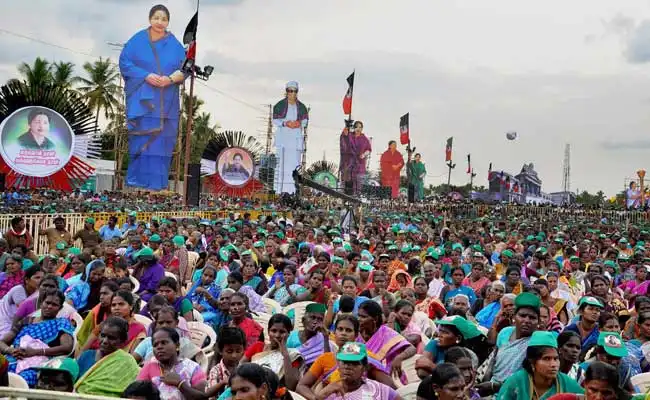
As Tamil Nadu moves closer to assembly elections, the Bharatiya Janata Party is attempting an ambitious political experiment: replicating its successful Bihar alliance model in a state long dominated by Dravidian politics.
The strategy hinges on building a broad social and political coalition under the NDA umbrella to challenge the ruling DMK-led alliance. However, Tamil Nadu’s deeply entrenched political culture, high urbanisation, and complex caste dynamics raise serious questions about whether a formula that worked in Bihar can translate effectively in the southern state.
The ‘Bihar Model’ BJP Wants to Replicate
In Bihar, the NDA stitched together a carefully balanced social coalition representing Dalits, non-Yadav OBCs, upper castes, and Extremely Backward Classes. This coalition isolated the opposition’s traditional Muslim–Yadav base and delivered a decisive electoral victory.
Encouraged by that success, the BJP is now trying to assemble a similar umbrella alliance in Tamil Nadu by reuniting old partners, absorbing breakaway factions, and minimising vote fragmentation that could benefit the DMK.
Alliance Building in a Dravidian Stronghold
Tamil Nadu’s electoral landscape is shaped less by a single dominant party and more by coalition arithmetic. No party has historically secured power without a strong alliance.
The BJP’s partnership with the AIADMK has therefore become central to its southern strategy. The alliance is being positioned as the primary vehicle for relevance, with leadership projected under Edappadi K Palaniswami. Additional efforts are underway to bring together rival AIADMK factions and smaller caste-based parties under a unified NDA front.
The inclusion of the Pattali Makkal Katchi has added social breadth, particularly in northern Tamil Nadu, where the Vanniyar community holds influence. However, internal divisions within the PMK and shifting loyalties complicate consolidation.
There have also been outreach attempts toward emerging political forces with mass appeal among youth, indicating the BJP’s recognition that traditional caste arithmetic alone may not be sufficient.
Why Tamil Nadu Is Not Bihar
Political analysts argue that while caste remains relevant in rural Tamil Nadu, urban voters respond differently. With a highly urbanised population, elections are influenced as much by governance, leadership perception, and welfare delivery as by caste identity.
Experts note that attempts to mobilise voters as a consolidated religious or caste bloc have historically struggled in the state. Counter-mobilisation often neutralises caste-based strategies, particularly in mixed or urban constituencies.
Moreover, the BJP continues to battle perceptions of being socially narrow in appeal, despite having leaders from backward communities. Previous efforts to elevate leaders from dominant regional castes have not translated into electoral breakthroughs.
Understanding Tamil Nadu’s Caste Landscape
Tamil Nadu’s social fabric is complex and politically active:
-
Dalits, comprising nearly one-fifth of the population, have long been engaged by Dravidian parties through social justice narratives.
-
Thevars, influential in the southern districts, maintain strong representation within the AIADMK.
-
Vanniyars, a numerically strong Most Backward Class, wield significant influence in northern districts through organised mobilisation.
-
Nadars, a trading and entrepreneurial community, hold cross-party influence in southern Tamil Nadu.
-
Gounders, concentrated in the western Kongu belt, play a decisive role in AIADMK leadership and regional politics.
Each group carries its own political history, loyalties, and grievances, making statewide consolidation a formidable challenge.
What Lies Ahead
With election notifications expected in the coming months, the BJP faces a defining test in Tamil Nadu. While alliance expansion may prevent vote splitting, success will depend on whether the coalition can move beyond arithmetic and resonate with voters on governance, credibility, and regional identity.
Tamil Nadu has repeatedly shown resistance to imported political templates. Whether the BJP can adapt its Bihar playbook to local realities — or whether the strategy falters against the state’s unique political consciousness — will shape the outcome of the upcoming elections.
you may also like


- March 03, 2026
Gulf Tensions Rise; Evacuation Flights Reach India

- March 03, 2026
Chhattisgarh Private Schools Announce RTE Protest
- March 02, 2026
India Rejects Report Linking Officials to Nijjar Killing
- March 02, 2026