


- March 03, 2026
Thackeray and Pawar Reunions Falter in Strongholds as BJP-Led Alliance Tightens Grip on Mumbai, Pune
Thackeray and Pawar family reunions fail to deliver electoral gains in Mumbai and Pune as BJP-led alliance dominates Maharashtra civic polls.
- January 16, 2026
- in National
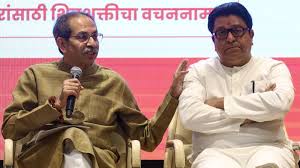
The results of Maharashtra’s municipal elections suggest a decisive setback for once-dominant political families, as recent reunions within the Thackeray and Pawar clans failed to translate into electoral success in their traditional strongholds of Mumbai and Pune.
In Mumbai, the much-publicised reconciliation between cousins Uddhav Thackeray and Raj Thackeray—after nearly two decades of political estrangement—appears to have had limited impact. Counting trends indicate that the BJP-led Mahayuti alliance, along with the Shiv Sena, is on course to take control of the Brihanmumbai Municipal Corporation (BMC), India’s richest civic body.
For over two decades, the undivided Shiv Sena, founded by Bal Thackeray, ruled Mumbai with or without the BJP. However, following the 2022 split in the party and prolonged delays in civic elections, voter sentiment now appears to have shifted decisively. The Mahayuti alliance’s strong showing underscores its consolidation of the Hindutva vote base in the city, despite attempts by the reunited Thackeray cousins to revive older political narratives.
Raj Thackeray’s campaign leaned heavily on regional identity and “Marathi manoos” rhetoric, echoing slogans from earlier decades. Yet analysts note that Mumbai’s electorate seems to have moved beyond such appeals, favouring governance continuity and political stability over symbolic reunifications.
A similar pattern emerged in Pune and Pimpri-Chinchwad, where the reunion between Sharad Pawar and his nephew Ajit Pawar failed to arrest the decline of the Nationalist Congress Party’s influence. Despite contesting together in key civic bodies, trends show the BJP leading comfortably in Pune, while both NCP factions remain far from power. Pimpri-Chinchwad, once a stronghold of the undivided NCP, also witnessed a decisive BJP surge, with Ajit Pawar’s faction trailing and Sharad Pawar’s party struggling to make a significant impact. The results have raised fresh questions about the long-term political relevance of family-led reunions in Maharashtra’s rapidly evolving urban politics.
Across the state, the BJP-led alliance is set to secure a majority of wards in the 29 municipal corporations that went to polls, reinforcing its dominance in urban Maharashtra. The outcome suggests that voter priorities may now be centred less on political legacy and more on performance, alliances, and perceived administrative strength.
As counting continues, the broader implication is clear: symbolic family reconciliations alone may no longer be enough to sway electorates in Maharashtra’s key cities.
you may also like


- March 03, 2026
Gulf Tensions Rise; Evacuation Flights Reach India

- March 03, 2026
Chhattisgarh Private Schools Announce RTE Protest
- March 02, 2026
India Rejects Report Linking Officials to Nijjar Killing
- March 02, 2026