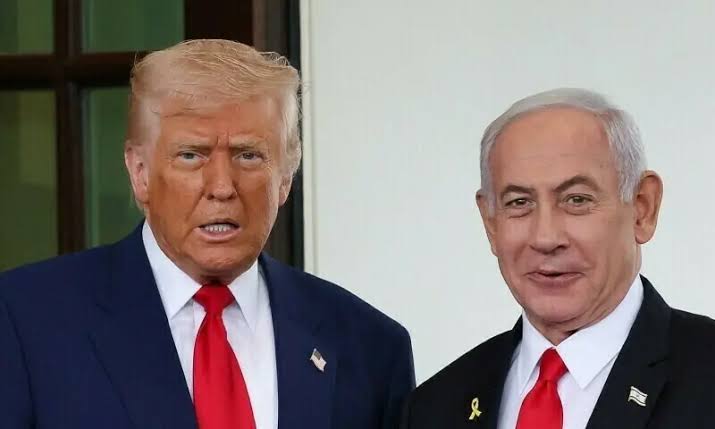
US President Donald Trump and Israeli Prime Minister Benjamin Netanyahu are set to hold a high-profile meeting in Washington on Tuesday, marking their first face-to-face talks since the military campaign against Iran. The discussions come at a critical time as both leaders navigate increasing political challenges at home while addressing evolving security concerns across the Middle East.
The meeting is expected to focus on developments related to Iran, the ongoing conflict in Gaza, the situation in Lebanon, and broader regional cooperation initiatives, including the expansion of the Abraham Accords.
Political Pressure Mounts for Both Leaders
The talks take place against a backdrop of growing domestic pressure for both leaders.
Netanyahu is preparing for a re-election campaign while facing criticism over his handling of relations with Washington. Meanwhile, Trump is under increasing pressure to reduce America’s military involvement overseas as economic concerns and rising prices become major issues ahead of the upcoming US midterm elections.
Officials familiar with the discussions indicated that the leaders are also expected to review the framework agreement between Israel and Lebanon following the conflict with Hezbollah, alongside broader regional security initiatives.
Although Trump acknowledged that he and Netanyahu have some differences regarding Iran, he described their positions as largely aligned.
Alliance Faces New Challenges
The relationship between Trump and Netanyahu has experienced several shifts over the years. After Trump’s return to the White House, both leaders projected a united front, particularly during the military campaign targeting Iran earlier this year.
However, as the conflict expanded and regional tensions intensified, the United States increasingly pursued diplomatic efforts aimed at reducing hostilities. Reports suggest this strategic shift created differences between Washington and Jerusalem regarding the pace and direction of military operations.
The evolving dynamics have sparked debate among political observers, with many noting that US policy has increasingly prioritized diplomatic engagement alongside military deterrence.
Iran Remains at the Center of Discussions
Iran’s nuclear programme is expected to be one of the most significant topics during the meeting.
Netanyahu is reportedly planning to share updated intelligence assessments with Trump while urging continued efforts to prevent Tehran from advancing its nuclear capabilities.
The Israeli Prime Minister has reiterated that Iran must not be allowed to develop nuclear weapons, while also expressing support for diplomatic solutions if they can achieve long-term security objectives without renewed large-scale military conflict.
He also warned that Israel would respond strongly to any future attacks originating from Iran.
Focus on Gaza and Lebanon
Beyond Iran, both leaders are expected to review ongoing developments in Gaza and southern Lebanon.
Israel has recently approved measures that could allow the gradual deployment of an international stabilization force in parts of Gaza under specific conditions. However, participation from international partners remains limited.
In Lebanon, Israeli authorities have agreed to allow the Lebanese Army to deploy in selected southern villages under a pilot programme designed to improve local security and reduce tensions near the border.
Additional diplomatic discussions involving Israel and Lebanon are expected to continue in the coming weeks as regional stakeholders work toward maintaining stability.
US Public Opinion Adds Another Layer
Growing public scrutiny in the United States over the humanitarian situation in Gaza has also become an important factor influencing Washington’s Middle East policy.
Recent opinion surveys indicate declining public support for Israel among sections of the American population, increasing political pressure on US policymakers ahead of national elections.
The Washington meeting is therefore expected to play an important role in shaping the next phase of US-Israel cooperation while determining how both governments approach the ongoing crises involving Iran, Gaza and Lebanon.
Frequently Asked Questions (FAQs)
1. Why are Donald Trump and Benjamin Netanyahu meeting?
The leaders are meeting to discuss key regional issues, including Iran, Gaza, Lebanon, security cooperation, and future diplomatic initiatives.
2. What is the main agenda of the meeting?
Iran’s nuclear programme, the Gaza conflict, Lebanon’s security situation, and expansion of the Abraham Accords are expected to be the primary topics.
3. Why is the meeting considered significant?
It comes amid rising geopolitical tensions and domestic political pressure on both leaders, making it a crucial diplomatic engagement.
4. Are Trump and Netanyahu fully aligned on Iran?
While both share concerns about Iran, they have acknowledged some differences regarding the best approach to handling the situation.
5. What role does Gaza play in the discussions?
The leaders are expected to review humanitarian concerns, security operations, and proposals related to international stabilization efforts in Gaza.
6. What is the latest development regarding Lebanon?
Israel has supported a pilot initiative allowing the Lebanese Army to deploy in selected southern areas, with further diplomatic talks planned.
7. What are the Abraham Accords?
The Abraham Accords are agreements aimed at normalizing diplomatic relations between Israel and several Arab nations, with efforts continuing to expand participation.
8. How does US domestic politics affect the meeting?
Economic concerns, public opinion on Middle East conflicts, and upcoming elections have increased pressure on the US administration to pursue diplomatic solutions.
9. Why is Iran’s nuclear programme a major concern?
Israel and the United States continue to view Iran’s nuclear activities as a significant regional security challenge.
10. Could this meeting impact Middle East diplomacy?
Yes. The discussions may influence future US-Israel policy coordination and shape diplomatic efforts related to Iran, Gaza, Lebanon, and broader regional stability.