

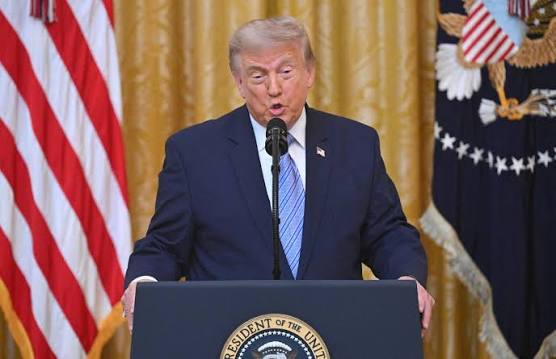
The debate over election integrity has once again taken center stage in the United States after President Donald Trump used a nationally televised prime-time address to revisit claims about past elections while renewing his call for stricter voter identification laws.
The speech, delivered just months before the 2026 midterm elections, focused on Trump’s long-standing concerns about election security and his support for a voter ID bill that has yet to gain enough backing in Congress. The remarks have also reignited criticism from political opponents and election experts, who argue that repeating unverified claims could weaken public confidence in the electoral process.
Trump Calls for Tougher Voting Rules
During his address, Trump said fair elections are essential to the country’s future and argued that stronger safeguards are needed to protect the voting system.
He announced that documents related to the 2018 and 2020 elections would be released, saying they would provide additional information about election-related issues. However, he did not present evidence showing that votes were altered or that the outcome of the 2020 presidential election had been changed.
Trump also renewed his support for a voter ID bill, describing it as an important step toward ensuring secure and transparent elections. The proposal has remained stalled in Congress because it has not received sufficient political support.
Focus Returns to 2020 Election Debate
The speech marked another chapter in Trump’s continued focus on the 2020 presidential election.
While discussing election integrity, he repeated allegations involving foreign interference and weaknesses in the voting process. At the same time, he did not question the legitimacy of elections in which he emerged victorious, including the 2016 and 2024 presidential contests.
The White House also launched an online portal containing documents, intelligence assessments, investigation files, and official correspondence linked to election-related matters.
Election Experts Dispute Claims
Election security specialists have continued to maintain that the United States’ decentralized election system provides multiple layers of protection against large-scale manipulation.
Officials have repeatedly stated that no credible intelligence has demonstrated that foreign governments successfully changed vote totals during the 2020 election. Numerous audits, recounts, court proceedings, and reviews conducted across several states also found no evidence of widespread fraud capable of changing the final outcome.
Experts note that while foreign governments have attempted to influence public opinion through online campaigns and misinformation, such efforts differ significantly from altering actual election results.
Critics Warn About Public Trust
Several political leaders and former intelligence officials criticized Trump’s remarks, warning that repeatedly raising unsupported allegations could reduce confidence in future elections.
Former senior intelligence official Sue Gordon described the speech as concerning, arguing that election security should remain grounded in verified intelligence rather than political narratives.
Democratic lawmakers also accused Trump of attempting to shape public perception before the 2026 midterm elections. They argued that previous investigations had already addressed many of the issues raised and found no evidence that foreign interference changed election outcomes.
Some lawmakers stressed that maintaining confidence in democratic institutions remains critical as the country prepares for another major national election cycle.
Broadcast Decision Sparks Fresh Debate
Trump’s address also attracted attention because several major television networks chose not to air the speech live.
While some broadcasters streamed the entire event online, others switched away before it concluded or continued with their regular programming schedules.
The decision prompted criticism from Trump, who accused certain media organizations of political bias and argued that they should have carried the address in full.
Media analysts pointed out that major networks have, on several occasions in previous administrations, decided not to broadcast politically focused presidential speeches live, making the decision consistent with past editorial practices.
Election Security Remains a Political Flashpoint
Election security continues to be one of the most divisive issues in American politics.
Supporters of stricter voter identification laws argue they improve public confidence and strengthen election integrity. Opponents contend that existing safeguards are already robust and warn that additional requirements could create barriers for eligible voters.
The discussion has also gained attention after the administration proposed significant funding reductions for the Cybersecurity and Infrastructure Security Agency (CISA), the federal agency responsible for helping states protect election infrastructure from cyber threats.
Attention Turns to the 2026 Midterms
With the 2026 midterm elections approaching, election laws and voting procedures are expected to remain central campaign issues across the United States.
Republicans continue to advocate for tighter voting regulations, while Democrats argue that existing election systems remain secure and that public debate should focus on verified evidence rather than unproven allegations.
As lawmakers continue debating voting reforms, the broader conversation over election integrity, public trust, and democratic institutions is likely to remain one of the defining political issues heading into the next national vote.
Frequently Asked Questions (FAQs)
1. What did Donald Trump discuss in his prime-time address?
He focused on election integrity, repeated claims about the 2020 and 2018 elections, and urged lawmakers to support a voter ID bill.
2. Did Trump provide evidence that the 2020 election result was changed?
No. He did not present evidence showing that vote totals were altered or that the election outcome changed.
3. What is the voter ID bill?
It is proposed legislation that would require voters to present identification before casting ballots in federal elections.
4. Why is the bill still pending?
The proposal has not received enough political support in Congress to move forward.
5. What do election experts say about the 2020 election?
Multiple audits, court cases, and official reviews found no evidence of widespread fraud capable of changing the election outcome.
6. Why did some television networks not air Trump’s speech live?
Some broadcasters chose to stream the speech online or continue regular programming, similar to editorial decisions made during previous administrations.
7. What role does CISA play in US elections?
The Cybersecurity and Infrastructure Security Agency helps protect election systems from cyber threats and supports state election officials.
8. Why is election integrity a major issue ahead of the 2026 midterms?
Both major political parties continue to disagree over voting laws, election security, and how future elections should be managed.
9. What concerns did critics raise after Trump’s speech?
Critics argued that repeating unsupported election claims could reduce public confidence in the electoral system.
10. Why are the 2026 midterm elections important?
The elections will determine control of Congress and significantly influence the political agenda for the remainder of the presidential term.
Leave a Reply